ShizukaKazu

vip
Age 3.4 Yıl
Peak Tier 5
No content yet
#美伊谈判陷入僵局 New Developments in US-Iran Negotiations
According to Xinhua News Agency, a Pakistani official told reporters on the 25th that compared to the first round of negotiations, Iran has taken a more hardline stance, emphasizing that any plan to end the war must be implemented according to Iran's conditions, not based on the conditions proposed by U.S. President Donald Trump.
On the same day, Iran's Tasnim News Agency quoted a statement from the spokesperson of Iran's Hatem Anbia Central Headquarters of the Armed Forces, saying that if U.S. forces continue to impose blockades, looting,
View Original
Ryakpanda
#美伊谈判陷入僵局 New Developments in US-Iran Negotiations
According to Xinhua News Agency, a Pakistani official told reporters on the 25th that compared to the first round of talks, Iran has adopted a more hardline stance, emphasizing that any plan to end the war must be implemented according to Iran's conditions, not those proposed by U.S. President Donald Trump.
On the same day, Iran's Tasnim News Agency quoted a spokesperson from Iran's Hatem Anbia Central Headquarters of the armed forces, saying that if U.S. troops continue to impose blockades, plunder, and piracy in the region, they will face a response from Iran's powerful armed forces.
Previously, U.S. Secretary of Defense Lloyd Austin stated on April 24th local time that the U.S. has been increasing its maritime blockade against Iran, and all ships deemed to meet blockade standards by the U.S. have been ordered to return. Austin said a second U.S. aircraft carrier will participate in the blockade against Iran in a few days.
According to CCTV News, on the morning of the 25th local time, Iranian Foreign Minister Hossein Amir-Abdollahian, during a visit to Pakistan, met with Pakistani Army Chief of Staff Qamar Javed Bajwa in Islamabad. The two sides exchanged views on the latest developments in the ceasefire related to the US-Israel-Iran conflict and on strengthening regional peace and stability cooperation.
Amir-Abdollahian expressed gratitude to Pakistan for its efforts in promoting a ceasefire and clarified Iran's position and concerns on this issue. Bajwa stated that Pakistan is willing to continue mediating on related issues until results are achieved.
According to Iranian media reports on the 25th, the Iranian Islamic Revolutionary Guard Corps (IRGC) said that its intelligence department had destroyed multiple groups supported by the U.S. and Israel in a series of operations in Kurdistan Province and Kerman Shah Province.
In Kurdistan Province, the IRGC intelligence arrested 11 separatists, killed 1, and seized 8 rocket launchers and over 2,000 rounds of ammunition; targeted a regional headquarters of a terrorist organization, seizing 90 bomb detonators, 18 grenades, 5 mortar shells, and other weapons and ammunition, as well as radio communication equipment.
In Kerman Shah Province, the intelligence department arrested 144 individuals suspected of illegal arms trading, seizing 17 weapons and 1,200 rounds of ammunition; also arrested 4 spies linked to Israel's Mossad intelligence and special operations agency.
Latest Statement from the International Maritime Organization
On the 24th, IMO Secretary-General Kitack Lim stated that the organization is working with multiple parties to plan an evacuation for mariners stranded in the Persian Gulf, which can be implemented once safety conditions are met.
Lim said during a briefing on the situation in the Strait of Hormuz that the evacuation plan includes compiling a list of affected ships, prioritizing based on humanitarian needs, and, when security is assured, using existing maritime traffic management mechanisms for evacuation. "For the evacuation to proceed smoothly, all parties involved in the conflict must agree to cease attacks on maritime targets during the operation."
Lim noted that since the U.S. and Israel launched military operations against Iran in late February, the IMO has verified 29 attacks on ships near the Persian Gulf and the Strait of Hormuz, resulting in at least 10 mariners killed and several ships damaged. Currently, about 2,000 crew members aboard approximately 1,600 ships are stranded in the Persian Gulf. Supplies such as water, food, and fuel on stranded ships are expected to run out soon. Several ships have been seized in the region in recent days.
Lim urged all parties to remain vigilant, warning that mines may be present throughout the Strait of Hormuz, and ships still face the risk of attack.
According to CCTV News, on the 23rd, U.S. Central Command stated that the USS Bush aircraft carrier strike group was operating in the Indian Ocean within its area of responsibility. The U.S. military will deploy three aircraft carriers in the Middle East. On the same day, Iran released a video showing commandos boarding a speedboat and stopping a large cargo ship in the Strait of Hormuz.
Analysts believe that in the contest for control over the Strait of Hormuz, the U.S. and Iran are engaged in a "battle of wills." Iran relies on small, fast, and agile maritime guerrilla tactics to counter U.S. military equipment and technological advantages, and the tug-of-war between "big guns and giant ships" and "mosquito fleets" is likely to continue.
On one hand, the U.S. imposes blockades that require significant military and logistical support, making it difficult for the U.S. to sustain effective maritime blockade operations over the long term. On the other hand, Iran can achieve its objectives with limited naval forces.
Analysts believe that the sharp confrontation between the U.S. and Iran over the strait is essentially a struggle for more leverage in subsequent negotiations, and this deadlock is unlikely to be broken in the short term.
repost-content-media
  • Reward
  • 9
  • Repost
  • Share
MasterChuTheOldDemonMasterChu:
Just charge forward 👊
View More
#加密市场行情震荡 Currently, the global macro core variables focus on the geopolitical game between the US and Iran, with negotiations between both sides stuck in a deadlock, continuously bringing uncertainty and disturbance to the capital markets. The US stance is firm; in a recent interview, Trump stated that the US holds an absolute advantage in the US-Iran negotiations, demanding Iran surrender its enriched uranium stockpile and relinquish control over the Strait of Hormuz, with strong pressure implying a heavy-handed approach. The second round of negotiations originally planned to be led by US V
BTC0,05%
View Original
Ryakpanda
#加密市场行情震荡 Currently, the global macro core variables focus on the geopolitical game between the US and Iran, with negotiations stuck in a deadlock, continuously bringing uncertainty and disturbances to the capital markets. The US stance is firm, with Trump stating in a recent interview that the US holds an absolute advantage in the US-Iran negotiations, demanding Iran to surrender its enriched uranium stockpile and relinquish control over the Strait of Hormuz, with strong pressure implying a heavy-handed approach. The second round of negotiations originally planned to be led by US Vice President Vance in Islamabad was ultimately shelved after Iran explicitly refused to participate. Additionally, the US-Iran temporary ceasefire agreement expiring on April 22 faces numerous uncertainties; the US unilaterally extended the ceasefire, but core disagreements remain unresolved, and the confrontation in the Middle East remains tense. Driven by multiple factors such as geopolitical conflicts, shipping restrictions, and supply concerns, international oil prices continue to rise. As of now, Brent crude oil prices have risen to $106.01 per barrel, steadily climbing within the day, with a year-over-year increase of nearly 59%. The soaring oil prices further intensify global inflation pressures, increase volatility in major asset classes, and indirectly create complex bidirectional impacts on risk assets.
In Bitcoin’s current rebound, short positions have been largely cleared, with short-term selling pressure briefly released, but the upward logic of the market shows obvious shortcomings. According to CryptoQuant data, this price increase is not supported by spot market inflows; the core driving force comes from a concentrated short squeeze in the futures market amounting to nearly $1.19 billion. Over-reliance on derivatives to drive the rally results in weak stability, making it prone to sentiment retreat and trend reversal.
Currently, Bitcoin faces significant resistance at the $80,000 mark, with upward momentum gradually exhausted, and the bulls and bears are approaching equilibrium.
Key resistance and support zones are clearly defined:
- Major resistance: $78,500–$79,000, a heavily pressured zone where bulls find it difficult to break through continuously;
- Short-term reasonable pullback: if pressure causes a decline, the first support levels are $76,000–$76,500;
- Critical defensive position: $75,000–$75,500, a break below this could damage the short-term upward structure and trigger an accelerated downward trend.
In the short-term market rhythm, the latest developments in the US-Iran situation over the weekend will be important catalysts. However, the market has already fully priced in geopolitical conflict expectations, and the impact of news-driven unilateral shocks is relatively limited. Overall, the market remains primarily under technical pressure, with a downward correction and consolidation. From a weekly chart perspective, the current fourth wave of the rebound has entered its final stage, with volume continuing to shrink and upward momentum weakening, signaling a gradual accumulation of a top in the medium term. After repeated US-Iran tensions and the market’s optimistic expectations being fully released, the probability of Bitcoin testing the $80,000 level and then pulling back is relatively high. Coupled with multiple negative signals resonating: $8.47 billion worth of options expiring, the prior $1.19 billion short positions being largely cleared, insufficient spot market support, and the convergence of futures and spot premiums, all indicate that this phase of the rally is nearing its end. Without continuous inflows of new spot funds or a volume breakout above $80,000, the weekly stage rebound is likely to end, and the market will revert to a correction cycle, with the core oscillation range locked between $75,000 and $76,000. In the medium term, the market will shift from a bullish dominance to a more oscillating and slightly weaker pattern.
repost-content-media
  • Reward
  • 7
  • Repost
  • Share
MasterChuTheOldDemonMasterChu:
Just charge forward 👊
View More
#震荡行情交易策略 Weekend market liquidity is usually lower, making it easier for price spikes or abnormal fluctuations to occur. Here are some practical risk control tips:
1. Reduce leverage or hold off on trading
Participation from institutions and large funds decreases over the weekend, and liquidity thins out. The same amount of capital can cause more dramatic price swings. If your position is highly leveraged, it’s recommended to lower the leverage ratio in advance or partially close positions to reduce exposure risk.
2. Set reasonable stop-loss/ take-profit orders
Place stop-loss orders near
View Original
Ryakpanda
#震荡行情交易策略 Weekend market liquidity is usually lower, making it prone to price spikes or abnormal fluctuations. Here are some practical risk control tips:
1. Reduce leverage or close positions and wait
Participation from institutions and large funds decreases on weekends, leading to thinner liquidity. The same amount of funds can cause more dramatic price swings. If your position has high leverage, it’s recommended to lower the leverage ratio in advance or partially close positions to reduce exposure risk.
2. Set reasonable stop-loss/ take-profit orders
Place stop-loss orders near key support/resistance levels to prevent missing the chance to react during a spike. Be aware that weekend slippage may increase, so leave some buffer space for stop-loss prices.
3. Monitor funding rate changes
Perpetual contract funding rates reflect bullish or bearish sentiment. If the funding rate is extreme (such as significantly positive or negative), it indicates an overcrowded position on one side, and reversals or liquidations may occur over the weekend.
4. Minimize frequent trading
Weekend markets tend to have more noise, increasing the chances of false breakouts or breakdowns. Avoid opening new positions unless necessary to prevent being misled by short-term volatility.
5. Pay attention to macro event windows
If there are important macroeconomic data releases or policy announcements over the weekend (such as Federal Reserve officials’ speeches or geopolitical events), it’s advisable to adjust your positions in advance or set alerts.
repost-content-media
  • Reward
  • 7
  • Repost
  • Share
MasterChuTheOldDemonMasterChu:
Just charge forward 👊
View More
CORE Coin: The Awakening of BTCFi Leader in 2026
After three years of silence, CORE awakens suddenly. Starting from a low point at the beginning of the year, CORE surged nearly 7 times in half a month, rapidly rising from a few cents, with trading volume continuously expanding for several days, becoming one of the most discussed tokens across the network.
1. Three Years of Grinding: From “Down 98%” to “Comeback of the King”
CORE (Core DAO) was born in early 2023, focusing on a Layer 1 public chain that combines Bitcoin’s security with EVM smart contracts. Its core narrative is BTCFi—unlo
CORE-3,22%
BTC0,05%
View Original
Ryakpanda
CORE Coin: The 2026 BTCFi Leader Awakens
After three years of silence, CORE awakens suddenly. From the lows at the beginning of the year, CORE surged nearly 7 times in half a month, rapidly rising from a few cents, with trading volume continuously expanding for several days, becoming one of the most discussed tokens across the network.
 One, three years of sharpening a sword: from “98% crash” to “King’s Return”
CORE (Core DAO) was born in early 2023, focusing on a Layer 1 public chain that combines Bitcoin’s security + EVM smart contracts, with the core narrative of BTCFi—unlocking Bitcoin’s DeFi value.
In February 2023, CORE once hit a historical high of $6.14, then declined all the way down to around $0.02, a drop of over 98%, forgotten by many.
From 2023 to 2025, the CORE team did not just “tell stories,” but quietly accomplished three things:
1. Satoshi Plus consensus implementation: combining Bitcoin’s PoW hash power + DPoS proof of stake to achieve Bitcoin-level security + high TPS, called “Bitcoin-native DeFi infrastructure.”
2. Non-custodial BTC staking launched: users can stake and earn without transferring BTC out of the Bitcoin chain, truly “coins in hand, safe earning,” solving the biggest pain point of BTCFi.
3. Ecosystem explosion from 0 to 1: as of April 2026, over 230 million transactions on the CORE chain, more than 15.63 million wallet addresses, with DeFi, NFT, and GameFi flourishing.
In 2026, when the market refocuses on “real yields + BTCFi,” people realize: CORE is no longer just an air coin, but the only landing leader in the BTCFi track.
Two, the core logic for bullishness in 2026: threefold catalysis, none can be missing
1) BTCFi narrative explosion: $1 trillion “sleeping BTC” to be awakened
Bitcoin is the “gold” of the crypto world, with a market cap exceeding $1 trillion, but long only “hoarded,” unable to participate in DeFi, called the biggest sleeping capital.
In 2026, industry consensus is clear: the next bull market will definitely be a BTCFi bull market. And CORE is the only public chain that achieves “Bitcoin-native staking + EVM ecosystem”:
- Non-custodial staking: no cross-chain transfer needed, coins stay in hand, safety first;
- coreBTC: native encapsulation of Bitcoin, 1:1 pegged to BTC, deeply integrated with DeFi;
- Institutional-grade security: verified through London exchanges, with top custody institutions like BitGo, Copper as nodes.
Conclusion: the hotter BTCFi is, the more valuable CORE becomes.
2) Token economy reshaping: from “inflation” to “deflation + real yields”
The main reason for CORE’s past decline was large issuance and lack of value capture. In 2026, everything changes:
- Total supply deflation: CORE’s total is 2.1 billion, no additional issuance; 10% of ecosystem transaction fees are burned, decreasing over time.
- Real yields (Rev+): ecosystem income (staking, DeFi, NFT) directly buy back CORE and distribute dividends, forming a positive flywheel of “ecosystem profits → buyback and burn → token price increase → more active ecosystem.”
- Extremely small circulating supply: current circulating market cap is only a few tens of millions of USD, vastly undervalued compared to the BTCFi space, with small capital enough to trigger a big market move.
In one sentence: previously “speculation,” now “profit-making.”
3) Technology + ecosystem implementation: from “storytelling” to “data speaks”
In 2026, CORE no longer just talks about visions but shows full-scale data explosion:
- On-chain data: 230 million transactions, 15.63 million addresses, daily active users continuously hitting new highs;
- DeFi ecosystem: over 180 applications, including lending, DEX, liquidity staking fully launched;
- Institutional entry: top custody providers and traditional capital begin to deploy, with compliance + security double assurance;
- Global consensus: from Asia to Europe and America, community numbers in the tens of millions, with search volume across the network surging.
The market finally realizes: CORE is not a “copycat,” but the “Ethereum” of BTCFi.
Three, 2026 market outlook: CORE has just completed its first 7x rally, market sentiment has shifted from “despair” to “frenzy,” but the main upward wave is still ahead.
Core judgment:
1. Low market cap + strong narrative = huge explosion potential: current market cap only tens of millions, once BTCFi becomes the main theme of the bull market, a 10x is just the beginning, a hundredfold is not a fantasy.
2. Bitcoin halving cycle resonance: after the 2024 halving, BTC remains bullish long-term, and demand for BTCFi will continue to grow, directly benefiting CORE.
3. Ecosystem flywheel acceleration: Rev+ real yields + burn mechanisms, each upward cycle makes the fundamentals stronger, forming a “the more it rises, the more valuable” positive feedback loop.
repost-content-media
  • Reward
  • 6
  • Repost
  • Share
MasterChuTheOldDemonMasterChu:
Just charge forward 👊
View More
#加密市场行情震荡 Structural Opportunities in Volatile Bottoming: Deep Analysis and Trading Strategies for the Crypto Market on April 25
On April 25, 2026, the cryptocurrency market continued its recent narrow fluctuation pattern, with Bitcoin consolidating around $77,500 and Ethereum holding steady above $2,300. Although the extension of the US-Iran ceasefire agreement briefly boosted Bitcoin to above $79,000, the market failed to effectively break through the key resistance at $80,100, indicating that bullish momentum still needs to accumulate. The six consecutive days of net inflows into spot Bitc
BTC0,05%
ETH-0,08%
XRP-0,9%
SOL-0,16%
View Original
post-image
  • Reward
  • 5
  • Repost
  • Share
MasterChuTheOldDemonMasterChu:
Just charge forward 👊
View More
#加密市场行情震荡 Hacker Month Deals a Heavy Blow to DeFi, BTC Struggles to Hold Its Position Amid Fear, Is There Still a Future for the Crypto Market?
April 25th, the crypto market remains in a state of low volatility and high fear as it consolidates sideways. BTC hovers around $77,656 with narrow fluctuations, contract trading volume plummeted over 20% in a single day, signaling clear deleveraging. Meanwhile, April has become the most severe hacker month since February 2025—KelpDAO ($292 million) and Drift Protocol ($285 million) were attacked successively by North Korea’s Lazarus Group, with total
BTC0,05%
ETH-0,08%
SOL-0,16%
View Original
post-image
post-image
  • Reward
  • 12
  • Repost
  • Share
MasterChuTheOldDemonMasterChu:
Just charge forward 👊
View More
#加密市场行情震荡 BTC weekend volatility at 77k, fear index at 31, is it a rebound or further decline?
1. Market Status
Fear and greed index at 31, three consecutive days in the fear zone. BTC has retraced from the 80k level at the start of the week down to 77k, a nearly 4% drop. ETH follows suit, falling from 2390 to 2310, the dream of 2500 shattered. Altcoins are even more tragic, everywhere in the green.
2. Key Levels for BTC
77k is the current support and resistance boundary. Above 79.5k is the 30-day high; standing firm here is needed to talk about a rebound. Below 76.5k is the 24-hour low; break
BTC0,05%
ETH-0,08%
ONDO-1,03%
CHIP-15,27%
View Original
post-image
  • Reward
  • 14
  • Repost
  • Share
MasterChuTheOldDemonMasterChu:
Just charge forward 👊
View More
#OpenAI发布GPT-5.5 From "Chatting" to "Getting Work Done": What Exactly Has GPT-5.5 Changed
To understand why GPT-5.5 is different, you first need to clarify what problems it is actually solving.
Past large models, even GPT-5.4, are essentially "advanced question-answering machines." You ask it a question, and it gives you an answer. For slightly more complex tasks, you have to break down the steps yourself, feed in materials, and check each step's output for correctness.
The model is smart, but in practice, it acts like an intern who needs full supervision.
GPT-5.5's positioning has com
View Original
Ryakpanda
#OpenAI发布GPT-5.5 From "Chatting" to "Getting Work Done": What Exactly Has GPT-5.5 Changed
To understand why GPT-5.5 is different, you first need to clarify what problems it is actually solving.
Past large models, even GPT-5.4, are essentially "advanced question-answering machines." You ask it a question, and it gives you an answer. For slightly more complex tasks, you have to break down steps yourself, feed in materials, and check each step's output for correctness. The model is smart, but when it comes to doing work, it acts like an intern who needs full supervision.
GPT-5.5's positioning has completely changed. OpenAI emphasizes four key words this time: understanding goals, breaking down steps, calling tools, and closed-loop delivery. If you give it a vague requirement, it will plan how to do it, decide which tools to use, check intermediate results, and finally deliver the completed work. A typical example comes from OpenAI’s finance team’s real workflow. They had GPT-5.5 review 1M-1 tax forms, totaling 71,637 pages, and finished two weeks earlier than previous years. This isn’t just "answering a tax question," but taking over an entire repetitive, low-tolerance, long-cycle business process.
Another case better illustrates the point. Pietro Schirano, CEO of startup MagicPath, used GPT-5.5 to merge a branch containing hundreds of frontend and refactoring changes into the main branch, completing the entire process in just 20 minutes and resolving all conflicts at once. His later comment was: "I really feel like I’m working with a higher intelligence."
The core breakthrough of GPT-5.5 isn’t just an improvement in a single capability, but the stitching together of "understanding—planning—executing—checking" into a stable pipeline.
In the past, models’ biggest flaw was drift—losing track of what they were supposed to do halfway through or gradually distorting in details. GPT-5.5’s output consistency, format stability, and logical coherence over long workflows have clearly advanced to a new level.
What does GPT-5.5 mean for ordinary users?
The most immediate change is in interaction style.
Previously, using AI was more like looking up information—you ask a question, it answers. Now, with GPT-5.5, it’s more like assigning tasks—you describe what you want, and it figures out how to do it itself.
Reports from Cursor and Windsurf teams indicate that GPT-5.5 performs significantly better than GPT-5.4 in handling ambiguity and long-term tasks. CodeRabbit’s evaluation even specifically mentions that GPT-5.5 is more "restrained" during code reviews, more inclined to point out issues that truly affect deployment rather than general comments.
Internal data from OpenAI also shows the depth of this shift. Over 85% of employees use Codex across departments weekly, with 95% of engineers using it daily. An internal project produced 1 million lines of code in five months, all generated by Codex, with no manual coding. Finance, marketing, and PR teams are also using it for daily workflows, saving 5 to 10 hours of work weekly through automation. Jensen Huang even called on all NVIDIA employees to use GPT-5.5-based Codex in an all-hands email, saying: "Let’s jump to light speed. Welcome to the era of artificial intelligence."
Considering GPT-5.5 was co-designed with NVIDIA’s GB200, GB300, and NVL72 systems, with training and deployment tightly integrated between model and hardware, this endorsement isn’t just politeness. The joint design means hardware architecture has been deeply customized by algorithms, with chip design directions, architecture optimizations, and performance bottlenecks all aligned with GPT-5.5’s capabilities. But that doesn’t mean it can be "left to run." Multiple third-party evaluations note that GPT-5.5 relies more heavily on task boundaries. If requirements are unclear, it won’t proactively fill in gaps but will execute based on existing information.
This "obedience" can be an advantage in some scenarios, but a limitation in others. It’s more like an experienced professional who needs a clear brief rather than an all-knowing but unpredictable butler. AI engineer Peter Gostev’s in-depth experience report states that while GPT-5.5 can operate stably for at least 7 hours autonomously, if initial steps aren’t clearly defined, mid-process corrections aren’t cheap. Startup CEO Dan Shipper did a comparison experiment: he asked a top engineer to fix a bug in an app, then gave the same code to GPT-5.4, which couldn’t reproduce the engineer’s solution. But GPT-5.5 succeeded. Shipper said it was the first time he truly felt "conceptual clarity" in a programming model—not just parroting but understanding the problem and figuring out how to solve it himself.
If you’re considering how to use GPT-5.5 in your work, you might start with these scenarios:
Programming and development: end-to-end code refactoring, cross-file bug fixing, test completion, especially suitable for projects with complex codebases
Data analysis: handling large document collections, generating structured reports, integrating multiple data sources
Knowledge work: transforming chaotic business inputs into executable plans, assisting research and literature review
Workflow automation: reviewing大量重复性文档、处理格式化表格和税表类工作
OpenAI returns to the center stage, but the game is far from over.
The release of GPT-5.5 has indeed allowed OpenAI to reclaim the top spot in AI comprehensive rankings. On the Artificial Analysis Intelligence Index, GPT-5.5 scored 60, ending the deadlock with Claude Opus 4.7 and Gemini 3.1 Pro. OpenAI took four of the top six spots. But how long this "number one" lasts depends on several variables.
First is price. GPT-5.5 is more expensive, while DeepSeek V4 launched on the same day with open-source and low-cost strategies, offering a "universal" approach. For small and medium enterprises and individual developers, the 26-fold API price difference is significant. OpenAI needs to find a new balance between "high-end closed source" and "broad accessibility."
Second is safety. GPT-5.5’s stronger autonomous execution capabilities mean that if misused, risks are amplified. Automated exploits, code generation attacks, information gathering—these potential threats become more realistic as the model becomes more capable. OpenAI is also pushing traceability tech like C2PA metadata watermarks, but product lead Adele Li previously admitted that metadata "is not a panacea," as screenshots, cropping, and platform compression can disable watermarks.
Third is the pace of competition. On the night of GPT-5.5’s release, Anthropic coincidentally published a report admitting that Claude’s performance had declined due to product adjustments and that it had been fixed. This "counter-move" indicates that the gap between top models is narrowing, and any lead may be temporary.
Some users also found that on several benchmark datasets not shown on OpenAI’s official blog, Claude Opus 4.7 still leads, meaning the claim of "comprehensive dominance" isn’t entirely accurate.
Returning to a fundamental question: will GPT-5.5 cause ordinary people to lose their jobs?
In the short term, probably not. It can indeed handle many tasks rated 80 to 90 points independently, but tasks requiring 100 points, deep strategic judgment, or involving creativity and emotional connection still need humans. What’s truly changing is the significantly lowered barrier to turning ideas into results.
Previously, you needed to learn programming, data analysis, or PowerPoint skills; now, you just need to clearly articulate what you want. Future competitiveness depends less on whether you can use AI tools and more on whether you have ideas worth executing by AI. The more powerful the tools, the more valuable your ideas become.
This transformation sparked by GPT-5.5 isn’t about eliminating people but about replacing "just executing" work. When AI can write your code, fill out spreadsheets, review tax forms, the only thing you can’t be replaced in is the ability to decide "what" and "why."
What’s your view? Will GPT-5.5 make you more willing to pay for AI, or will you prefer open-source solutions? Feel free to share your thoughts in the comments.
repost-content-media
  • Reward
  • 15
  • 1
  • Share
MasterChuTheOldDemonMasterChu:
Steadfast HODL💎
View More
#WCTC交易王PK
WCTC Gameplay Strategy
1. Choose the right opponent: Don't focus solely on the return rate, watch "Position Fluctuations"
Many people only look at the opponent's return rate, but actually, opponents who frequently open and close positions in the last 30 minutes are the easy targets—emotional trading is common, making it easier to chase highs and sell lows.
Practical tip: Click on the opponent's avatar to see "Trade Frequency"; if they make more than 3 trades per minute, choose them for a match.
2. Control your position size: No more than 20% of your principal per trade
WCTC is a wi
View Original
post-image
post-image
  • Reward
  • 16
  • 1
  • Share
MrFlower_XingChen:
To The Moon 🌕
View More
#英特尔与德州仪器大涨 Financial reports and price increases resonate, CPUs undergo a revaluation of their value
Intel and Texas Instruments consecutively deliver better-than-expected financial results, driving stock prices higher. At the same time, the CPU giants signal price hikes, and the structural transformation in computing demand is pushing processors to a new strategic height.
unsetunsetBetter-than-expected financial reports
unsetunsetThe two major giants have impressive performance.
Intel Q1 revenue of $13.58 billion, up 7.2% year-over-year, earnings per share of $0.29, far exceeding the
View Original
Ryakpanda
#英特尔与德州仪器大涨 Financial reports and price increases resonate, CPUs usher in a revaluation of value
Intel and Texas Instruments consecutively deliver better-than-expected financial results, driving stock prices higher. At the same time, the two CPU giants signal price hikes, and the structural transformation of computing demand is pushing processors to a new strategic height.
unsetunsetFinancial reports surpass expectations
unsetunsetThe performance of the two major giants is impressive.
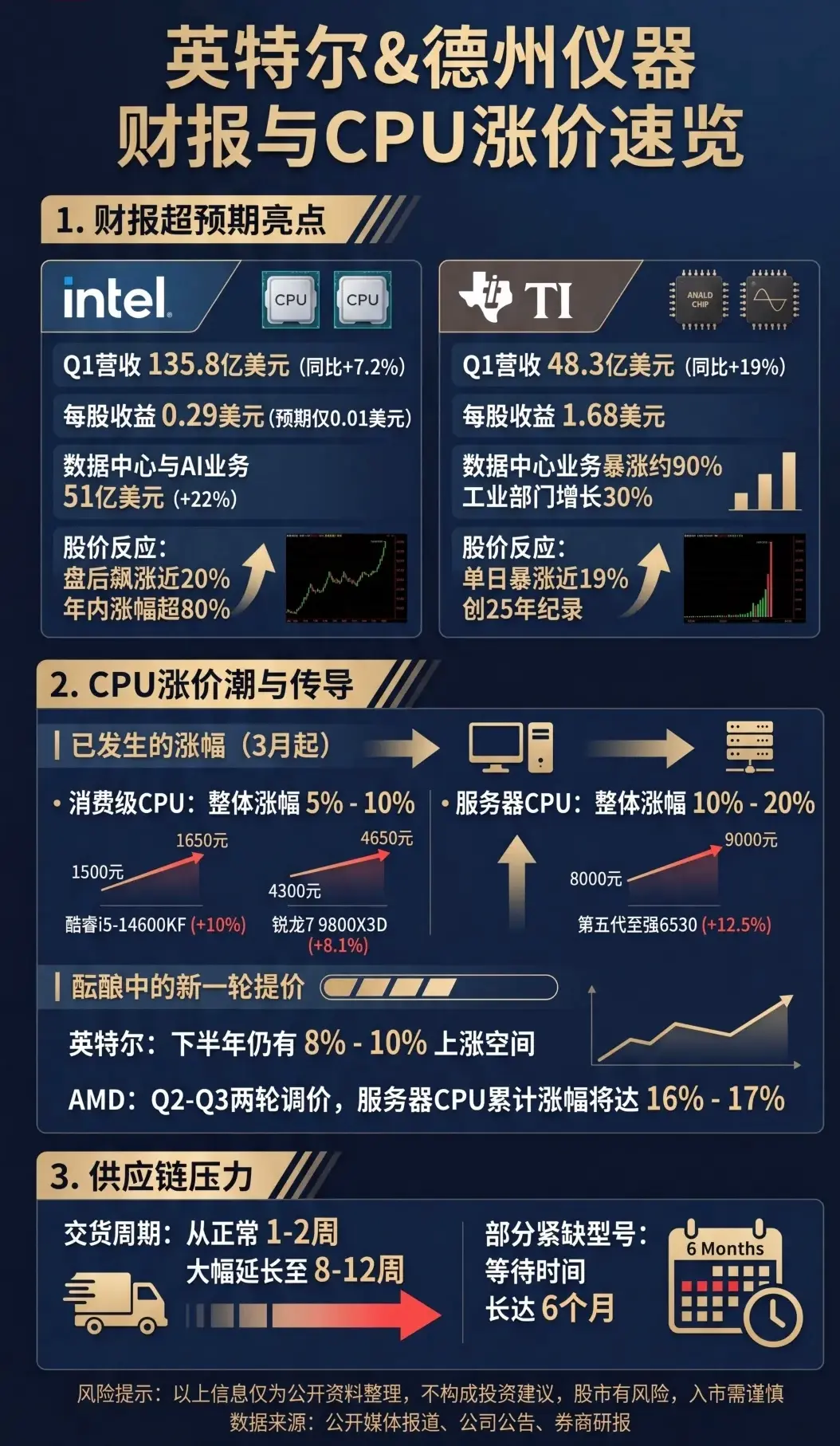
Intel's Q1 revenue was $13.58 billion, up 7.2% year-over-year, with earnings per share of $0.29, far exceeding the expected $0.01; data center and AI business revenue reached $5.1 billion, a 22% surge, with after-hours stock soaring nearly 20%, and an annual increase of over 80%.
Texas Instruments' revenue in the same period was $4.83 billion, up 19%, with earnings per share of $1.68, and data center business skyrocketed about 90%, industrial sector increased 30%, with the stock price jumping nearly 19% in a single day, setting a 25-year record.
unsetunsetCPU price hike wave: price transmission under supply and demand imbalance
unsetunsetBehind the performance, CPUs are experiencing a comprehensive price increase. Since March, consumer-grade CPUs have risen 5%-10%, server CPUs 10%-20%. For example, the Core i5-14600KF price increased from 1,500 yuan to 1,650 yuan, a 10% rise; Ryzen 7 9800X3D from 4,300 yuan to 4,650 yuan, an 8.1% increase; the fifth-generation Xeon 6530 from 8,000 yuan to 9,000 yuan, a 12.5% increase.
Major manufacturers are also brewing a new round of price hikes: Intel may have an 8%-10% increase in the second half of the year, AMD plans two rounds of price adjustments in Q2 and Q3, with a total server CPU price increase of 16%-17%. Delivery lead times have also extended from the normal 1-2 weeks to 8-12 weeks, with some models taking up to 6 months, and capacity is under high pressure.
unsetunsetThree main driving forces
unsetunsetThis wave of price increases is not a short-term imbalance but a superposition of three major trends.
Structural shift in AI demand.
Applications are shifting from training to intelligent agent deployment, making CPU scheduling increasingly critical. During training, CPU-to-GPU ratio is 1:4 to 1:8; in inference scenarios, it is evolving toward 1:1 or even 1:2, meaning CPU demand will multiply under the same GPU scale.
Capacity squeeze from advanced process nodes.
Next-generation CPUs all adopt 3nm process technology, competing for the same capacity as AI chips and GPUs. Foundries are fully booked, and supply-side response in the short term is difficult.
Strategic layout by manufacturers.
Intel has invested $14.2 billion to buy back a 49% stake in an Irish wafer factory, widely seen as a key move to lock in capacity early and prepare for explosive CPU demand.
Outlook
unsetunsetThe intertwining of better-than-expected earnings and ongoing price hike signals points to a clear trend: in the Agentic AI era, CPUs have shifted from auxiliary roles to the core of computing architecture scheduling and value anchoring. Upstream design companies’ bargaining power is strengthening, while downstream manufacturers face structural cost increases. Securing capacity early has become urgent. The revaluation of CPU value may just be beginning, and the tight supply-demand pattern will persist throughout the entire upgrade cycle.
repost-content-media
  • Reward
  • 14
  • Repost
  • Share
MrFlower_XingChen:
To The Moon 🌕
View More
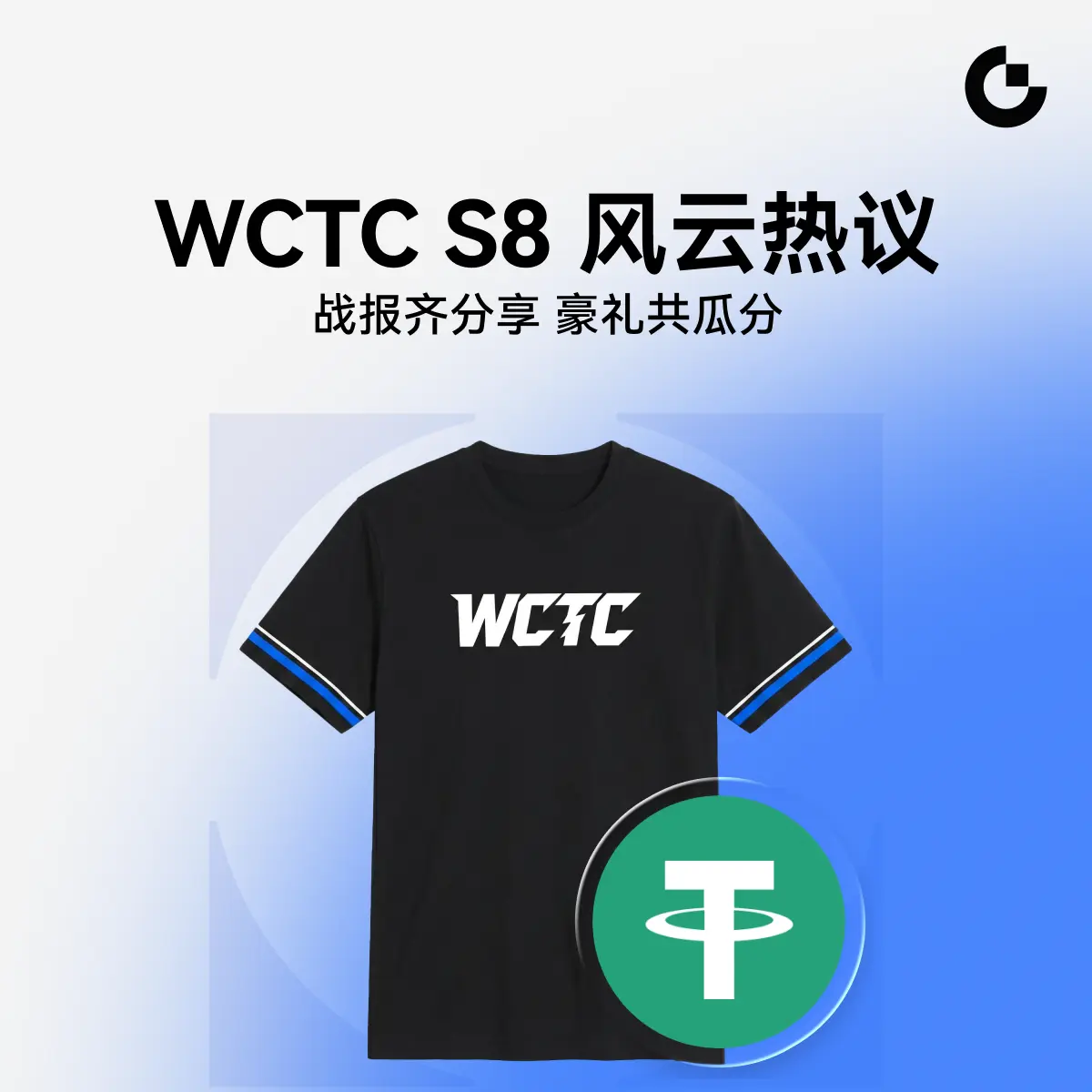
#WCTC交易王PK WCTC Competition Experience and Strategy Summary
1. Tournament Features
WCTC S8 is a global cryptocurrency trading competition hosted by Gate, with a total prize pool of up to 8 million USDT. The competition format includes:
1 Team Competition: Emphasizes collaboration and joint risk management
2 Individual Competition: Tests technical analysis and psychological resilience
3 1v1 Champion PK: A contest of speed and precise execution
4 Two-Stage System: Each stage lasts two weeks, with resets in between, giving participants a chance to adjust strategies
2. Core Compe
View Original
post-image
post-image
post-image
Ryakpanda
#WCTC交易王PK WCTC Competition Experience and Strategy Summary
1. Competition Format Features
WCTC S8 is a global cryptocurrency trading contest hosted by Gate, with a total prize pool of up to 8 million USDT. The competition format includes:
1 Team Competition: Emphasizes collaboration and joint risk management
2 Individual Competition: Tests technical analysis and psychological resilience
3 1v1 Champion PK: A contest of speed and precise execution
4 Two-Stage System: Each stage lasts two weeks, with a reset in the middle, giving participants a chance to adjust strategies
2. Core Competition Strategies
1. Focus on a single advantageous strategy
Top players all emphasize "one strategy, one asset, one cycle"
2 Avoid frequent strategy switching, focus on repeatable winning methods
For example: focus on breakout strategies, liquidity sweep + FVG entries, etc.
3 Aggressive risk management
The competition aims for percentage returns; conservative approaches struggle to place highly
Top players often experience 20-50% drawdowns before winning
It is recommended to risk 1-2% per trade, but can be moderately increased when opportunities are confirmed
4 Psychological discipline takes precedence over technical indicators
Avoid emotional trading (chasing gains, revenge trading, over-leverage)
5 Stay mentally clear, choose to observe when not in good condition
6 Keep a trading journal and conduct in-depth reviews of mistakes
3. Practical Skills
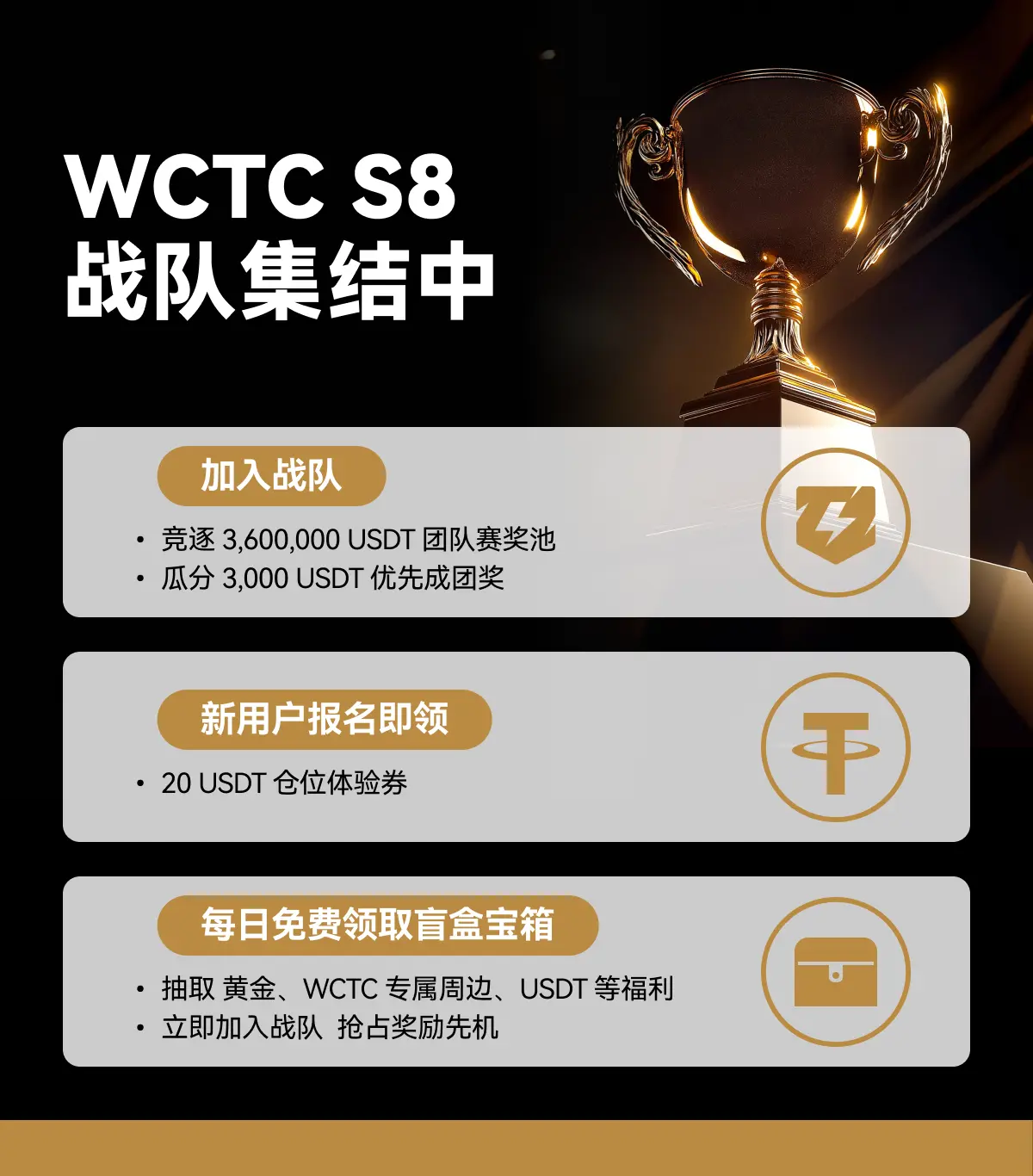
1 Early entry: The earlier you register, the more early bird rewards you can get (such as an 800k USDT prize pool share, 20 USDT experience coupons)
2 Build a team: The top 30 team leaders can receive a 3,000 USDT team prize pool
3 Trading volume target: Achieving 3,000 USDT trading volume weekly or inviting friends can earn extra rewards
4 Multi-asset allocation: Use spot, ETF, futures, and other tools to diversify strategies
4. Common Pitfalls
1 Strategy jumping: Frequently changing strategies is a major taboo for beginners
2 Overtrading: Emotion-driven overtrading quickly depletes capital
3 Ignoring review: Without systematic review, it’s hard to develop repeatable advantages; set daily/weekly maximum loss limits
5. Recommended Preparation Process
1. First verify strategy effectiveness on a demo account
2. Establish clear trading rules and entry conditions
3. Set daily/weekly maximum loss limits
4. Maintain regular routines during the competition, avoid fatigue trading
Risk warning: Trading competitions amplify the risk of losses. Only participate with funds you can afford to lose. Past performance does not guarantee future results.
repost-content-media
  • Reward
  • 18
  • Repost
  • Share
MrFlower_XingChen:
To The Moon 🌕
View More
#rsETH攻击事件后续进展 Is the old path of DeFi no longer viable? Behind the hundred-billion-dollar withdrawals: people are seeking more security
The security risks of DeFi have long gone beyond smart contract vulnerabilities. After major hacking attacks, the most common misconception is to attribute all incidents solely to smart contract code flaws.
The event where the Drift protocol lost about $285 million precisely proves that this view is outdated. Chain analysis firm Chainalysis revealed that the attack stemmed from permission abuse, administrator pre-signature operation vulnerabilities, false c
USDC0,02%
TRX0,41%
ETH-0,08%
View Original
post-image
post-image
  • Reward
  • 15
  • Repost
  • Share
MrFlower_XingChen:
To The Moon 🌕
View More
#ETH链Meme币FLORK拉升 Currently, the ETH chain is still supported and driven by ASTEROID, and the concept does not yet support large-scale development. This wave has only two possible directions: one is that Space Dog continues to break through, reaching an epic level with a market cap of over 1 billion. During this period, old projects are resurrecting every day, retail PVP is casually sipping soup, similar to the gameplay on BSC before.
The second is hoping for a new project to break through and break the deadlock, preferably one with ample room for derivatives to play a significant role, ful
ETH-0,08%
View Original
post-image
post-image
  • Reward
  • 17
  • Repost
  • Share
MrFlower_XingChen:
To The Moon 🌕
View More
#加密市场行情震荡 The crypto market is once again experiencing intense volatility! After previously hovering at high levels, Bitcoin officially dropped below the key threshold of $78,000 today. The short-term trend is unpredictable, with sharp price swings within 24 hours. Coupled with negative macroeconomic news, market panic is spreading. Both bulls and bears are facing a "double-sided squeeze," and a large-scale capital escape is underway.
First, here is the most direct real-time Bitcoin price data (as of the time of writing), with each set of data hitting the market's pain points:
24H high: $
BTC0,05%
View Original
post-image
post-image
  • Reward
  • 17
  • Repost
  • Share
MrFlower_XingChen:
To The Moon 🌕
View More
#美伊谈判陷入僵局 The confrontation between Iran and the U.S. directly triggered an epic global oil supply crisis, with alarming data:
Strait transportation plummeted: In early April, the average daily shipment was only 3.8 million barrels, an 81% drop from 20 million barrels in February, with some dates completely halted;
Global supply sharply decreased: In March, global oil supply fell to 97 million barrels per day, a decrease of 10.1 million barrels per day from the previous month, marking the largest single-month decline in history;
Exporting countries reducing production/stopping: Kuwait de
View Original
post-image
  • Reward
  • 14
  • Repost
  • Share
MasterChuTheOldDemonMasterChu:
Steadfast HODL💎
View More
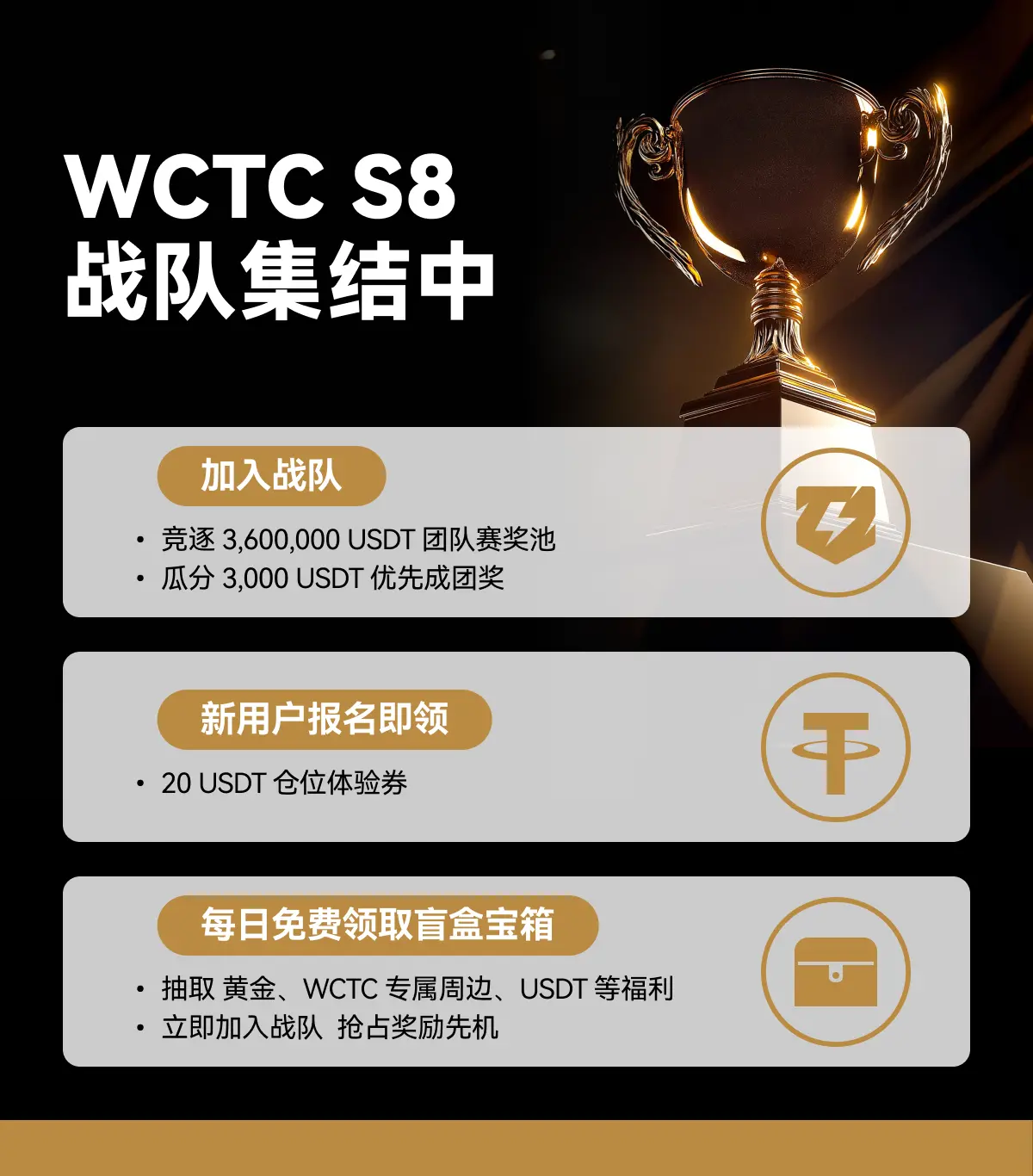
#WCTC交易赛瓜分800万USDT 🏆 WCTC S8 Team Competition Kicks Off
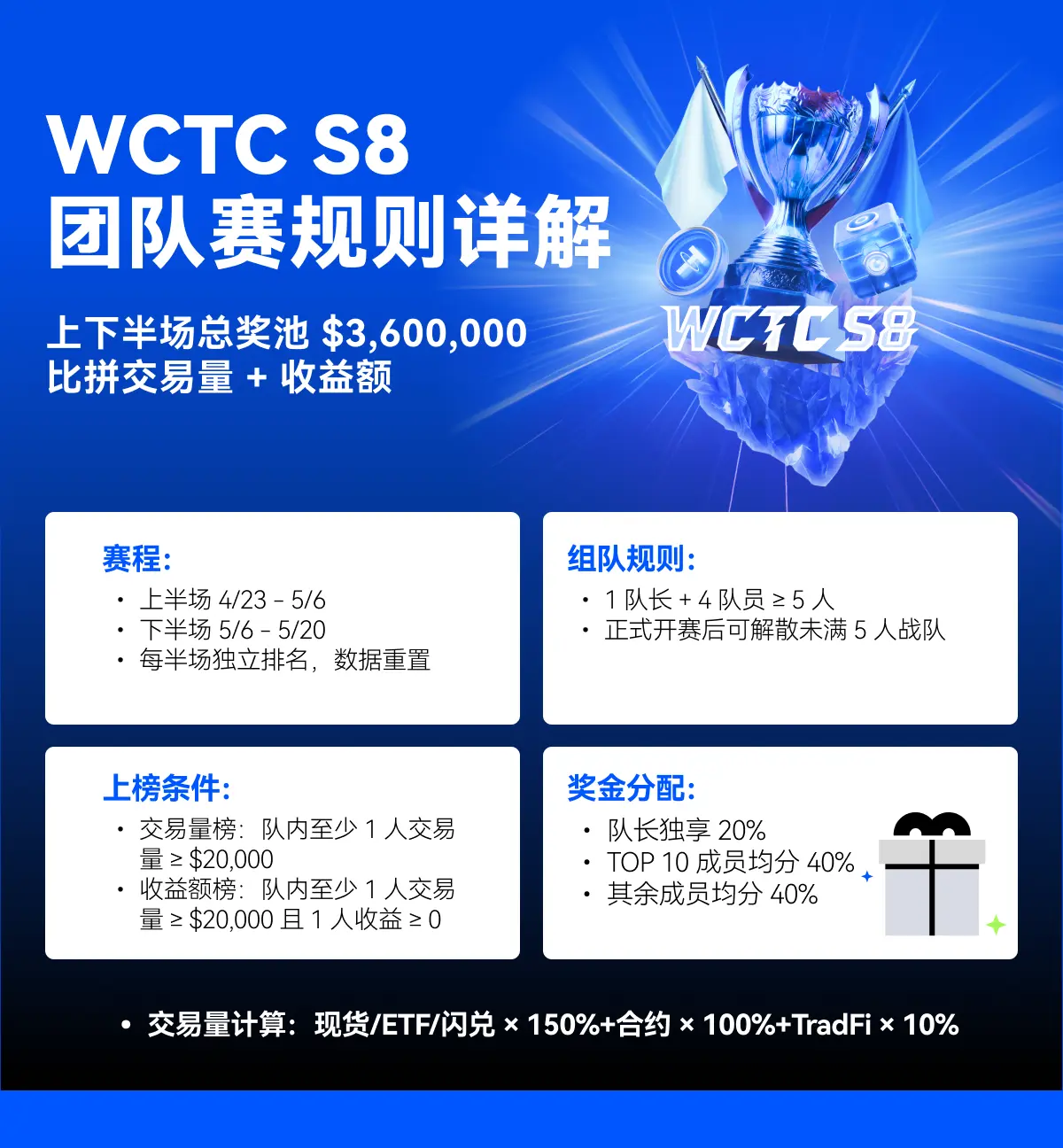
Highest prize pool of $3,600,000
⚔️ The game is divided into the first and second halves
📈 Compete in team trading volume + profit rankings
🔄 Each half has an independent ranking, data resets and continues to climb the leaderboard
👥 A team can be formed with 1 captain + 4 members
💰 Reward distribution
Captain gets 20% exclusive
Top 10 members share 40%
Remaining members share 40%
📍 A single person's trading volume within the team ≥ $20,000 can qualify for the leaderboard
Form a team now and aim for the top!
https://www.gate.co
View Original
post-image
  • Reward
  • 7
  • Repost
  • Share
MasterChuTheOldDemonMasterChu:
Just charge forward 👊
View More
#Arbitrum冻结KelpDAO黑客ETH Recently, the Arbitrum Security Council pulled off a major move—freezing 30,766 ETH stolen from KelpDAO, worth about $77 million.
At first glance, this looks like a good thing. The hacker’s funds are locked up, and victims’ prospects of getting their assets back are greatly improved. With law enforcement involvement and on-chain governance responses, a complete asset-recovery path is taking shape.
But flip this coin over, and the other side is chilling.
A chain’s security council can unilaterally freeze funds—what’s the difference from a bank freezing accounts?
ARB-1,99%
ETH-0,08%
View Original
Ryakpanda
#Arbitrum冻结KelpDAO黑客ETH Recently, the Arbitrum security committee pulled off a major feat—freezing the 30,766 ETH stolen from KelpDAO, worth about $77 million.
At first glance, this is a good thing. The hacker’s money is locked up, and victims’ hopes of getting their assets back are greatly boosted. Law enforcement intervention and on-chain governance responses are coming together—an entire asset-recovery path is taking shape.
But flip the coin, and the other side gives you chills down your spine.
A security committee of a single chain can freeze funds unilaterally. What’s the difference from a bank freezing accounts?
If they can freeze hackers today, can they freeze yours tomorrow? And if, in a decentralized on-chain system, there is an organization that can press the pause button at any time, then whose assets are those supposed to be—really?
Arbitrum is not the first to do this, and it certainly won’t be the last.
From Tornado Cash being sanctioned, to various cross-chain bridges being hacked and then the project teams jointly freezing USDT with Tether, to today’s Arbitrum security committee taking direct action—on-chain freezing is shifting from an extreme measure to a kind of standard operating procedure.
Supporters will say: This is a necessary move to protect users and crack down on crime. That’s right—$77 million isn’t a small amount. Victims may be ordinary users, and recovering assets is indeed gratifying.
But the voices of opponents can’t be ignored either: once the ability to freeze on-chain becomes the norm, what difference is left from traditional finance? Immutability, no need for trust, and resistance to censorship—Web3’s foundational pillars are being pulled out one by one.
When you rely on a chain that can be frozen, are you using the blockchain—or just a database wearing a Web3 costume?
From a market perspective, $ARB is bullish in the short term. Showing execution, giving users a sense of security, and even potentially attracting more institutions—after all, large holders like assets that can be recovered.
But in the long run, this is a serious hit to the decentralization narrative. Every successful instance of human intervention weakens blockchain’s most fundamental value proposition.
The real problem is actually just one:
If a chain can freeze money, then whose money is it, in the end?
Is it yours, or the committee’s? Is it the code’s, or the private-key holders of those few multisig wallets?
There is no standard answer to this question. Because the blockchain world is heading into an unanticipated crossroads: on one side are the real-world needs for regulation, security, and user protection; on the other side is an uncompromising belief in decentralization. Perhaps future public chains will fork into two camps: one that is “more secure” and more intervention-friendly, suited for institutions and large capital; the other that steadfastly maintains absolute resistance to censorship, suited for true believers.
repost-content-media
  • Reward
  • 6
  • Repost
  • Share
MasterChuTheOldDemonMasterChu:
Just charge forward 👊
View More
#美伊二轮谈判进展 The U.S.-Iran "pause button" has been pressed, but has the alarm been turned off?
As April progresses into late April, global markets are firmly focused on the Middle East. In the past 24 hours, dramatic and extreme tug-of-war headlines have emerged around the U.S.-Iran situation—Iran refused to attend negotiations, while Trump unilaterally extended the ceasefire. This "fight while talking" drama continues, and as investors, what we truly need to pay attention to is how this chess game will unfold next and how your account should respond.
1. Latest developments in the U.S.-Iran s
View Original
Ryakpanda
#美伊二轮谈判进展 The U.S.-Iran "pause button" has been pressed, but has the alarm been lifted?
As April progresses, global markets are firmly focused on the Middle East. In the past 24 hours, dramatic and extreme tug-of-war news has emerged around the U.S.-Iran situation—Iran refused to attend negotiations, while Trump unilaterally extended the ceasefire. This "fight while talking" drama continues, and as investors, what we truly need to pay attention to is how this chess game will unfold next and how your account should respond.
1. Latest developments in the U.S.-Iran situation: ceasefire extended, but the blockade remains.
The second round of U.S.-Iran talks scheduled for April 22 in Islamabad, Pakistan, was stalled due to Iran’s refusal to attend. Iran’s official news agency reported that Iran believes the U.S. is obstructing a substantive agreement, calling participation in negotiations a "waste of time." However, on the same day, U.S. President Trump announced that, at Pakistan’s request, he agreed to extend the U.S.-Iran ceasefire until Iran submits its proposal and consultations are completed. But this does not mean the situation has eased:
- Trump explicitly instructed the U.S. military to continue maritime blockade against Iran and maintain combat readiness
- Iran responded strongly: the Strait of Hormuz entrance and exit have been blocked, all navigation is under strict control of the Islamic Revolutionary Guard Corps Navy
- Iran publicly displayed ballistic missiles in Tehran, claiming to be fully prepared for renewed conflict
- IEA chief warned: the world is facing the most severe energy crisis in history
In one sentence: the ceasefire is just a "pause button," not a "stop button."
2. New variables in the tariff battlefield: $166 billion in refunds initiated!
Meanwhile, major changes are happening across the ocean in tariff policies. On April 20, U.S. Customs officially launched the refund process—this year in February, the U.S. Supreme Court ruled that Trump’s tariffs imposed under the International Emergency Economic Powers Act were overreach, requiring refunds. So far, about 56k importers have registered, involving approximately $127 billion in refunds. But don’t get too excited. Trump has announced plans to impose a new 10% tariff on imported goods under another law. More importantly, the U.S. Trade Representative has explicitly told Mexico that there will be no return to zero tariffs. For investors, this means: the uncertainty of U.S. trade policy will not disappear in the short term.
3. What market information should we focus on?
Faced with external uncertainties, many brokerages have given clear judgments:
Caitong Securities believes: "Although the two-week ceasefire between the U.S. and Iran is about to end, the market remains relatively optimistic about future Middle East developments, and major global equity markets are currently relatively stable."
Zhongyuan Securities points out: "Future Middle East conflicts may still recur, but the market has gradually become desensitized, and subsequent market pricing will gradually return to its fundamental logic."
Zhongtai Securities states: "In the medium term, the A-share market does not face systemic risks of sharp decline, but the probability of a 'fast bull' is low. It is recommended to 'control positions and prioritize structure.'"
Core conclusion: The marginal impact of geopolitical factors is waning, and A-shares are returning to their own rhythm.
Based on the above information, key dimensions to monitor:
1. The "dual variables" of the U.S.-Iran situation: ceasefire extended, but maritime blockade remains. Next, pay attention to two signals:
- Will Iran submit a "unified plan"? This determines whether negotiations can restart.
- Will the U.S. military continue intercepting Iranian ships? Any accidental conflict could break the fragile ceasefire.
2. Performance divergence during the intensive Q1 report disclosure period—April is peak season for quarterly reports.
Caitong Securities reminds: "As the deadline for financial report releases approaches, the risk of underperformance may increase, and capital behavior may become more cautious."
3. The "left hand refunds, right hand tariffs" of U.S. tariff policy—$166 billion in refunds has begun, but a 10% new tariff is also being pushed simultaneously. For export-related targets, closely monitor how policy changes impact them.
4. Changes in liquidity environment
Zhongtai Securities points out: "An environment of extremely abundant liquidity is not stable." Future focus should be on central bank operations and market interest rate changes.
Currently, the market is in a stage of "external disturbance attenuation and internal logic strengthening." The U.S.-Iran situation remains the biggest uncertainty. For investors, the most important thing now is not to guess "whether there will be war tomorrow," but: does your holdings have performance support? Can your judgment framework penetrate the noise? The market won't wait for you to clear all the clues before acting. But the more chaotic it is, the more you need to stay calm.
repost-content-media
  • Reward
  • 6
  • Repost
  • Share
MasterChuTheOldDemonMasterChu:
Just charge forward 👊
View More
#美伊二轮谈判进展 Ceasefire "God-level Prediction"? $430 million Precise Bet on Falling Oil Prices, Insider Trading Suspicion Rises Again
On April 22, U.S. President Trump announced the extension of the Iran ceasefire agreement just 15 minutes before the market saw a $430 million short position on crude oil, sparking strong suspicion of potential insider trading. Data shows this is the third time this month and the fourth time since the outbreak of conflict that a "precise timing" large transaction occurred before the release of major Middle East situation news:
On March 23, 15 minutes before Trum
View Original
Ryakpanda
#美伊二轮谈判进展 Ceasefire “God-Level Prediction”? $430 Million Precisely Timed Oil Price Drop Bet Sparks New Insider Trading Doubts
On April 22, just 15 minutes before U.S. President Trump announced the extension of the Iran ceasefire agreement, the market saw as much as $430 million in crude oil short bets, triggering strong outside doubts about potential insider trading. Data shows this is the third such time this month, and the fourth time since the outbreak of the conflict, that “precisely timed” large-scale trades appeared before major Middle East situation updates were released:
On March 23, about 15 minutes before Trump announced the postponement of strikes on Iran’s power facilities, around $500 million was bet on a decline in oil prices;
A few hours before the ceasefire agreement was made public on April 7, a $950 million short position was established in advance;
About 20 minutes before Iran announced the opening of the Strait of Hormuz on April 17, $760 million was bet on oil prices rebounding lower;
In total, the scale of similar transactions in April has reached about $2.1 billion. The repeated appearance of “precise trades timed for events” has led the market to begin focusing on the risks of information leakage and regulatory arbitrage.
Analysts say that, in a context of highly sensitive geopolitics, if such trading activities involve the flow of undisclosed information, they could seriously undermine market fairness.
repost-content-media
  • Reward
  • 4
  • Repost
  • Share
MrFlower_XingChen:
To The Moon 🌕
View More
  • Pin