CryptoSelf

vip
Market Analyst
On-chain Analyst
Diamond Hands
No content yet
Pin
XRP’s Strategic Position in Crypto Market Structure and Altcoin Cycles: An Algorithmic Perspective
Cryptocurrency markets are volatile systems shaped by Bitcoin dominance and cyclical altcoin expansions. This study analyzes XRP’s structural position within market architecture, focusing on its consensus mechanism, liquidity function, and potential role in altcoin rallies. It argues that XRP’s speed, cost efficiency, and intermediary use in cross-border payments position it not only as a speculative asset, but as a strategic liquidity catalyst.
XRP2,07%
BTC1,84%
Expand All
Last edited on 2026-02-28 11:03:15
  • Reward
  • 42
  • Repost
  • Share
Phatntomvip:
2026 GOGOGO 👊
View More
Thank you for the information and sharing 🌸🤍
View Original
Asiftahsinvip
ETH Technical Outlook: Ethereum Stabilizing Near Macro Base After Multi-Month Breakdown
Ethereum remains in a sustained corrective downtrend following rejection from the $4,900–$4,300 macro supply zone. After losing the 0.236 Fibonacci level ($2,502), price accelerated sharply to the downside and recently tapped the macro base near $1,745 (Fib 0).
ETH is now consolidating around $1,900–$2,000, attempting short-term stabilization, but higher-timeframe structure remains bearish unless key resistance levels are reclaimed.
EMA Structure (Bearish Alignment Persists)
20 EMA: $2,046
50 EMA: $2,359
100 EMA: $2,704
200 EMA: $2,985
Ethereum is trading below all major EMAs, confirming strong bearish alignment across short-, mid-, and long-term structure.
The $2,050–$2,360 zone (20 & 50 EMA cluster) now acts as immediate dynamic resistance.
As long as ETH remains below the 100 & 200 EMA cluster near $2,700–$3,000, upside remains capped and rallies are likely corrective.
Fibonacci & Market Structure
1.0 Fib (Cycle High): $4,953
0.786 Fib: $4,267
0.618 Fib: $3,728
0.5 Fib: $3,349
0.382 Fib: $2,970
0.236 Fib: $2,502
Fib 0 (Macro Base): $1,745
The decisive breakdown below $2,502 (0.236 Fib) confirmed structural weakness and continuation of the markdown phase.
Price has now reached the $1,745 macro base, representing the final major retracement support of the broader cycle advance.
Holding above this level keeps the possibility of longer-term accumulation alive. A confirmed breakdown below $1,745 would signal deeper structural risk.
RSI Momentum
RSI (14) is currently near 39, recovering slightly from oversold territory.
Momentum remains below the 50 midline, indicating bearish dominance despite short-term stabilization.
A sustained move above 50 RSI would be the first signal of improving momentum structure.
📊 Key Levels
Resistance
$2,046 (20 EMA)
$2,359–$2,502 (50 EMA + 0.236 Fib)
$2,970 (0.382 Fib)
Support
$1,900 (local range support)
$1,745 (macro cycle base)
Below $1,745 → structural breakdown risk
RSI: 39 — weak recovery
📌 Summary
Ethereum has completed a distribution → breakdown → markdown cycle from the macro highs and is now attempting consolidation near the $1,745 macro base.
While short-term stabilization is visible around $1,900–$2,000, the broader structure remains bearish below $2,500–$2,700.
Only a sustained reclaim of $2,359–$2,502 would begin shifting structure toward neutral. Until then, rallies are likely corrective within a broader downtrend, with $1,745 remaining the critical macro support to defend.
$ETH #CanBitcoinReclaim$70K?
repost-content-media
  • Reward
  • 19
  • Repost
  • Share
Repairvip:
2026 GOGOGO 👊
View More
Thanks 🌸🤍 for the information and sharing
View Original
MasterChuTheOldDemonMasterChuvip
#深度创作营
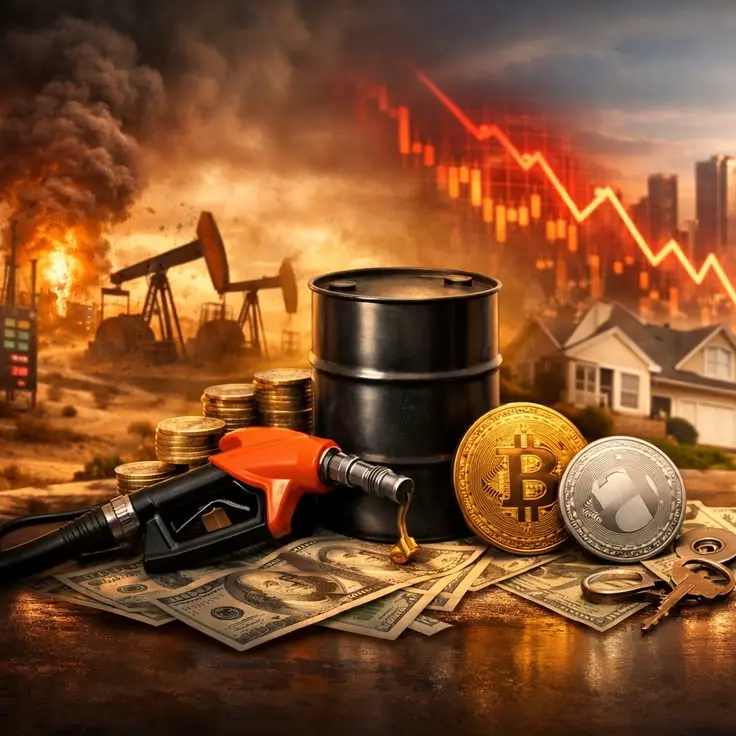
What is the impact of the US-Israel joint strike on Iran on the financial markets? How can we avoid having our wallets blown up?
The US and Israel are no longer pretending; they have officially launched a comprehensive joint military operation against Iran. The missiles weren’t very accurate, and while I was taking an afternoon nap, my account was blown to pieces... Now, Little Wealth God is here to talk about how this conflict affects the financial markets and how we should operate.
💣 First, let’s look at the latest developments in the US-Iran conflict according to the timeline:
February 27
The US government officially approved the evacuation of non-emergency personnel from the US mission in Israel and issued an emergency advisory urging them to leave as soon as possible. US Ambassador to Israel, Hekabi, even issued a stern warning: “If you need to leave, do so today.”
February 27
The Chinese Ministry of Foreign Affairs and Chinese embassies in Iran remind Chinese citizens to avoid traveling to Iran for the time being.
February 27
Trump stated he was “not satisfied” with the progress of Iran nuclear negotiations, “We don’t want to fight, but sometimes we have to.”
February 28 14:18
An explosion occurs in downtown Tehran, the capital of Iran.
February 28 14:20
Israel announces a “preemptive” strike on Iran.
February 28 14:39
An attack near the office of Iran’s Supreme Leader.
February 28 14:39
Israeli security officials say the attack on Iran is the result of joint US-Israel action.
February 28 14:50
US officials: The US airstrikes on Iran are ongoing.
Three hours ago
Israel is preparing for the first phase of a four-day joint strike.
Three hours ago
Explosions are heard in two western provinces of Iran.
Two hours ago
US officials: The US and Israel are launching a joint military operation against Iran.
Two hours ago
Iranian officials say they are preparing for a “destructive” retaliation.
Two hours ago
Seven missiles hit near the Iranian presidential palace and Khamenei’s residence.
Two hours ago
Israel announces its operation against Iran is called “Roaring Lion.”
Two hours ago
Israel orders the public to immediately enter shelters.
One hour ago
Multiple Iranian missiles attack Tel Aviv, Israel.
One hour ago
Trump states that after the war ends, he will take over the Iranian government.
One hour ago
Iran is hit by a third round of missile attacks.
51 minutes ago
The commander-in-chief of the Iranian army has died.
27 minutes ago
The US Navy base in Bahrain is attacked.
Summary: From the course of the conflict, it’s clear that the US and Israel are very determined in their strikes against Iran and have been prepared for a long time. In plain terms, they never intended to negotiate; they are ready to fight. Iran is not backing down either, retaliating against Israel. The conflict is already showing signs of evolving into a war. Trump’s statement about waiting for the war to end before considering Iran’s government also indicates that the US’s goal is to completely destroy the Iranian regime, possibly with ground troops later on. The conflict is unlikely to end soon and may even worsen. Currently, it’s a risk-avoidance phase, not the time to bottom-fish or deploy positions.
👉 Next, the possible directions of the conflict’s development:
To understand how this conflict might impact the financial markets, we first analyze several potential scenarios:
1. Full regional war (50% probability): The US-Israel coalition aims to overthrow the Iranian regime, launching a full-scale attack. Iran activates proxy armed groups, with Hezbollah in Lebanon, Houthi in Yemen, and others opening fire, spreading the war to neighboring countries.
2. US-Israel quick strike ending the war (40% probability): They target Iran’s leadership with precision strikes, quickly overthrow the regime through decapitation, and take control of the government, installing a new proxy government.
3. Short-term limited strikes (10% probability): After targeting key objectives, the US and Israel pull back, Iran restrains its retaliation, and international mediation leads to a ceasefire.
📈 Overview of the US-Iran war’s impact on financial markets:
1. Crude Oil Market: Short-term surge, long-term trend depends on conflict intensity.
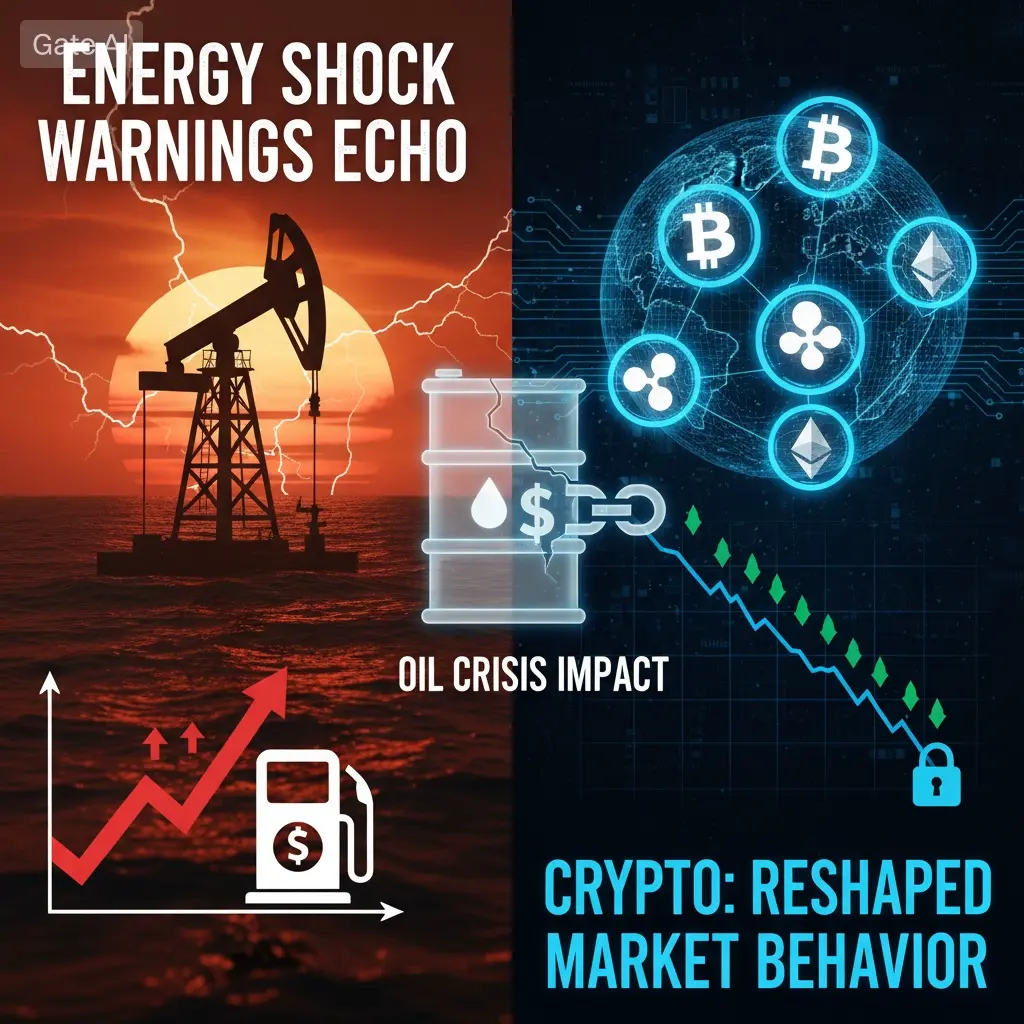
The Strait of Hormuz, controlled by Iran, accounts for about 30% of global oil shipping. News of the US-Israel joint attack caused a panic-driven surge in oil prices. As of 15:00 on February 28, Brent crude futures in London broke $95/barrel, up over 4%; WTI futures in New York rose over 3.8%; Shanghai crude futures main contracts increased over 4.2%.
Looking ahead, if the conflict remains a short-term limited strike, with the US and Israel pulling back after hitting core targets and Iran restraining retaliation, oil prices could rise 10%-30% in the short term, with Brent potentially reaching $85-$100 per barrel. If the conflict escalates, with Iran retaliating by attacking oil tankers or disrupting shipping, prices could quickly jump to $90-$105 per barrel, oscillating at high levels for 1-3 months. If Iran blocks the Strait of Hormuz, prices could spike 40%-60% within 24 hours, surpassing $120 per barrel, possibly hitting $150 in the short term. However, the market has buffers: the US Strategic Petroleum Reserve holds about 415 million barrels, which can be released within 13 days at a maximum rate of 4.4 million barrels per day; OPEC+ idle capacity, with Saudi Arabia and others, has initiated emergency production increases, possibly raising output by 137,000 barrels/day in April; US shale oil is also elastic—high prices will incentivize US shale producers to expand capacity, increasing daily output from 13.4 million to over 14 million barrels.
2. Gold and Silver Markets:
Gold, with its dual role as a geopolitical risk hedge and inflation hedge, will likely see a surge of capital inflows. Historical experience shows that military conflicts in the Middle East tend to push precious metals prices higher. During the escalation of the Iran conflict in June 2025, gold prices briefly broke $2,300 per ounce. This event again confirms the safe-haven value of precious metals amid geopolitical risks. Since the market is closed for gold trading over the weekend, a strong opening on Monday is expected, with gold and silver prices rising sharply.
3. Stock Markets:
War usually causes risk assets to plunge. Since global stock markets are closed for the weekend, they are expected to be broadly impacted upon opening Monday. Investors, worried about escalating geopolitical risks and a slowdown in global economic recovery, will likely sell risk assets. Sectors like airlines, tourism, consumer discretionary, and tech growth stocks will lead declines, while defensive sectors, energy, and military stocks may outperform.
4. Forex Market:
(1) US Dollar: Short-term strength, medium-term pressure.
In the short term, safe-haven capital flows into the dollar, pushing the US dollar index higher. As the world’s primary reserve currency, the dollar often acts as a safe haven during geopolitical tensions. However, in the medium term, high oil prices will boost global inflation, forcing the Federal Reserve into a dilemma: inflation may require maintaining high interest rates or resuming rate hikes, but high rates will increase fiscal pressure and weaken the dollar’s attractiveness. Additionally, the US fiscal deficit could negatively impact the dollar’s outlook.
(2) Euro/Pound: Significant weakening.
Europe relies heavily on Middle Eastern energy; soaring oil prices will exacerbate imported inflation, slow economic growth, and increase pressure on the European Central Bank to cut rates, leading to euro/pound depreciation. Europe’s economic recovery is already fragile, and rising energy prices due to geopolitical conflicts further dampen prospects. Investor confidence in the euro and pound declines, causing their exchange rates to weaken.
5. Cryptocurrency Market:
Recent divergence between gold and Bitcoin has already demonstrated the collapse of the “digital gold” narrative. We should view Bitcoin more as a risk asset, which will be heavily impacted by war. In fact, Bitcoin has already fallen sharply—once dropping below $63,000, with over 150,000 liquidations across the network. Currently, Bitcoin hovers around $64,000, with major players observing further developments in the conflict to decide the next move.
📊 Most importantly, our response strategies:
In the next few days, closely monitor the evolution of the war to determine our trading approach.
1. If it escalates into a full regional war:
a. Gold and Silver Markets — Perpetual Contract Arbitrage.
Go long across the board. Since the weekend traditional finance markets are closed, you can first operate on XAUT and XAG perpetual contracts, buying dips and preparing for a rally when markets reopen on Monday.
b. Forex and Oil Markets — Traditional Finance Long Positions.
Currently, Iran has not yet blocked the Strait of Hormuz. If the war continues to intensify, oil and the dollar will likely keep rising. Consider going long in traditional markets.
c. Bitcoin Market — Short contracts, buy spot near previous lows.
If the conflict worsens, prices may challenge previous lows around $59,900. You can short via contracts. For long-term holders, every dip is an opportunity to buy the dip—don’t worry too much about where the price will bottom; buying spot around $59,900 is advisable.
2. If the war ends with a quick strike or ceasefire through international mediation:
a. Gold and Silver — Short positions.
b. Forex and Oil — Short positions.
c. Cryptocurrency — Long positions, with stop-loss around $59,900.
💡 Position Management: Under extreme events like war, markets tend to deviate from technical analysis. The first priority is to ensure the safety of your wallet. Every war is a painful process of the old order collapsing and a new balance forming. We are already fortunate to survive in a country far from the war zone. Don’t always think about making every penny at every moment. “A cannon roar, gold flows like a river” is a privilege of the capital giants. In this global capital “Monopoly” game, for retail investors, surviving is more important than winning once.
repost-content-media
  • Reward
  • 21
  • Repost
  • Share
Repairvip:
2026 GOGOGO 👊
View More
Thanks 🌸🤍 for the information and sharing
View Original
MoonGirlvip
#95%ofAltsBelow200-daySMA #95%ofAltsBelow200-daySMA 📉📊
The data is clear: nearly 95% of altcoins are trading below their 200-day Simple Moving Average.
That’s not just weakness — that’s structural compression.
🔍 What This Means
📉 Trend Context
The 200-day SMA is a long-term trend indicator. When the majority of assets sit below it, the broader altcoin market is technically still in a macro downtrend.
🧊 Liquidity Drain
Capital is concentrated in BTC and a handful of majors. Risk appetite for mid- and low-cap alts remains limited.
⚖️ Rotation Phase
Historically, altcoins recover only after: 1️⃣ Bitcoin stabilizes
2️⃣ BTC dominance peaks
3️⃣ Liquidity expands across the board
We may be in the early stages of that transition — but confirmation isn’t here yet.
📊 Strategic View
When 90%+ of alts are below the 200-day SMA, two scenarios typically follow:
🔹 Continued consolidation and selective rallies
🔹 Or a sharp rotation if BTC breaks into strong momentum
Blindly buying every dip isn’t a strategy. Selective positioning and patience matter.
🧠 My Take
Extreme breadth weakness often appears near cycle transitions.
But until altcoins reclaim their 200-day averages with volume, this remains a structural caution zone.
Are you accumulating quality projects early, or waiting for full trend confirmation?
#Altcoins #CryptoMarket #MoonGirl
  • Reward
  • 15
  • Repost
  • Share
Repairvip:
LFG 🔥
View More
Thanks 🌸🤍 for the information and sharing
View Original
User_anyvip
#USIsraelStrikesIranBTCPlunges
Today, the US Central Command (CENTCOM) released footage of US and allied (particularly Israeli) air/missile strikes against Iran as part of Operation Epic Fury. This is part of a large-scale military operation launched on the orders of the US President.
CENTCOM's official statement reads:
"The President ordered bold action. CENTCOM forces are delivering an overwhelming and unrelenting blow."
The footage shows missiles launched from warships, fighter jets taking off from aircraft carriers, and strikes hitting Iranian targets (IRGC command centers, air defense systems, missile/drone launch sites, etc.). This is part of the ongoing conflict following the first wave of the US-Israeli joint operation, along with Iranian retaliatory attacks (US bases in Bahrain, Qatar, UAE, etc.). The situation is quite serious: hundreds of targets have been hit in Iran, Iran has retaliated by sending hundreds of missiles/drones to the region (most intercepted by US/Israeli defenses), there are casualties, and the conflict continues.
repost-content-media
  • Reward
  • 23
  • Repost
  • Share
Repairvip:
To The Moon 🌕
View More
bilgi ve paylaşım için teşekkürler 🌸🤍
Crypto_Buzz_with_Alexvip
#BitcoinBouncesBack
Bitcoin Bounces Back – Market Recovery in Motion
After recent volatility, Bitcoin has shown signs of recovery, bouncing back from short-term lows. Traders are observing renewed buying pressure, with key support levels holding firm and momentum indicators signaling potential stabilization. The rebound reflects both market resilience and renewed investor confidence in Bitcoin as a hedge during turbulent periods.
While volatility remains, this bounce suggests that buyers are stepping in, and technical analysts are monitoring levels for continuation or reversal patterns. Market participants are also keeping an eye on macroeconomic factors, regulatory news, and global risk sentiment that could influence Bitcoin’s trajectory.
Why this matters
Bitcoin’s bounce indicates potential short-term stabilization
Investor sentiment may improve, attracting renewed buying
Market liquidity and trading volume influence momentum
Technical analysis levels are critical for planning entries and exits
repost-content-media
  • Reward
  • 13
  • Repost
  • Share
CrypTenvip:
LFG 🔥
View More
Thank you for the information and sharing 🌸🤍
View Original
GateUser-68291371vip
#IsraelStrikesIranBTCPlunges
The escalation of the conflict in the Middle East has caused a sharp decline in the digital asset market. According to the analytics platform CoinGlass, the daily liquidation volume for cryptocurrency futures contracts exceeded $445 million, and forced position closures affected more than 135,000 traders.
Bitcoin and Ethereum experienced the greatest pressure. Following the first cryptocurrency, the overall market also declined: for several assets, the correction depth exceeded 8%.
The decline in prices negated recent recovery attempts and intensified the pressure that had been building in the market over the past month. Market participants are reducing risky positions amid fears of further conflict escalation.
Seeking Alpha analysts note that in the wake of explosions in Iran's capital, Tehran, investors traditionally shift capital into safe-haven assets, including gold. They estimate that in a prolonged conflict, Bitcoin's price could fall to $53 000.
Earlier, Bloomberg Intelligence senior commodity strategist Mike McGlone stated that Bitcoin could drop to the (000 mark this year.
  • Reward
  • 12
  • Repost
  • Share
ApexStarvip:
2026 GOGOGO 👊
View More
Thank you very much for the information and sharing. 🌸🤍
View Original
MasterChuTheOldDemonMasterChuvip
【Decisive Battle at 2000! Whale Accumulation Signal Has Appeared, Is This the Last Bus?】
Quick Market Overview: After a bloodbath on February 5th, ETH found support at the critical level $2000 and rebounded near $2050 . This is not only a technical defense line but also the ultimate battleground for bulls and bears!
🔥 Key Signal Analysis:
1. Smart Money Moves: On-chain confirmation shows whales are heavily accumulating around the $2000 level. Big players are starting to buy the dip—are you following?
2. Strong Rebound Momentum: Ethereum’s Beta is high; rebounds tend to be more vigorous than Bitcoin’s, making this the moment to verify.
3. Technical Oversold Recovery: Daily indicators have risen from extreme oversold zones, indicating short-term rebound demand.
🎯 Two possible outcomes, must choose one:
• Bullish Scenario: Stabilize above $2000 and break through $2100 with increased volume, confirming a short-term bottom, targeting above $2200 . Strategy: Enter with a small position at current prices, try long positions, and set a strict stop-loss below $1950.
• Bearish Scenario: Rebound falters, and if it drops below $2000 again, a new downtrend begins, directly testing the $1800–$1900 abyss. Strategy: Stop-loss immediately if it drops, avoid catching the falling knife.
💎 Core Conclusion:
Currently, the rebound is just a technical correction; the real trend signal is whether it can hold above $2100. We are at a critical decision point—either break through and chase the rally or fall below and run fast. The market waits for no one—don’t wait to pat yourself on the back after the price has already gone up!
⚠️ Reminder: The market is ever-changing; the above analysis is for reference only. Investment involves risks—please make independent decisions and strictly control your positions. #ETH$ETH #当前行情抄底还是观望?
repost-content-media
  • Reward
  • 22
  • Repost
  • Share
ApexStarvip:
LFG 🔥
View More
Thank you very much for the information and sharing. 🌸🤍
View Original
xxx40xxxvip
#DeepCreationCamp
🥇₿🔷 Three Assets, One Storm: Deep Analysis of Gold, Bitcoin & Ethereum | February 28, 2026 | #深度创作营
> We are at a historic breaking point. U.S.-Iran tensions have escalated, gold is hovering near record highs at $5,278, Bitcoin has fallen for five consecutive months, and Ethereum sits at a critical support level. These three assets are caught in the same storm — yet each is living a very different story.
🥇 GOLD: The Star Actor of the Fear Economy
Current Price Overview
Metric Value
Spot Price (Feb 28) $5,278/oz
April 2026 Futures $5,239/oz
January 2026 Peak $5,595/oz
1-Year Gain +$2,289 (+77%)
2025 Performance +65%
2024 Performance +28%
Gold beat the S&P 500 two consecutive years — while equities returned 25% and 18% in 2024 and 2025 respectively, gold delivered 28% and 65%. This back-to-back outperformance is rare in modern financial history. Global gold demand reached a record 5,002 tonnes in 2025, with total value surging 45% to $555 billion.
Five Layers Behind the Rally
1. Escalating U.S.-Iran Tensions: On February 28, geopolitical tensions between the U.S., Israel, and Iran intensified, triggering immediate safe-haven flows. The risk of the Strait of Hormuz closing threatens global oil supply while pushing inflation expectations higher. Gold is always among the first to respond to geopolitical shocks.
2. Stagflation Trap: January's Core PPI surprised to the upside at 3.6% year-over-year — the highest in 11 years. Producer inflation is rising while U.S. GDP growth sits at just 1.4%. This stagflation combination is gold's ideal environment: poor growth, high inflation.
3. Central Bank Buying: Central banks purchased 863 tonnes of gold in 2025, with 850 tonnes projected for 2026. Russia, China, and Middle Eastern central banks are diversifying away from dollar reserves, providing structural demand that floors the price.
4. Fed Uncertainty: Powell's term ends in May 2026. Trump's expected replacement is seen as more open to rate cuts. Both the rate-cut expectation and concerns about Fed independence are net bullish signals for gold.
5. Investor Demand: Gold ETFs saw 801 tonnes of inflows in 2025, while demand for gold bars and coins reached 1,374 tonnes. Retail and institutional investors are buying simultaneously.
Price Targets
Bank of America maintains a 12-month target of $6,000. JP Morgan is more aggressive, with analysts citing institutional and central bank demand sufficient to justify $6,300. LiteFinance's model range sits at $4,914–$5,719 for now, placing gold near the upper bound for monthly close.
Short-Term Risk: Profit-Taking
Month-end profit realization, particularly in India, created selling pressure. LiteFinance positions the price at $5,107–$5,208 for the March 2 opening. Short-term consolidation looks healthy; as long as tensions persist, a break below $5,000 looks unlikely.
₿ BITCOIN: Five Months of Losses, Institutional Accumulation
Current Price Overview
Metric Value
Spot Price (Feb 28) ~$65,054
24h Range $62,964 – $68,671
February Loss -14%
October 2025 ATH $126,296
Drawdown from ATH -50%
2026 YTD Loss -27%
Weekly Change +0.60%
Bitcoin reached its all-time high of $126,296 in October 2025, then closed the next five consecutive months in the red. February 2026 was one of the harshest — losing 14 points to retreat to the $65,000 zone.
Technical Picture: Under Pressure but Not Broken
Bitcoin's technical setup is bearish short-term but promising medium-to-long term.
Support levels: $62,687 is the strong floor. A daily close below it opens the door to $60,000. $67,400 is the first critical threshold for a recovery attempt.
Resistance levels: $68,300 is the near-term resistance; $69,490 is the next target. A sustained close above these levels would signal a possible short-term trend reversal.
RSI: Daily at 36.67 (neutral). Monthly at 28 — Extreme Oversold. This level has historically aligned with powerful long-term entry points.
EMA Structure: BTC is trading below all five major EMAs (10, 20, 50, 100, 200-day). Being below the 200-day EMA confirms macro bearish pressure — but the monthly RSI hitting 28 signals the selling may be overdone.
Historical Pattern: CoinPedia compares the current correction cycle to the 426–427-day bear markets of 2022 and 2023. If this cycle holds, the definitive bottom targets December 2026 — meaning current levels could already be inside the accumulation zone.
Where Does the Bitcoin Rainbow Chart Place Us?
The Rainbow Chart currently places Bitcoin firmly in the "BUY!" band: the $54,700–$73,700 range historically corresponds to the most optimal window for long-term accumulation. The $95,100 level marks the upper boundary of the "Accumulate" band — any price below it is considered cheap by historical standards.
The Institutional Side Hasn't Collapsed
While prices fell, institutional demand held firm. In the final three days of February, U.S. spot Bitcoin ETFs recorded $1.1 billion in net inflows — the strongest three-day accumulation in six weeks. The Fear & Greed Index sits at 14 (Extreme Fear), yet institutions are quietly buying. This divergence — retail fleeing while institutions accumulate — is historically one of the clearest early signals of an approaching bottom.
Scenarios
Bull case: BTC closes above $68,300 resistance, targeting $69,490 → $73,700. InvestingHaven maintains a structural long-term target of $180,000.
Bear case: A break below $62,687 opens $58,000–$60,000. If rising tensions trigger a fresh risk-off wave, this scenario could materialize in the short term.
Base case: Analytical model averages point to a $64,000–$67,000 range for late February — aligned with current price action.
🔷 ETHEREUM: Deepest Wound, Biggest Potential
Current Price Overview
Metric Value
Spot Price (Feb 28) ~$1,897 – $1,960
August 2025 ATH $4,951
Drawdown from ATH -62%
Early January 2026 ~$3,120
Daily RSI 37–44 (Neutral / near Oversold)
Market Cap ~$233–245 billion
Ethereum is the hardest hit of this cycle. After reaching its all-time high of $4,951 in August 2025, it lost 62% of its value in just six months, retreating to the $1,820–$1,900 band. While Bitcoin's peak-to-trough move is 50%, Ethereum's is 62% — altcoins always fall deeper.
Technical Picture: Technically Damaged, Fundamentally Sound
EMA Structure — All Signals Bearish:
EMA Level
20 EMA $2,221
50 EMA $2,581
100 EMA $2,888
200 EMA $3,104
ETH is trading below all five key EMAs. However, a slight bullish MACD crossover is beginning to form — though both lines remain below zero, this could be an early sign of momentum recovery.
Bollinger Band Position: ETH is trading near the lower band ($1,840). This positioning has historically set the stage for technical bounces.
Key Levels:
Strong support: $1,822 (immediate), $1,764 (deeper)
Critical resistance: $1,991, $2,103
$2,000 psychological level: The short-term trend inflection point
A large green candle of +6% from the $1,800 zone on February 25 showed buyers responding aggressively at critical support. However, the $2,100–$2,200 zone is now a heavy resistance ceiling — calling for a structural recovery before that clears is premature.
What Sets Ethereum Apart: The Fundamental Story Remains Intact
Vitalik Buterin's Roadmap: The Ethereum Foundation announced a detailed upgrade schedule of six hard forks through the end of 2029, implemented every six months. These upgrades are designed to fundamentally improve network performance — a strong signal for long-term value.
DeFi Dominance: The vast majority of total value locked (TVL) across the crypto ecosystem remains concentrated on Ethereum and its Layer-2 solutions. A significant share of stablecoin transactions, tokenized assets, and institutional DeFi flows run on Ethereum.
Staking Economy: Staking activity tightens the liquid supply of ETH. The Pectra protocol upgrade improved staking efficiency, partially offsetting supply pressure alongside institutional ETF inflows.
Institutional ETF: Ethereum ETFs continue to attract institutional interest, with periodic inflows from BlackRock and Fidelity-based products.
Scenario Analysis
Short term (1–4 weeks): First target $1,950–$2,000. Bollinger lower band proximity and oversold conditions set the stage for a technical bounce; however, if the broader market stays risk-off, this potential could be delayed.
Medium term (1–3 months): A break above $2,100–$2,200 opens the March target to the $2,268–$2,300 band. CoinCodex models a 13.88% gain over 30 days to $2,198.
Long term (end of 2026): Consensus estimates cluster in the $3,500–$6,200 range, driven by Ethereum's upgrade timeline, Layer-2 growth, and institutional adoption.
⚖️ COMPARING ALL THREE: What Is Each Asset Saying?
GOLD BITCOIN ETHEREUM
Current Price $5,278 ~$65,054 ~$1,897
Distance from ATH -6% -50% -62%
2025 Annual Return +65% -27% YTD ~-60%
Fear Indicator Safe Haven ✅ Extreme Fear 😱 Extreme Fear 😱
Short-Term Signal Neutral/Bullish Neutral/Bearish Neutral/Bearish
Long-Term Target $6,000–$6,300 $120,000–$180,000 $3,500–$6,200
Key Catalyst Geopolitics + Inflation ETF + Cycle Bottom Network Upgrade + DeFi
This table makes it clear how differently these three assets are trading even within the same storm. Gold is the short-term winner of the war economy. Bitcoin is a cyclical bottom candidate backed by institutional conviction. Ethereum carries the deepest technical damage but defends its long-term network value with the strongest arguments.
Critical Relationship: The Gold-Bitcoin Correlation Has Broken
Normally, Bitcoin moves in partial correlation with gold. That relationship has now decoupled. As gold climbed above $5,000 on rising tensions, Bitcoin fell nearly 5%. This divergence may persist in the short term. However, if the tension-driven economy begins to erode confidence in the dollar — especially if the new Fed chair pivots dovish after May 2026 — Bitcoin could re-converge with gold. Historically, prolonged distrust environments have strengthened Bitcoin; that dynamic played out clearly during the COVID months of 2020.
🧭 Conclusion: Which Asset for Which Investor?
"I want protection, not risk": Gold. The unambiguous winner on the geopolitical risk and inflation axis. The $5,000–$5,278 floor looks solid; the $6,000+ target is banking consensus.
"I'm looking for a cyclical bottom and I'm patient": Bitcoin. Institutional accumulation is ongoing, RSI signals extreme oversold, and ETF inflows are strengthening. Don't expect a big move until structural risk-off fades, but the long-term accumulation case is growing stronger.
"High risk, high potential, I believe in the technology": Ethereum. The deepest drawdown, the most ambitious network upgrade roadmap, the largest DeFi ecosystem. The $1,800–$1,900 zone is a level history won't let you ignore — but patience is required in the short term.
One unified message spans all three assets: The market is in extreme fear, institutions are accumulating, and retail is fleeing. History has validated this dynamic time and again.
This content is not financial advice. All investment decisions should be based on your own research and risk tolerance.
repost-content-media
  • Reward
  • 33
  • Repost
  • Share
SatoshiGhostvip:
2026 GOGOGO 👊
View More
Thank you very much for the information and sharing. 🌸🤍
View Original
User_anyvip
#DeepCreationCamp
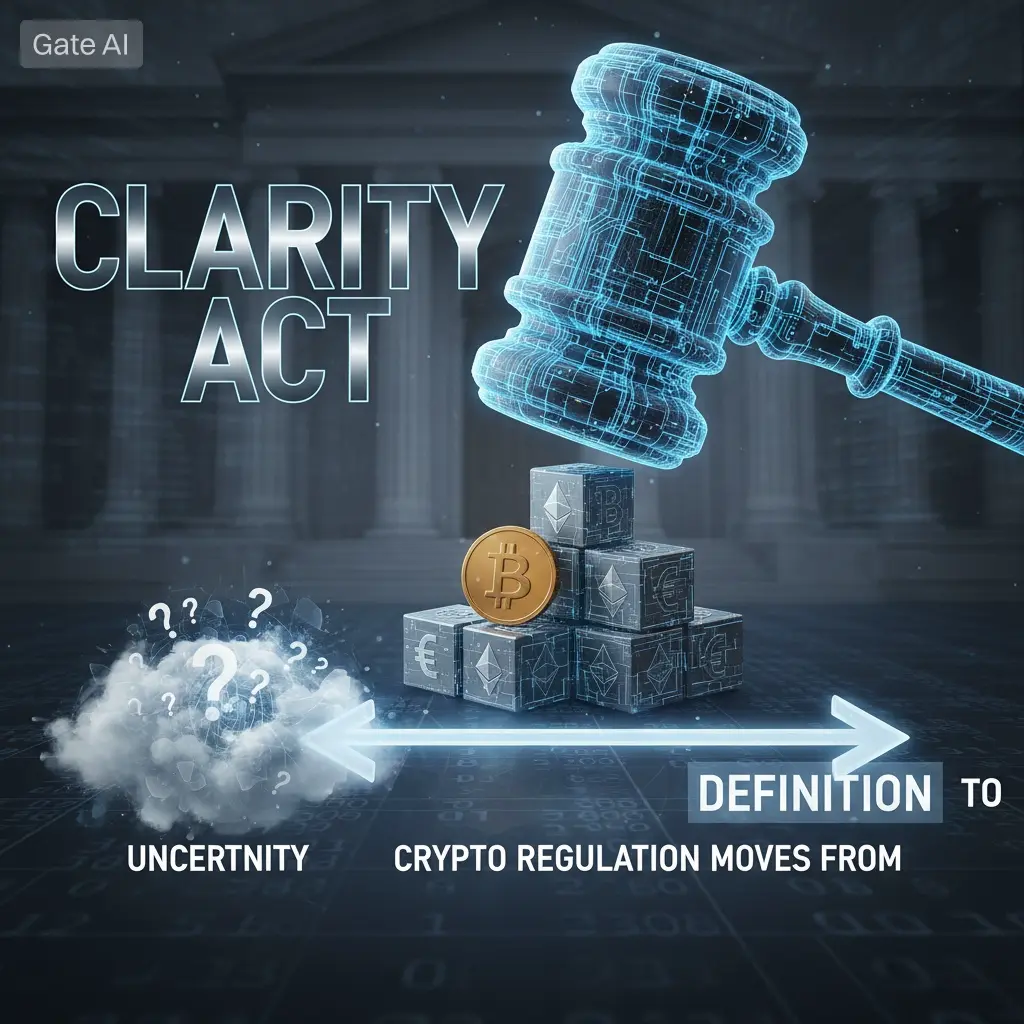
Hello friends. In today's article, I will be discussing the evolution of crypto regulations and my thoughts on their impact on individual investors, exchanges, and cryptocurrencies, specifically BTC. Thank you in advance for taking the time to read.
The cryptocurrency market is entering a new era in 2026 with the maturation of regulations. SEC guidelines and Clarity Act discussions in the US, the full implementation of MiCA in Europe, and strict approaches from countries like China, India, and Russia directly affect individual investors, exchanges, and major assets like Bitcoin (BTC). In this article, I will analyze the positive and negative aspects of these regulations, based on market logic. I will also share my own trading experiences. For example, I will share practical insights such as investors turning to offshore exchanges in India due to the TDS burden in 2025. My aim is to offer investors strategies for managing risks, because while regulations bring clarity, they can also create new obstacles.
First, let's look at the US. The SEC released FAQs in 2026 encouraging crypto adoption: increasing capital efficiency by reducing stablecoin haircuts for broker-dealers to 2%. While the Clarity Act passed the House, it's experiencing bottlenecks and delays in the Senate regarding stablecoin yields, aiming to constrain the SEC by transferring most digital assets to the CFTC. In my view, the positive effects are clarity, accelerating institutional entry; for example, new rules for tokenized securities are expanding BTC ETFs, increasing liquidity. My personal experience: I achieved a 15% return on a portfolio in 2024 thanks to the SEC's tokenized asset guidelines, as I was able to bypass traditional intermediaries. The negative aspects I find are the restriction of stablecoin rewards, pushing retail investors towards low-yield products; also, the GENIUS Act is placing heavy burdens on issuers, potentially consolidating smaller exchanges. These developments support the price of BTC with a more capital-friendly environment, while increased enforcement could trigger volatility.
In Europe, MiCA fully came into effect at the end of 2024 and is enforcement-focused in 2026. It stands out with licensing for stablecoin issuers, investor protection through transparent disclosures, reserve requirements, and AML integration. Positive effects include facilitating cross-border operations. 102 CASPs are registered, increasing trust. It offers a safer environment for individual investors: for example, MiCA's market abuse controls protect investors from a flash loan attack in 2025, similarly mitigating risks. For exchanges, standardization strengthens large players, such as bank integrations, increasing TVL (TVL) in this environment of trust. Negative aspects include high compliance costs (KYC, reserves), which could drive smaller firms out of the market. In particular, tax reporting with DAC8 erodes investor privacy. More liquid markets are positive for BTC and cryptocurrencies, but strict regulations can slow speculative trading, potentially limiting growth potential while stabilizing price fluctuations.
Now let's turn to economies like China, India, and Russia, which are critical in terms of regulation. For example, in China, Ban 2.0 (February 2026) banned stablecoins and RWAs, making crypto trading illegal. This decision, with its CBDC focus, could indirectly increase global stablecoin demand; however, it creates offshore opportunities for individual investors. Local access restrictions and mining pressure are lowering the BTC hash rate. The clearest example of this is the 5% drop in BTC in 2025 due to Chinese miner sales. Exchanges are fleeing to offshore markets, fragmenting liquidity. In India, Budget, while maintaining a 30% gains tax and 1% TDS in 2026, introduced penalties for misreporting. FIU-IND blocked foreign exchanges and tightened KYC. As a result, regulated access is positive for BTC and cryptocurrencies, but penalties deter speculative trading. In Russia, a new law (July 2026) sets a $4,000 annual limit for retail investors, unlimited for qualified individuals. Locally licensed exchanges are mandatory, while payments are prohibited. On the positive side, legalization increases investor access; post-test trading is possible for liquid assets like BTC. On the negative side, the limits restrict retail participation, and foreign exchanges are blocked. This could slow down the hash rate increase I foresee with the legalization of mining in Russia in 2025. From an exchange perspective, there's local consolidation, but the bans on anonymous coins are reducing diversity.
Ultimately, these regulations are attracting institutional capital by bringing clarity. I expect BTC to surpass $100,000 in 2026 because friendly environments in the US and Europe will prevail. However, high costs, access restrictions, and privacy erosion are pushing individual investors towards passive strategies. My methodology is to use regulated exchanges.Yes, friends, please share your thoughts and opinions in the comments about the regulations in your countries and how these regulations are shaping your investments. You can also share your thoughts using the hashtag #深度创作营 if you wish.
repost-content-media
  • Reward
  • 18
  • Repost
  • Share
MoonChaservip:
Ape In 🚀
View More
Thank you very much for the information and sharing, baby 🤍🤍
View Original
Discoveryvip
Ethereum is More Than Just a "Coin," It’s a Massive City: A Deep Dive into the Ecosystem
​Hey everyone! Today, I want to talk to you a bit about Ethereum but not just about "where the price is going." Let's take a closer look at what's happening behind the scenes, in that massive ecosystem. We always hear the term "Ethereum ecosystem," but it’s not just a network; it’s a digital world, almost like a giant city.
​Why Ethereum?
There are thousands of projects out there, but why does Ethereum stand out? Because this is the homeland of smart contracts. If Bitcoin is gold, Ethereum is the massive infrastructure where that gold is processed, where banks are built, and where games are played.
​What’s happening in the ecosystem right now? Let me summarize a few key points:
​The Layer 2 Situation (Speed and Low Costs): We used to say, "Ethereum is too slow, gas fees are too expensive," right? Well, Layer 2 solutions came to the rescue. Networks like Arbitrum, Optimism, and Base take Ethereum's security and handle transactions at lightning speed for just pennies. If you're going to make a transaction today, using these "highways" instead of getting bogged down on the mainnet is much more logical.
​DeFi : Taking out a loan without going to a bank? Or locking up your tokens to earn interest? Giants like Uniswap or Aave are still the backbone of the ecosystem. You have total control over your money no middlemen, no managers.
​The Restaking Storm: Lately, we’ve seen the rise of "Restaking" with EigenLayer. You stake your ETH to secure the network, and then you use that same asset again in other protocols. Yield on top of yield!
​So, where are we headed?
Ethereum is no longer a clunky structure. With the "Dencun" upgrade, costs for rollups have plummeted. This means that in the future, we won't even feel that the applications we use are running on Ethereum. Everything will be much more fluid.
​To be honest, I’ve pretty much stopped doing transactions on the Mainnet lately. I usually keep my portfolio on Arbitrum because transactions are confirmed in seconds and the commission I pay isn't even worth a piece of gum. Being able to buy into Ethereum's security this cheaply is, in my opinion, the ecosystem's greatest achievement.
​Friends, there’s a lot of noise in crypto, but Ethereum is the most stable voice in that noise. As the ecosystem grows, we see more clearly that ETH isn't just an asset it’s the fuel of this new internet. Don’t forget to do your own research (DYOR), but definitely keep an eye on this "city"!
#深度创作营
#DeepDiveCreatorCamp
repost-content-media
  • Reward
  • 20
  • Repost
  • Share
SatoshiGhostvip:
2026 GOGOGO 👊
View More
As 2026 unfolds under the vibrant energy of the Year of the Horse, Gate.io has once again turned cultural tradition into a powerful engine for community growth and digital participation. Their Lunar New Year campaign on Gate Plaza masterfully reimagines the ancient custom of hongbao — the giving of red envelopes filled with good fortune — as a large-scale, interactive token distribution event.
At the heart of the promotion lies the **$50,000 Red Envelope Rain**, a mechanism that rewards spontaneous engagement: users who create and share posts on the Gate Plaza feed can claim portions of the pr
GT0,14%
post-image
  • Reward
  • 23
  • 1
  • Share
Phatntomvip:
2026 GOGOGO 👊
View More
Gate.io's Gate Square platform has launched the **"$50,000 Red Packet Rain"** campaign, a major community event organized to celebrate the 2026 New Year, especially as the Lunar New Year approaches. This event offers a fun and engaging way for users to earn crypto rewards by simply sharing content. The campaign runs from February 9, 2026, 10:00 AM to February 23, 2026, 4:00 PM UTC and features a total prize pool of **$50,000**.
Gate Square functions as Gate.io's social media-like section, where users can share their crypto opinions, analyses, or entertaining content. The campaign is designed p
GT0,14%
post-image
  • Reward
  • 24
  • 2
  • Share
Phatntomvip:
2026 GOGOGO 👊
View More
**Gate Square: The Storm of Red Envelopes – 2026 Lunar New Year Epic**
In the dead of night, the sky cracks open and a crimson storm erupts.
This isn’t ordinary rain.
Every drop is a red envelope: packed with GT tokens, Position Vouchers, and pure luck itself.
A total whirlwind worth **50,000 dollars** swirls above Gate Square.
You are the hero of this epic.
Your weapon is your keyboard, your armor is your original words.
The rules are harsh but fair:
**The Envelope Storm**
Enter Gate Square.
Speak about crypto, the chaos of markets, or the fire of a new year – but make it yours,
GT0,14%
post-image
  • Reward
  • 17
  • 1
  • Share
Phatntomvip:
2026 GOGOGO 👊
View More
#我在Gate广场过新年
In the 2026 Year of the Fire Horse, “Get Rich Fast with Horse Power” has become more than a motto for me – it’s my life philosophy. 🐎⚡
This zodiac energy fills the year: bold moves, quick decisions, and unexpected surges… I fit this profile perfectly. With years of accumulated experience, the resilience I’ve built through market ups and downs, and my ability to spot opportunities on platforms like Gate, I see my wealth score as 8888/10000. Why so high? Because 8 is the symbol of abundance, prosperity, and infinite flow; my strategies are designed to grow in exactly the same comp
post-image
  • Reward
  • 22
  • Repost
  • Share
Phatntomvip:
To The Moon 🌕
View More
Every Story Fuels the Red Packet Rain! 🐎🧧
Today’s crypto headlines are electric, and Gate Square is the perfect arena to discuss them all. Below, each major story gets its own spotlight—with a direct call to jump in, post your take, and let the $50,000 Red Packets Giveaway rain down on you.
1. Gate Founder Dr. Han Delivers a Visionary Keynote on AI + Web3 at Consensus HK
Gate.io Founder & CEO Dr. Han took center stage at Consensus Hong Kong 2026 and painted a compelling picture of the future: TradFi, Web3, and AI are converging into one powerful ecosystem. “AI is evolving digital assets from
GT0,14%
post-image
  • Reward
  • 14
  • Repost
  • Share
Phatntomvip:
To The Moon 🌕
View More
Kick Off New Year of with a Big Win on Gate Square!
$50,000 Red Packet Rain Is Here
Catch your first New Year fortune — just post to win!
👉 https://www.gate.com/campaigns/4044
Three New Year rewards await:
1️⃣ $50,000 Red Packet Rain: New users win 100%. Up to 28 GT per post
2️⃣ New Year Lucky Winner: Post with #CelebratingNewYearOnGateSquare to win 50 GT + New Year gift box
3️⃣ Creator Leaderboard: Compete for Inter Milan jerseys, Red Bull co-branded jackets and more
📅 Feb 9, 09:00 – Feb 23, 16:00 UTC
📌 Web is live. App users, please update to version 8.8.0+ to participate
Details: http
GT0,14%
post-image
  • Reward
  • 15
  • Repost
  • Share
Cryptobladevip:
LFG 🔥
View More
#CelebratingNewYearOnGateSquare
🐎 The Year of the Horse kicks off with a winning streak, Gate Plaza wishes you a Happy New Year in advance!
$50,000 Red Envelope Rain Descends on Gate Plaza!
The first wave of wealth in the New Year, just by posting!
👉 https://www.gate.com/campaigns/4044
Three new year benefits waiting for you to grab:
1️⃣ $50,000 Red Envelope Rain: Post to receive, 100% chance for new users to win, up to 28 GT per post
2️⃣ Year of the Horse Lucky Fish: Post with #我在Gate广场过新年 to enter a draw for 1 person to win 50 GT + Spring Festival gift box
3️⃣ Creator Leaderboard Contest
GT0,14%
post-image
  • Reward
  • 13
  • Repost
  • Share
Cryptobladevip:
LFG 🔥
View More
#CelebratingNewYearOnGateSquare **Celebrating New Year on Gate Square: We're Turning Up the New Year at Gate Square! 🧧🎆**
Hello, Gate Square team! We are officially welcoming 2026 in a mystical party atmosphere with the ongoing #CelebratingNewYearOnGateSquare event. Dragons in the sky, red envelopes raining down, prizes flying through the air – this is not an ordinary campaign, but a festival where creativity and energy turn into rewards!
Quick summary and how to dominate:
- **Red Packet Rain ($50,000 pool)**: Randomly triggered by each original post. If you're new, your first New Year post
GT0,14%
MEME-2,85%
post-image
  • Reward
  • 26
  • Repost
  • Share
Cryptobladevip:
LFG 🔥
View More
**Walsh Says To Cautiously Shrink Balance Sheet: Fed's Next Moves in Focus**
Hey Gate Square fam! Let's break down this one: #WalshSaysToCautiouslyShrinkBalanceSheet
John Walsh (assuming this refers to a prominent Fed voice or economist in the 2026 context – often these snippets come from FOMC minutes, speeches, or interviews) has been signaling that the Federal Reserve should proceed **very carefully** with further balance sheet reduction (quantitative tightening / QT). Here's the key context and why crypto traders are watching this closely:
- **Current situation (early 2026)**: The Fed's bal
BTC1,84%
ETH2%
post-image
  • Reward
  • 22
  • Repost
  • Share
kinghtridervip:
To The Moon 🌕
View More
**White House Talks on Stablecoin Yields: What It Means for Crypto in 2026**
Hey Gate Square crew! Let's dive into one of the hottest macro topics right now: #WhiteHouseTalksStablecoinYields.
As of early 2026, the U.S. administration has been holding closed-door discussions (and some public hints) about regulating stablecoin issuers and – more controversially – whether stablecoins should be allowed to offer yields to holders. Think Tether, USDC, DAI, but with interest-bearing versions like tokenized Treasuries or on-chain savings accounts.
Here's the quick breakdown of what's being talked abou
USDC0,01%
DAI-0,05%
PYUSD-0,04%
post-image
  • Reward
  • 28
  • Repost
  • Share
kinghtridervip:
2026 GOGOGO 👊
View More
  • Pin

Trade Crypto Anywhere Anytime
qrCode
Scan to download Gate App
Community
  • 简体中文
  • English
  • Tiếng Việt
  • 繁體中文
  • Español
  • Русский
  • Français (Afrique)
  • Português (Portugal)
  • Bahasa Indonesia
  • 日本語
  • بالعربية
  • Українська
  • Português (Brasil)