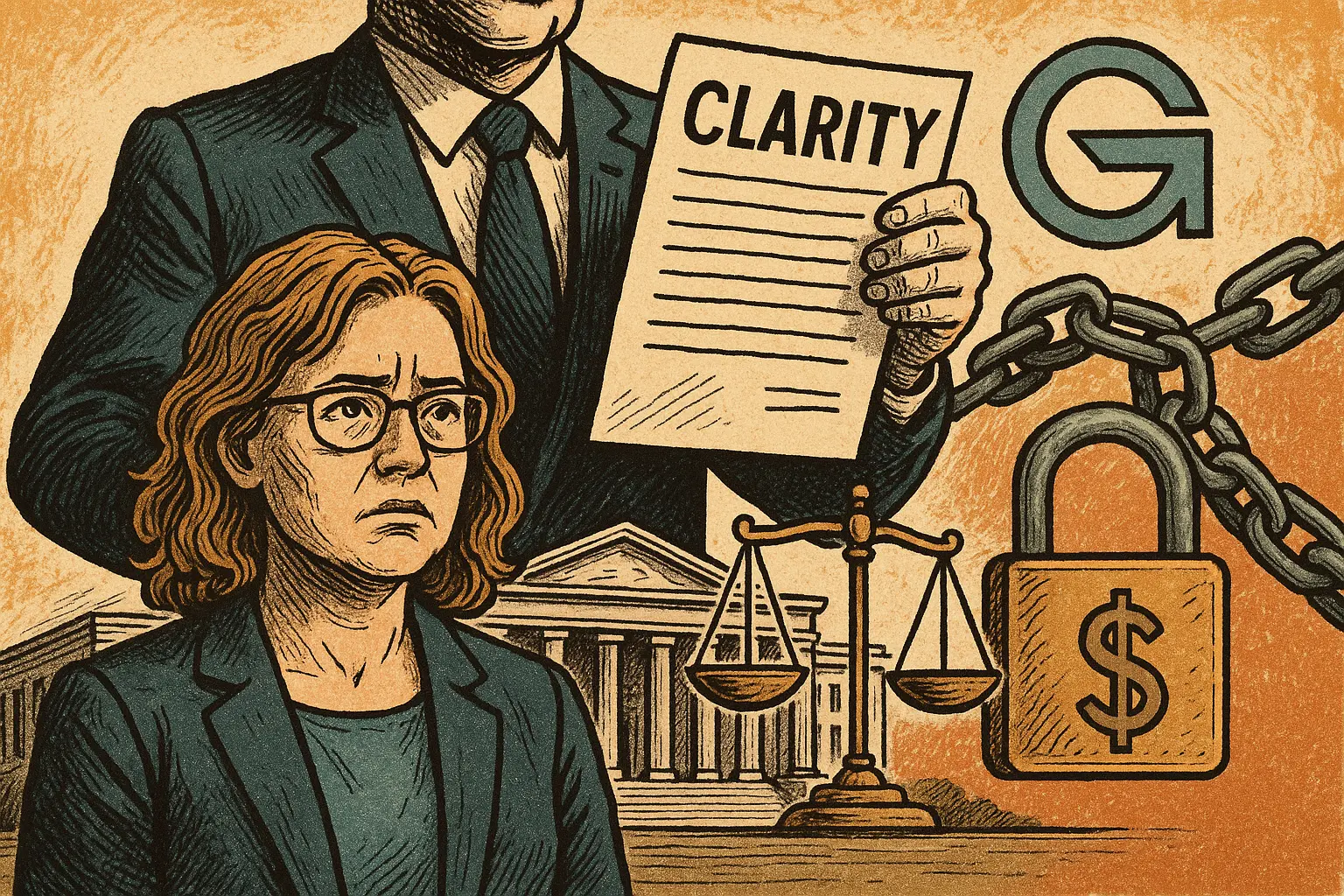
Gnosis co-founder and blockchain protocol pioneer Dr. Friederike Ernst stated that the regulatory provisions in the “Digital Asset Market Structure Clarity Act” (CLARITY Act), currently under congressional review, presuppose that all cryptocurrency trading activities must be conducted through centralized intermediaries. This could enable a few deeply entrenched large financial institutions to control the core channels of the entire crypto market, which contradicts the fundamental spirit of blockchain technology.
Ernst’s Core Criticism: From Stakeholders to Rent-Seeking Customers
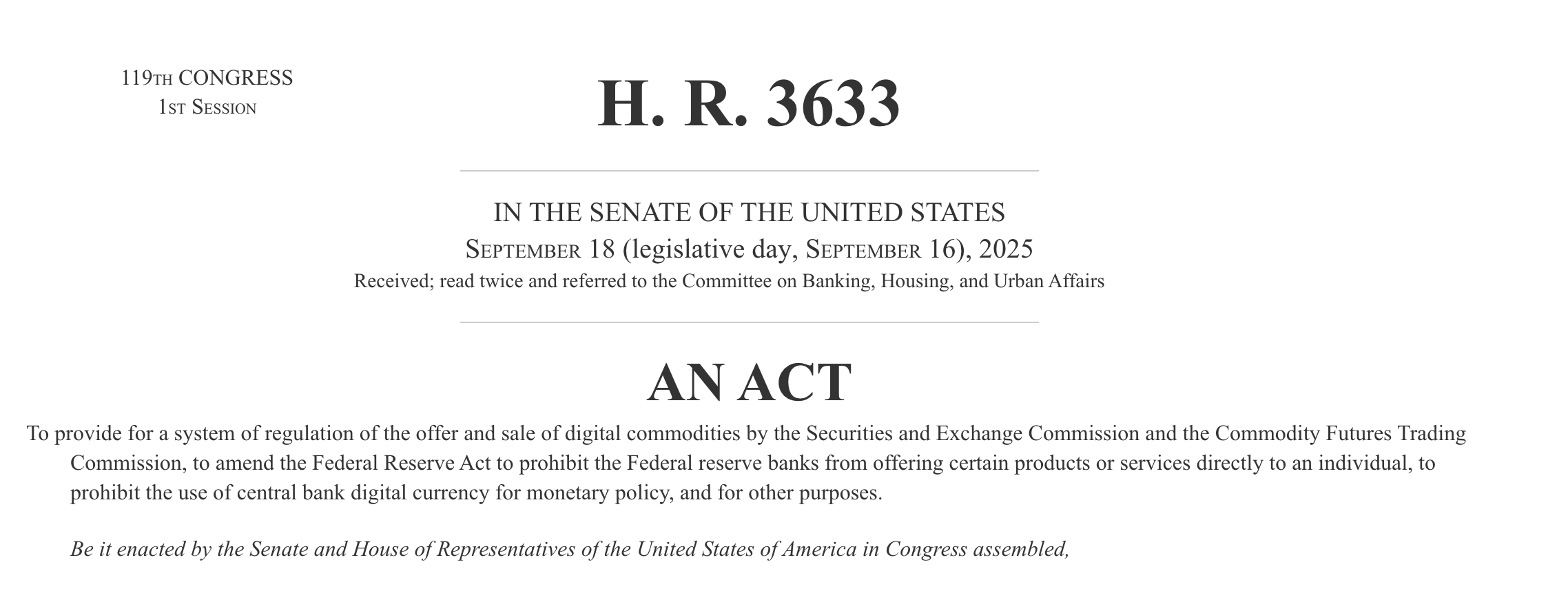
(Source: U.S. Congress)
Ernst’s warning points to a deeper issue within the利益结构. She argues that the true breakthrough of blockchain technology lies not only in creating a new financial infrastructure but also in enabling users to become owners of the networks they rely on, rather than mere renters. The problem with the CLARITY Act is that it may stifle this sense of ownership:
“If financial activities are pushed back through institutional intermediaries, users could once again become customers renting financial technology services rather than stakeholders. The challenge is ensuring that the clarity of regulation does not inadvertently undermine this ownership model.”
Ernst also acknowledges some positive aspects of the bill—namely, that the CLARITY Act clearly delineates the regulatory jurisdiction between the U.S. Securities and Exchange Commission (SEC) and the Commodity Futures Trading Commission (CFTC), and explicitly protects peer-to-peer trading and self-custody rights for users.
However, she believes the bill’s biggest flaw is its failure to adequately safeguard open, permissionless blockchain protocols and decentralized finance (DeFi) platforms. “If these open protocols are not sufficiently protected, all the same failure points of traditional finance—centralized failures, intermediary risks, access barriers—could be introduced into the crypto space.”
Legislative Dilemma of the CLARITY Act: Multiple Parties and Long-Term Stalemate
The CLARITY Act is currently stuck in a multi-front deadlock in Congress, with core conflicts arising from several directions:
Stablecoin Yield Disputes: The crypto industry hopes to allow stablecoin issuers to share interest yields with holders, but traditional banking groups strongly oppose this, fearing it will accelerate deposit outflows from the banking system.
Coinbase Withdraws Support: In January, Coinbase announced it was withdrawing support for the bill, citing concerns that several provisions could harm the DeFi ecosystem, ban stablecoin yields, and hinder the growth of tokenized real-world assets (RWA). Coinbase CEO Brian Armstrong stated, “We would rather have no bill than a bad bill.”
Public Pressure from Trump: Former U.S. President Trump publicly urged banks not to “hijack” the CLARITY Act, but this pressure has yet to produce any substantive breakthroughs.
Key Window in April: The Last Chance for the Bill?
Market analysts have very different predictions about the bill’s future. U.S. Senator Bernie Moreno is optimistic that the CLARITY Act will pass in April and be signed into law by the President.
However, Alex Thorn, Head of Research at Galaxy Digital, expressed a more cautious view on X: “If the bill does not pass before April 2026, the chances of it becoming law in 2026 are very low.” He also pointed out that the stablecoin yield issue may not be the ultimate obstacle: “Reward mechanisms are likely not the final barrier; rather, deeper issues such as DeFi provisions, developer protections, and regulatory authority may be at play.”
Frequently Asked Questions
Q: How exactly does the CLARITY Act threaten DeFi and permissionless blockchain protocols?
According to Ernst, the regulatory framework of the CLARITY Act presumes that trading activities must be conducted through regulated centralized entities. This could mean that DeFi protocols would need to implement some form of centralized identity verification or permissioning to operate legally in the U.S. This directly conflicts with DeFi’s core principle—anyone can use the protocol without permission—potentially putting permissionless protocols at legal risk in the U.S.
Q: Does Coinbase’s withdrawal of support mean the entire crypto industry opposes the CLARITY Act?
No. The crypto industry’s stance on the CLARITY Act is divided. Many crypto companies support the bill for providing regulatory clarity, believing it will attract institutional capital and resolve long-standing jurisdictional disputes between the SEC and CFTC. Coinbase’s withdrawal mainly concerns specific provisions (DeFi restrictions, stablecoin yield bans) rather than opposition to the legislation itself. Other companies hold different views, reflecting the complex negotiations over regulatory details within the industry.
Q: If the CLARITY Act fails to pass by 2026, what will happen to crypto regulation in the U.S.?
If the bill does not pass, the U.S. crypto industry may continue operating in an uncertain regulatory environment, relying on SEC and CFTC enforcement actions rather than clear legislation. Alternatively, the SEC and CFTC might issue regulatory guidance within their respective jurisdictions to fill the gap—an approach former CFTC Chairman Heath Tarbert has referred to as a “fallback plan,” providing limited but non-permanent regulatory certainty.
Disclaimer: The information on this page may come from third parties and does not represent the views or opinions of Gate. The content displayed on this page is for reference only and does not constitute any financial, investment, or legal advice. Gate does not guarantee the accuracy or completeness of the information and shall not be liable for any losses arising from the use of this information. Virtual asset investments carry high risks and are subject to significant price volatility. You may lose all of your invested principal. Please fully understand the relevant risks and make prudent decisions based on your own financial situation and risk tolerance. For details, please refer to
Disclaimer.
Related Articles
EU Tightens Sanctions on Russia With Complete Ban on Cryptocurrency Platforms
Gate News message, April 27 — The European Union has imposed its 20th round of sanctions against Russia, significantly strengthening restrictions on cryptocurrency-related activities. The new measures include a complete ban on crypto asset service providers (CASPs) and all cryptocurrency platforms o
GateNews2h ago
Tillis Blocks Crypto Bill Over Ethics Provisions, TD Cowen Says
Republican Senator Thom Tillis has emerged as an obstacle to the crypto Clarity Act, stating Monday that he will oppose the bill unless it includes ethics language, according to investment bank TD Cowen and reporting from Politico. "There has to be ethics language in the bill before it leaves the Se
CryptoFrontier4h ago
Hoskinson Calls Clarity Act 'Insanity,' Says It Would Classify XRP as Security
Charles Hoskinson, founder of Cardano, stated in an interview that the Clarity Act in its current form would classify XRP, Ethereum, and ADA as securities if those projects were founded today, contradicting celebrations from the XRP community over the bill's passage.
The Security Trap Mechanism
H
CryptoFrontier4h ago
Trump Softens Prediction Market Criticism, Cites Support from 'Smart People'
President Donald Trump reversed his recent criticism of prediction markets on Saturday, telling reporters that "very smart" people he knows support the industry, despite his Thursday comments characterizing the sector as contributing to turning "the whole world" into "somewhat of a casino." The
CryptoFrontier4h ago
Canada's Bill C-25 Passes House Principle Vote, Bans Crypto Donations to Federal Political Campaigns
Gate News message, April 27 — Canada's "Strong Free Elections Act" (Bill C-25) passed a principle vote in the House of Commons and was referred to committee for detailed review. The bill, which received cross-party support with minimal substantive opposition, proposes to prohibit donations in
GateNews7h ago
Europe's MiCA Framework Makes Euro Stablecoin 'Safe but Uncompetitive,' Blockchain Association Reports
Gate News message, April 27 — The Blockchain for Europe association released a report on Monday that concludes the European Union's Markets in Crypto-Assets Regulation (MiCA) framework has significantly enhanced the safety of euro stablecoins but simultaneously undermined their commercial
GateNews9h ago


