
Rumors suggest Meta will re-enter the stablecoin market in the second half of the year, with payment platform Stripe potentially serving as a pilot partner. Despite Libra’s project being declared a failure, Zuckerberg still aims to make a comeback. Additionally, Stripe, valued at $159 billion, is rumored to be interested in acquiring PayPal.
Meta to Relaunch Stablecoin in Second Half, Stripe Could Be Key Partner
According to CoinDesk, Meta plans to re-enter the stablecoin market in the second half of this year. Sources reveal that Meta has issued a product requirement proposal to third-party companies, seeking assistance in managing stablecoin-based payment operations, with Stripe named as a potential pilot partner for Meta’s stablecoin.
Stripe has been a long-term partner of Meta. Its CEO Patrick Collison joined Meta’s board in April 2025, and last year, it acquired stablecoin company Bridge, further strengthening its crypto payment infrastructure.
- Related article: The biggest merger in crypto history! Stripe’s $1.1 billion acquisition of Bridge — what’s the strategic move?
Stripe Expands, Rumored to Consider Acquiring PayPal
In addition to potential collaboration with Meta, Stripe has been actively expanding in the financial sector.
According to Bloomberg, Stripe is considering a full or partial acquisition of the global payment giant PayPal, which is facing challenges. Sources indicate that Stripe has expressed preliminary interest in acquiring PayPal and is still in early evaluation stages, with no final deal confirmed.
With Stripe’s recent valuation reaching $159 billion and its previous acquisition of Bridge, a further acquisition of PayPal could reshape the competitive landscape of digital payments worldwide.
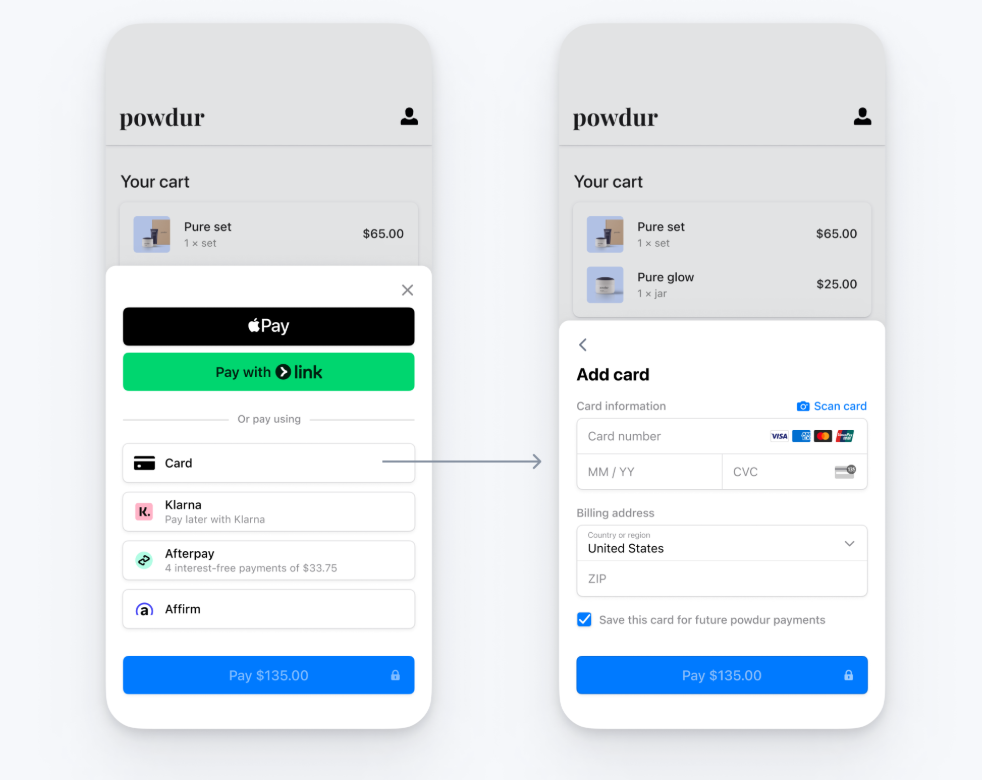
Image source: Stripe Docs Meta to Relaunch Stablecoin in Second Half, Stripe Could Be a Key Partner
After Libra (Diem) setback, Meta Still Not Giving Up
Looking back to 2019, Meta launched a stablecoin project called Libra (later renamed Diem), aiming to create a new type of cryptocurrency that could be used across platforms like Facebook and WhatsApp.
However, the project quickly faced strong opposition from the U.S. Congress and other lawmakers. As a result, the Libra Association scaled back its goals in 2020, shifting focus to developing multiple stablecoins pegged to different currencies, rather than the initially planned global digital currency backed by a basket of national currencies.
Ultimately, Libra (Diem) was never officially launched and was shut down in early 2022, with its assets sold off. However, according to a 2025 report by Fortune magazine, Meta is once again in talks with crypto companies, planning to launch a stablecoin as a payment management tool, and has hired a product VP with crypto experience to help advance these negotiations.
Zuckerberg Admits Failure, Shows Determination to Make a Comeback
According to footage obtained by Fortune magazine, Meta CEO Mark Zuckerberg, during a 2025 Stripe conference, publicly acknowledged the failure of the Diem project, stating outright that the project has been definitively ended.
When asked about Meta’s tendency to jump into emerging tech trends early, Zuckerberg responded that early involvement in new technologies is indeed very interesting, but he also added that even though Meta often starts later in many areas, they are very good at catching up and re-entering the competitive race.
Further reading:
Meta’s stablecoin Diem becomes a controversial issue in the Genius Bill! Democratic lawmakers: Zuckerberg is out of touch
Disclaimer: The information on this page may come from third parties and does not represent the views or opinions of Gate. The content displayed on this page is for reference only and does not constitute any financial, investment, or legal advice. Gate does not guarantee the accuracy or completeness of the information and shall not be liable for any losses arising from the use of this information. Virtual asset investments carry high risks and are subject to significant price volatility. You may lose all of your invested principal. Please fully understand the relevant risks and make prudent decisions based on your own financial situation and risk tolerance. For details, please refer to
Disclaimer.
Related Articles
Polygon sPOL officially goes live, unlocking 3.6 billion POL to enable staking rewards
Polygon Labs launches its first native liquid staking token, sPOL, unlocking more than 3.6 billion POL tokens and allowing stakers to use sPOL to perform DeFi operations while earning rewards. With sPOL, stakers can achieve dual yield, and in conjunction with the PIP-85 proposal, for the first time, 50% of validator priority fees are allocated to delegators, strengthening the economic incentives for long-term token staking.
MarketWhisper4h ago
Circle issues an additional 750 million USDC, pushes for the institutionalization of KRW stablecoin structures in South Korea
Circle increased issuance by 750 million USDC in South Korea and held talks with major financial institutions, indicating its strategy in the stablecoin market. The South Korean stock market reacted strongly, and stablecoin concept stocks surged across the board. In addition, USDC’s utilization efficiency improved, showing that demand for institutional adoption is increasing; the outlook is optimistic for the future.
MarketWhisper4h ago
Can bypass Taiwan Financial Supervisory Commission (FSC) rules on buying crypto with credit cards be possible? OdinTech launches the Wallet Pro service for buying crypto with U.S. debit cards
OwlPay and Wallet Pro services launched by Odin Ding use stablecoin technology to enable B2B cross-border payments, and they partner with international payment giants to showcase their ambitions to expand in the fintech sector. By operating from overseas, Odin Ding bypasses Taiwan’s regulatory restrictions, offering fast virtual-asset trading. At the same time, in light of the newly issued Virtual Asset Services Act, it is expected to become a reference template for other foreign-funded companies entering the Taiwan market.
CryptoCity4h ago
Polygon Launches Native Liquid Staking Token sPOL, Unlocking 3.6B Staked POL
Polygon has launched sPOL, a liquid staking token for POL that increases yields for stakers and unlocks 3.6 billion staked POL. It facilitates DeFi engagement, allowing users to migrate existing stakes without penalties and accumulate rewards. Despite its benefits, sPOL carries associated risks.
GateNews5h ago
Sentio(ST) will launch globally on Gate on April 15. Hold 1GT to participate for free in the 339th HODLer Airdrop and share 750k ST
Gate News, according to Gate’s official announcement
Gate’s initial listing of Sentio (ST) includes spot trading and instant exchange, and it has launched the 339th HODLer Airdrop campaign. Users holding 1GT or more can participate for free and share 750,000 ST tokens. This airdrop will end at 2026-04-15 17:00 (UTC+8). Spot trading will open at 18:00 on the same day, instant exchange trading will open at 19:00, and withdrawals are expected to open at 2026-04-16 18:00.
Sentio is a decentralized, AI-agent-ready blockchain data network that provides unified Web3 observability and a data platform, integrating indexing, querying, visualization, and alerting features. The project has been adopted by 70,000 users and 24 billion in customer TVL. ST is a BEP-20 standard token with a total supply of 1,000,000,000. The contract address is 0x70be40667385500c5da7f108a022e21b606045dd.
In this campaign, the participation cap for VIP 0–VIP 4 users is 2,000 GT. VIP 5–VIP 9 users receive different amount bonuses based on their tier, and VIP 10 and above users have no participation cap. All airdrop rewards are 100% immediately unlocked.
GateAnnouncement18h ago
Is it possible to bypass the Financial Supervisory Commission’s rules on using credit cards to buy crypto? Odingding promotes the Wallet Pro crypto purchase service with a U.S. debit card
OwlPay and Wallet Pro services launched by Oding Ding use stablecoin technology to enable B2B cross-border payments, and they have partnered with international payment giants to showcase their expansion ambitions in the fintech space. By operating from abroad, Oding Ding bypasses Taiwan’s regulatory restrictions, offering fast virtual-asset trading; at the same time, faced with the newly enacted Virtual Asset Services Act, it may in the future become a reference template for other foreign-funded companies entering the Taiwan market.
CryptoCity20h ago


