


Futures
Access hundreds of perpetual contracts
TradFi
Gold
One platform for global traditional assets
Options
Hot
Trade European-style vanilla options
Unified Account
Maximize your capital efficiency
Demo Trading
Introduction to Futures Trading
Learn the basics of futures trading
Futures Events
Join events to earn rewards
Demo Trading
Use virtual funds to practice risk-free trading
Launch
CandyDrop
Collect candies to earn airdrops
Launchpool
Quick staking, earn potential new tokens
HODLer Airdrop
Hold GT and get massive airdrops for free
Launchpad
Be early to the next big token project
Alpha Points
Trade on-chain assets and earn airdrops
Futures Points
Earn futures points and claim airdrop rewards


More



“I want to buy a Chinese electric vehicle!” Exclusive interview with two former leaders of developed countries: how to respond to the Middle East energy crisis
Every reporter|Zhang Huaishui Every editor|Liao Dan
In recent days, the escalation of the US-Iran war has triggered a surge in global energy prices, impacting the global economy.
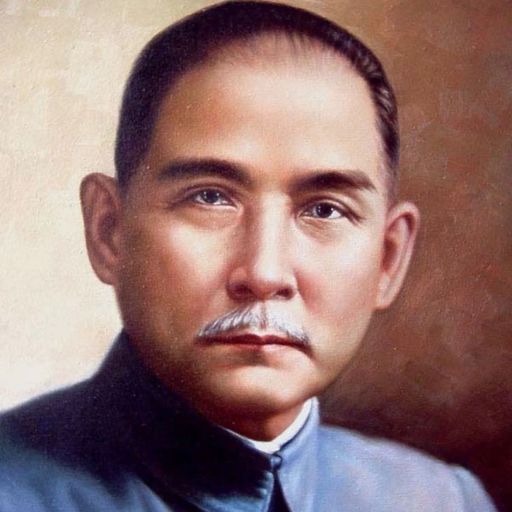
During the 2026 Boao Forum for Asia Annual Conference, NBD (hereinafter referred to as NBD) interviewed former Slovenian President Turk and former New Zealand Prime Minister Shipley. Slovenia is a member of the EU and a high-income economy, while New Zealand is a developed economy within the Commonwealth, both recognized as developed economies by international organizations such as the United Nations and the IMF (International Monetary Fund).
Both former leaders of developed countries expressed deep concern about the rising energy prices driven by the current tense situation in the Middle East, emphasizing the urgent need for an energy transition and highly recognizing China’s global leadership in the photovoltaic and new energy vehicle sectors.
Turk further stated, “I currently drive a Toyota, previously drove a Volvo, and in the future, I plan to switch to an electric vehicle, definitely choosing a Chinese brand because there are many options available.”
AI is driving exponential growth in energy demand, necessitating exploration of more solutions in the photovoltaic field
NBD: How do you view the impact of the US-Iran war on the global energy landscape? Will it accelerate the global de-fossil fuel process?
Shipley: Currently, due to the situation in the Middle East, there is widespread concern about the continuous rise in energy prices. What I am more concerned about is what fundamentally drives the increase in energy demand. One significant reason is the explosion of AI (artificial intelligence) and the digital industry. Data centers consume a large amount of electricity, and in the future, quantum computing will lead to exponential and doubling growth in energy demand. Countries are competing to attract data centers, further pushing up energy prices.
We see that China has not only made breakthroughs in new energy technologies like nuclear power but is also globally leading in solar technology. Many countries, including New Zealand, are using Chinese technology to build solar power plants. New energy not only provides new energy supply but also aligns well with sustainable development, which is crucial for the future energy landscape.
It is undeniable that the current continuous rise in energy prices has made it difficult for some governments and people to bear. Therefore, the tech sector needs to develop greener and more cost-effective technologies to produce more energy with the same or even fewer resources. In this regard, we see that China’s economic and social development has brought more electricity and energy consumption, but at the same time, its innovation capabilities in new energy are strong, leading to a relatively balanced overall development. Thus, against the backdrop of a turbulent international energy landscape, we hope to hear more Chinese voices and see more Chinese solutions.
Turk: Regarding the rise in oil prices, this is a situation that everyone is unwilling to see; it should not have been this way. Essentially, it is a significant mistake. The rise in oil prices is a negative consequence of military actions taken by the United States and Israel against Iran. The turmoil and conflict in the Middle East is something the whole world does not want to see; the international community genuinely hopes for a ceasefire and stabilization of the oil market.
Although we have been vigorously developing photovoltaics, renewable energy, and other new energy sources, the world is still highly dependent on oil, so we must remain cautious regarding energy issues.
China is a global leader in the photovoltaic sector, both in production capacity of photovoltaic products and in the practical application level of photovoltaic technology, ranking among the best in the world. I have personally visited places like the Kubuqi Desert, where I saw a large number of solar panels and photovoltaic projects being constructed, along with a lot of trees planted to combat desertification. This not only effectively addresses desertification and improves the ecological environment but also promotes agricultural development and protects cities in northern China. Therefore, we should rely on photovoltaic products and technology to explore more comprehensive utilization solutions, and China has already taken the lead in this area.
I believe that the current issue is that China and the EU need to reach a consensus on the cooperation and application of photovoltaic products and coordinate their respective domestic capacities. Both sides need to further discuss capacity issues in depth.
Currently, China is significantly increasing the scale of new energy utilization and actively developing photovoltaics, wind power, and various other new energy types. In the current energy situation, this is a necessary task that China and the EU should work on together, clarifying each party’s actual needs for photovoltaic products.
The Middle East situation has led to rising fuel costs, with a significant impact on low- and middle-income households
NBD: The Middle East crisis has led to rising international oil prices; what considerations do you have regarding your country’s energy security?
Shipley: New Zealand’s economy currently relies heavily on exports. With only about 5 million people in the country, the products produced domestically far exceed local needs, and a large number of products must be exported worldwide. Therefore, supply chains are crucial for us, especially fuel supply, which is of utmost importance for New Zealand.
The rise in international crude oil prices has led to increased prices for gasoline and diesel domestically, with a particularly noticeable impact on low- and middle-income families in New Zealand. As a result, the government has launched a “supplemental payment” program to provide subsidies to relevant families for one year, helping them cope with the living pressures caused by rising fuel prices. After the tensions in the Middle East, fuel costs have further risen, making such subsidies necessary for maintaining the daily lives of the people.
At the same time, we are also working with global partners to stabilize supply chains. Regarding the Middle East issue, New Zealand takes a relatively low-profile stance but always speaks out responsibly, calling on all parties to remain calm, strengthen cooperation, and work together to find solutions.
NBD: You just mentioned that the Middle East energy crisis has made everyone realize the importance of energy transition. For the EU, including your country, is energy transition a “must-do”?
Turk: First, it must be made clear that the EU not only needs the service and agricultural sectors but also needs industrial products. Promoting industrial manufacturing and modernization is an important development direction for the EU’s future. From a long-term geopolitical perspective, the EU will continue to be an important manufacturing cooperation and market center for China, so China and the EU should not only focus on competition but also pay attention to policy coordination and cooperation.
During my visit to China, a strong feeling is that the development momentum of electric vehicles in China is strong, with vast potential not only in China but also in Europe. Therefore, energy transition is a must-answer question for the EU. China and the EU urgently need to build a cooperative framework at the technical level to promote the better development of the electric vehicle industry while also driving the development of related sectors such as the labor market.
I believe that current policies still have shortcomings. Chinese electric vehicles have successfully entered the European market; for example, in Slovenia, locals previously knew almost nothing about Chinese car brands, but now more and more people are driving electric vehicles made in China. Therefore, Chinese electric vehicles have every reason to go global, but in the process of going abroad, how to manage and achieve balanced development requires joint efforts from enterprises on both sides to establish corresponding cooperative frameworks.
As the former president of Slovenia, I previously drove a Volvo, sold it after living in the U.S. for a long time, and after returning to Slovenia, I bought a Toyota. In the future, I plan to switch to an electric vehicle, and I will definitely choose a Chinese brand because there are many options available.
The potential of the new energy vehicle market is enormous, and cooperation between China and the EU is the only way forward
NBD: You just mentioned your intention to switch to an electric vehicle in the future. In Slovenia, do people feel the pressure brought by rising oil prices?
Turk: My family and I actually do not rely heavily on fuel vehicles because we live in the city center, and I usually walk to work. However, overall, Slovenia remains highly dependent on cars, and many people value their ability to own a car, a situation that is unlikely to change in the future. Therefore, we are still very sensitive to oil prices and oil supply.
Although Slovenia has sufficient oil reserves, the government assures that there is no need for concern, but the public sometimes does not completely trust this statement. It is undeniable that the rise in oil prices has already passed through to the consumer end. In our country, those who really have headaches are those who need to commute long distances. Many Slovenians live in small towns or rural areas and must drive to work early and late every day, so the rise in oil prices has a significant impact on them.
Additionally, agricultural production also relies heavily on fuel, with tractors and other agricultural machinery requiring gasoline and diesel; farmers are also beginning to worry about whether fuel supply will be sufficient and whether it will affect normal farming practices.
NBD: Based on your statement, Europe has been considering energy transition issues as well. With some achievements in the discussions between China and the EU regarding electric vehicles this year, how do you view the potential of Chinese new energy vehicles in Europe, including the Slovenian market?
Turk: I am not an expert in the new energy vehicle sector, but I can clearly see that the market demand for new energy vehicles in Europe is continuously growing, which is undoubtedly a positive sign and will significantly address the pressures brought by rising oil prices on the government and the people. However, the core issue is how to regulate and manage the market in an orderly manner.
Chinese leaders have also emphasized multiple times that cooperation must adhere to mutual benefit and win-win principles. It should benefit both China and Europe; China and the EU should jointly explore win-win cooperation paths, always guided by win-win outcomes.
It is undeniable that the potential of the new energy vehicle market is enormous. In the process of cooperation, there will inevitably be tendencies towards conservatism and exclusivity, but this is certainly not the correct way to solve the problem. I firmly believe that both China and the EU will find reasonable and feasible cooperation solutions in the future.