


Futures
Access hundreds of perpetual contracts
TradFi
Gold
One platform for global traditional assets
Options
Hot
Trade European-style vanilla options
Unified Account
Maximize your capital efficiency
Demo Trading
Introduction to Futures Trading
Learn the basics of futures trading
Futures Events
Join events to earn rewards
Demo Trading
Use virtual funds to practice risk-free trading
Launch
CandyDrop
Collect candies to earn airdrops
Launchpool
Quick staking, earn potential new tokens
HODLer Airdrop
Hold GT and get massive airdrops for free
Launchpad
Be early to the next big token project
Alpha Points
Trade on-chain assets and earn airdrops
Futures Points
Earn futures points and claim airdrop rewards


More

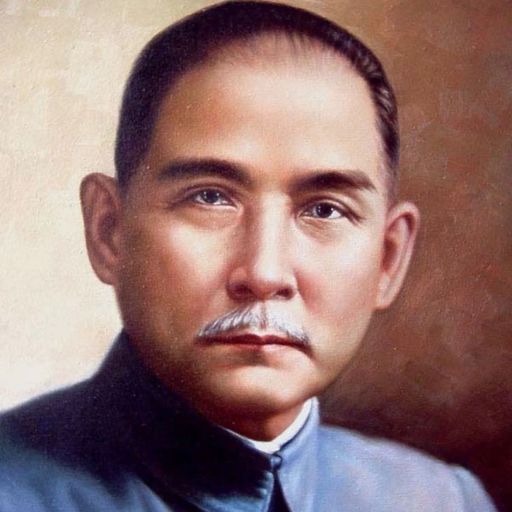



Losses coexist with growth in core product sales: Yang Dajun leads Ascentage Pharma through the innovation drug investment phase
Ask AI · How does the dual-engine strategy balance R&D investment and commercialization expansion?
When a pharmaceutical company reports an annual loss of over 1.2 billion yuan, yet its core product sales can grow by 81%, this seemingly contradictory performance reveals the typical development logic of innovative pharmaceutical companies during the period of commercialization expansion. Behind Ascentage Pharma’s 2025 report card is a precise layout of the “dual-engine” strategy: on one side, core products rapidly expand through health insurance support, and on the other, there is a continuous increase in global clinical development and R&D investment.
Yang Dajun: A Leader at the Forefront of Innovation
Yang Dajun is the co-founder, chairman, and CEO of Ascentage Pharma. He holds a Doctor of Medicine and a PhD in Genetics, and has been deeply involved in oncology, apoptosis mechanisms, and new drug development for nearly 30 years. Before founding Ascentage Pharma in 2009, he co-founded Ascenta Therapeutics, Inc. and served as a part-time professor and doctoral supervisor at Sun Yat-sen University Cancer Prevention and Treatment Center for many years.
Yang Dajun has led his team to push several original drugs with “First-in-class” or “Best-in-class” potential into clinical phases in China, the United States, Australia, and Europe. He also holds positions such as Vice Chairman of the Drug Research and Development Professional Committee of the China Pharmaceutical Innovation Promotion Association and a part-time researcher at the Shanghai Institute of Materia Medica, Chinese Academy of Sciences.
The “Dual Investment” Strategy of Parallel Commercialization and R&D
In 2025, Ascentage Pharma achieved product sales and commercialization rights income of 574 million yuan, a year-on-year increase of 90%. Among them, the core product Olverembatin (Orelabrutinib) performed particularly well. From January 2025, all approved indications for this product were fully included in the national health insurance catalog, with annual sales revenue in the Chinese market reaching 435 million yuan, a year-on-year increase of 81%. The second commercialized product Lisocabtagene Maraleucel (Lisocabtagene) was approved for market launch in July 2025, and as the first domestically produced original Bcl-2 inhibitor, it contributed 70.58 million yuan in revenue just five months post-launch. Together, these two products constitute the “dual-engine” driven pattern of Ascentage Pharma’s commercialization phase.
While growing rapidly, the company is still in an investment phase. In 2025, sales and distribution expenses reached 354 million yuan, a year-on-year increase of 80.4%, mainly used for the commercialization promotion of the two core products. During the same period, R&D expenses were 1.137 billion yuan, a year-on-year increase of 20.1%, primarily for advancing clinical trials globally.
Conclusion: Strategic Path Driven by Dual Engines
When we examine the development trajectory of Ascentage Pharma, it is not difficult to see that this is a story of persistence and breakthrough. Against the backdrop of the development of China’s innovative pharmaceutical industry, companies like Ascentage Pharma not only carry the mission of technological innovation but also face the challenges of commercialization. From a loss of 1.296 billion yuan to a growth model driven by dual engines, this transformation reflects the entire industry’s shift from imitation to innovation.