


Futures
Access hundreds of perpetual contracts
TradFi
Gold
One platform for global traditional assets
Options
Hot
Trade European-style vanilla options
Unified Account
Maximize your capital efficiency
Demo Trading
Introduction to Futures Trading
Learn the basics of futures trading
Futures Events
Join events to earn rewards
Demo Trading
Use virtual funds to practice risk-free trading
Launch
CandyDrop
Collect candies to earn airdrops
Launchpool
Quick staking, earn potential new tokens
HODLer Airdrop
Hold GT and get massive airdrops for free
Launchpad
Be early to the next big token project
Alpha Points
Trade on-chain assets and earn airdrops
Futures Points
Earn futures points and claim airdrop rewards


More




FX Daily: Just Another 'Anti-Decay' Friday
(MENAFN- ING) USD: It’s in Iran’s interest to keep oil sky-high
‘Theta’, or the time decay component in the value of an FX option, normally accelerates into weekends on the view that nothing happens over the two days the market is closed. This March, however, we have been seeing FX options staying bid into weekends on the view that there will be major event risk out of the Middle East. Some of the thinking here is that the White House can make some of its most belligerent comments while financial markets are closed and give investors the chance to re-appraise events by the time markets open on Monday.
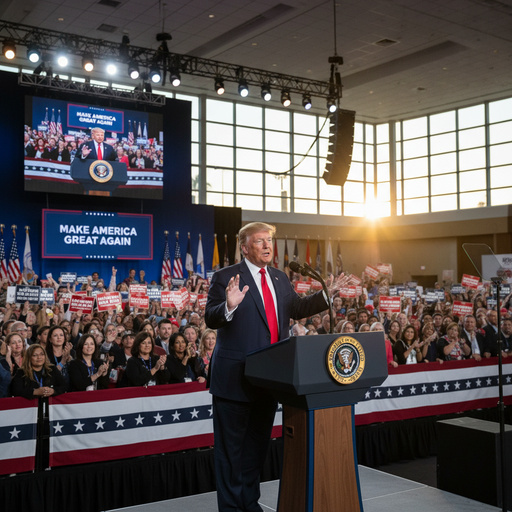
In FX markets, US President Donald Trump’s delay of a plan to bomb Iranian energy infrastructure by 10 days has brought little relief. The dollar remains well bid and the relief rallies in Asian equities have been very modest indeed. Presumably, investors are well aware of the Iranian position that it has been attacked before in the middle of negotiations, and in turn, the 10-day delay is providing little solace. Additionally, Iran will be aware that its stranglehold on the Strait of Hormuz is starting to bite real world activity. Fuel rationing is starting to be enacted in some countries and with reports of 60 days worth of fuel stocks left in the likes of India and Korea, Iran will feel that it has time on its side.
Barring some conciliatory words from Iran today – which seems highly unlikely – we expect the dollar to stay bid and risk assets to remain vulnerable. Most are amazed at how well equity markets are performing given the threat to global activity and now the rising cost of borrowing/financing. European Central Bank President, Christine Lagarde, was the latest official to echo such comments in an interview with The Economist yesterday.
US data will again take a back seat to Middle East headlines today. However, there might be some interest in the inflation expectations component of the final University of Michigan consumer sentiment data at 4:00pm CET today. The preliminary readings had shown the 1 year and 5-10 year readings rising to 3.6% (3.4%) and 3.5% (3.2%) respectively. Any big rise in these might be a slight dollar positive in that they could drag the Federal Reserve further into the tightening camp. Currently, 15bp of Fed tightening is priced this year. We know the Fed likes to see medium-term inflation expectations anchored. Inflation expectations for the 5 and 10-year zero-coupon inflation swaps have risen 20bp and 5bp respectively this month. Any large further rises here could see traders more actively engage in the idea of the Fed tightening this year. This would help the dollar and hit risk assets.
DXY remains bid towards the top of a 99.00-100.00 trading range. We see scope for another run towards the 100.25/50 area and risk assets and risk currencies staying under pressure.
Chris Turner
EUR: Little reprieve
EUR/USD remains soft as investors seem more minded to brace for escalation than a ceasefire. News of further US troop movements towards the Middle East is seen as worrying. Those investors in February who backed the view that the US military build-up would result in action – and not merely be used for maximum bargaining pressure – were proved correct.
Developments in the Middle East are a clear risk negative. One aspect that needs more attention is the role of Middle East investors, largely through Sovereign Wealth Funds, in global capital markets. Their funds have typically been deployed through bond markets rather than bank deposits, but the region’s loss of access to energy revenues and now new fiscal commitments at home will be triggering a tightening of global financial conditions. That is bad news for pro-cyclical currency pairs like EUR/USD.
There is not much eurozone data today, although the market may be watching Spain’s provisional March CPI release, where the month-on-month rate is expected to bounce to 1.0% (0.4%) and the year-on-year rate to 3.6% (2.3%). It seems the vast majority of the market does not want to buy into early central bank tightening. But until we see a sharp reversal lower in equity prices, events in the Middle East and hawkish central bank speak can probably see the hawkish pricing retained in money market curves. Here, 82bp of ECB tightening is still priced this year. And look out for comments from the ECB’s Isabel Schnabel today at 5:00pm CET. Let’s see whether she is putting an April rate hike on the table.
EUR/USD looks vulnerable, and we could easily see a break down to 1.1485 and a retest of the lows in the 1.1410/30 area.
Chris Turner
JPY: Waiting on intervention
Japanese policymakers are suggesting that FX intervention is close at hand. USD/JPY is close to 160 again. Over recent months, these same policymakers have been highlighting their close co-ordination with Washington. On that front, we wonder whether Washington would be happy with Japan selling up to $100bn as it did in 2024 – presumably selling US Treasuries to finance those FX sales. 10-year US Treasury yields have already risen 50bp this month and large scale Japanese FX intervention could exacerbate the Treasury sell-off.
Japan, like the Korean authorities at 1500 in USD/KRW, may struggle to draw a line in the sand at 160 in USD/JPY. And the case for a break above it is building.
Chris Turner
MXN: A bold Banxico rate cut
Banxico mildly surprised the market by cutting the policy rate 25bp to 6.75% yesterday. Somewhat surprisingly, its inflation forecasts were little changed since February (just 0.1/0.2% modest increases for headline and core CPI year-on-year rates). And it still forecast inflation returning to target at 3.00% in early 2027.
Cutting rates in the current environment is a little dangerous and does suggest that Banxico is slightly less concerned about currency weakness than many other emerging market central banks. We had felt earlier this year that Banxico would not want to see USD/MXN trading well under 17.00 again. As a big EM beast and a proxy hedge for the EM complex, we think the peso remains vulnerable. Some poor news out of the Middle East could now see USD/MXN correct back up to the 18.50/70 region.
Chris Turner
MENAFN28032026000222011065ID1110911741