


Futures
Access hundreds of perpetual contracts
TradFi
Gold
One platform for global traditional assets
Options
Hot
Trade European-style vanilla options
Unified Account
Maximize your capital efficiency
Demo Trading
Introduction to Futures Trading
Learn the basics of futures trading
Futures Events
Join events to earn rewards
Demo Trading
Use virtual funds to practice risk-free trading
Launch
CandyDrop
Collect candies to earn airdrops
Launchpool
Quick staking, earn potential new tokens
HODLer Airdrop
Hold GT and get massive airdrops for free
Launchpad
Be early to the next big token project
Alpha Points
Trade on-chain assets and earn airdrops
Futures Points
Earn futures points and claim airdrop rewards


More


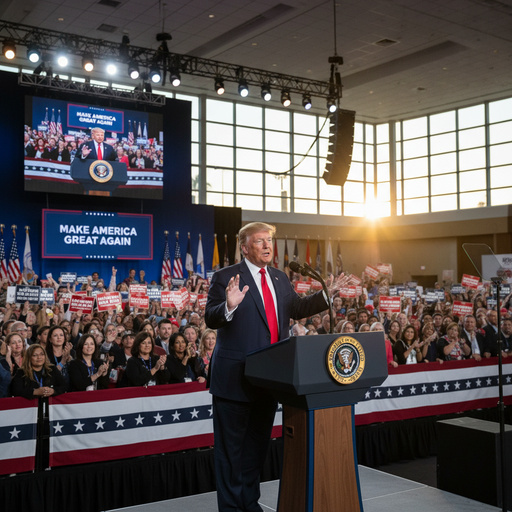


Understanding Protective Tariffs: Mechanisms, Impacts, and Real-World Outcomes
Protective tariffs represent a fundamental trade policy tool that governments leverage to shield domestic industries from international competition. By raising the cost of imported goods relative to locally produced alternatives, protective tariffs create economic incentives for consumers to purchase domestic products. This mechanism operates as both a shield for local manufacturers and a potential burden for consumers and import-dependent businesses. The balance between these competing forces determines whether protective tariffs ultimately strengthen or weaken an economy.
Who Wins and Who Loses: The Dual Impact of Protective Tariffs
The consequences of protective tariffs divide neatly across sectors. Certain industries thrive under protection while others struggle. Steel and aluminum producers benefit substantially, as tariffs make foreign competitors’ prices uncompetitive while supporting infrastructure and defense-related supply chains. Agricultural producers gain similar advantages when tariffs limit cheaper foreign imports and maintain competitive domestic pricing. Textile manufacturers and domestic automakers experience comparable market-strengthening effects.
However, this protection comes at a cost to other segments. Manufacturing operations reliant on imported raw materials face elevated production expenses, eroding profit margins and compromising competitiveness. Retailers importing consumer goods pass higher costs to shoppers, dampening demand. Technology companies dependent on global supply chains encounter significant disruptions. Even some automotive manufacturers—those requiring imported components rather than producing everything domestically—confront increased input costs. Consumer goods producers suffer similarly from higher material expenses.
The Chain Reaction: How Protective Tariffs Reshape Financial Markets
Financial markets respond dynamically to tariff implementation. Stock prices for import-dependent companies typically decline as investors anticipate margin compression and operational challenges. Conversely, domestically-focused producers often see valuations rise as competitive advantages strengthen and market share prospects improve.
This volatility introduces considerable uncertainty for portfolio managers. Protective tariffs can trigger broader market instability, affecting investor confidence and portfolio performance across multiple sectors. The interconnected nature of modern supply chains means a tariff targeting one industry frequently ripples through related sectors unexpectedly. Investors often respond by rebalancing holdings toward industries benefiting from tariff protection or those with resilient supply chain flexibility.
Inside the Machinery: How Protective Tariffs Function in Practice
The operational framework of protective tariffs involves government-administered import taxes that increase the landed cost of foreign goods. When a company imports products, it must pay an additional fee, effectively narrowing the price advantage foreign competitors previously enjoyed. This cost elevation typically transfers to retail consumers through higher prices for imported items.
Governments selectively apply tariff rates across industries deemed strategically important or economically vulnerable. Industries like steel, agriculture, and textiles receive frequent protection aimed at preserving domestic production capacity and employment. The underlying strategy often targets multiple objectives simultaneously: fostering employment growth, stimulating local innovation, and achieving self-sufficiency in critical sectors. Beyond immediate price effects, protective tariffs become components of broader geopolitical strategies and economic sovereignty initiatives.
However, tariff implementation rarely occurs in isolation. Trading partners frequently respond with retaliatory tariffs targeting the imposing nation’s exports. This tit-for-tat escalation can fundamentally alter international relationships and reduce overall economic efficiency across multiple nations.
When Protection Backfires: The U.S.-China Trade War Case Study
The tariff disputes between the United States and China during the first Trump administration illustrate both the potential and perils of protective tariff strategies. Both nations imposed substantial tariffs targeting approximately $380 billion in goods. Rather than achieving desired protectionist outcomes, this escalation generated widespread negative consequences for businesses and consumers across both economies.
According to the Tax Foundation, protective tariff policies implemented during this period imposed roughly $80 billion in new taxes on American consumers—characterized as “one of the largest tax increases in decades.” These levies threatened to reduce long-term U.S. gross domestic product by 0.2% and eliminate approximately 142,000 jobs, according to the same analysis. The episode demonstrates how protective tariffs, when used aggressively or reciprocated, can undermine the very economic objectives they theoretically serve.
Weighing the Evidence: Do Protective Tariffs Deliver Results?
The effectiveness of protective tariff policies remains contextual and contested. Historical evidence presents mixed outcomes. The U.S. steel industry benefited from tariff protection during periods of severe distress, stabilizing operations and preserving employment when foreign competition threatened viability. By reducing competitive pressure, protective tariffs permitted domestic producers to maintain operations and finance growth investments.
Yet the counterexamples prove equally instructive. Tariff-induced supply chain disruptions, elevated consumer prices, and international trade escalation can inflict economic damage exceeding protective benefits. Success depends heavily on implementation approach, specific economic conditions, and the responses of trade partners. Poorly designed or excessively aggressive protective tariffs risk triggering retaliatory cycles that damage exporting sectors and increase costs broadly across the economy.
Adapting Your Strategy: Portfolio Considerations in a Tariff Environment
Policy shifts involving protective tariffs create uneven economic impacts across sectors and regions. Diversification strategies become particularly valuable during such periods. Concentrating investments in directly affected sectors—manufacturing or agriculture—introduces unnecessary exposure to tariff-related volatility.
A balanced portfolio approach distributes holdings across sectors with varying tariff sensitivities. Considering non-correlated assets such as commodities or real estate that may perform distinctly under changing trade conditions provides additional resilience. Understanding which industries benefit from protective tariff policies and which face headwinds enables more informed allocation decisions during periods of trade policy uncertainty.