

Trade
Basic
Futures
Futures
Hundreds of contracts settled in USDT or BTC
TradFi
Gold
Trade global traditional assets with USDT in one place
Options
Hot
Trade European-style vanilla options
Unified Account
Maximize your capital efficiency
Demo Trading
Futures Kickoff
Get prepared for your futures trading
Futures Events
Participate in events to win generous rewards
Demo Trading
Use virtual funds to experience risk-free trading
Earn
Launch
CandyDrop
Collect candies to earn airdrops
Launchpool
Quick staking, earn potential new tokens
HODLer Airdrop
Hold GT and get massive airdrops for free
Launchpad
Be early to the next big token project
Alpha Points
Trade on-chain assets and enjoy airdrop rewards!
Futures Points
Earn futures points and claim airdrop rewards
Investment
Simple Earn
Earn interests with idle tokens
Auto-Invest
Auto-invest on a regular basis
Dual Investment
Buy low and sell high to take profits from price fluctuations
Soft Staking
Earn rewards with flexible staking
Crypto Loan
0 Fees
Pledge one crypto to borrow another
Lending Center
One-stop lending hub
VIP Wealth Hub
Customized wealth management empowers your assets growth
Private Wealth Management
Customized asset management to grow your digital assets
Quant Fund
Top asset management team helps you profit without hassle
Staking
Stake cryptos to earn in PoS products
Smart Leverage
New
No forced liquidation before maturity, worry-free leveraged gains
GUSD Minting
Use USDT/USDC to mint GUSD for treasury-level yields

More






US and Israel airstrikes cause nearly a thousand casualties in Iran, Trump claims Qasem Soleimani is "dead," Iran denies
Xinhua News Agency, Beijing, March 1 — On February 28, Beijing time, the United States and Israel launched a joint military strike against Iran, leading to a sharp escalation in regional tensions. U.S. President Donald Trump posted on social media on February 28, claiming that Iran’s Supreme Leader Khamenei “is dead,” but Iran denied this. The attack was widespread and far-reaching, prompting Iran to quickly retaliate, and the international community also responded.
US and Israel Airstrikes Cause Heavy Casualties, Iran Responds Firmly
On February 28, Trump posted on social media that Khamenei “is dead,” and stated that the US and Israel will continue their bombing of Iran.
Iran’s Islamic Republic Broadcasting Corporation reported late on February 28 that a source close to the office of Iran’s Supreme Leader said that Khamenei is “steadily and calmly directing the battlefield situation.” Israeli Prime Minister Netanyahu spoke that evening, saying increasing signs indicate Khamenei “is no longer alive.” Israeli media later cited senior Israeli officials claiming that Khamenei “has died” in the airstrikes.
The Iranian Red Crescent Society reported on the evening of February 28 that the joint US-Israeli attack had resulted in 201 deaths and 747 injuries. Iran’s Tasnim News Agency quoted a spokesperson, Mojtaba Haledi, saying that the airstrikes hit 24 provinces in Iran. Currently, 220 rescue teams are on standby, working at the affected sites and urging the public to stay safe. Additionally, Iran’s Mehr News Agency reported on March 1 that a primary school in Minab, southern Iran, was attacked during the military operations, resulting in 115 deaths.
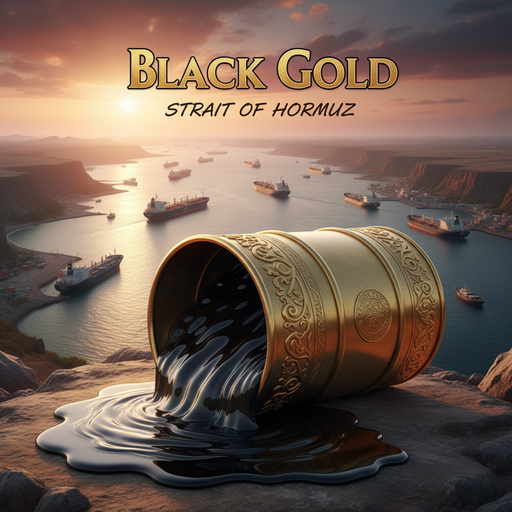
The Iranian Islamic Revolutionary Guard Corps announced that night that all ships are prohibited from passing through the Strait of Hormuz. According to Tasnim News Agency, with the halt of oil tankers and other ships passing through the Strait, it is effectively closed. The report said the IRGC has issued warnings to several vessels, stating that due to the US and Israel’s military strikes and Iran’s response, the area around the Strait of Hormuz is risky, and passage is currently unsafe.
The Strait of Hormuz connects the Persian Gulf and the Gulf of Oman and is a vital route for oil exports from Middle Eastern oil-producing countries such as Saudi Arabia, Iraq, Qatar, and the UAE. About one-fifth of global oil transportation passes through this strait.
US Military Claims Successful Defense, Homeland on High Alert
The US Central Command, responsible for Middle East military operations, posted on social media on February 28 that its forces successfully defended against hundreds of Iranian missile and drone attacks that day. No US personnel injuries have been reported so far. The command stated that the joint US-Israeli strike aims to dismantle Iran’s security system, targeting IRGC command and control facilities, air defense systems, missile and drone launch sites, and military airports. In the initial hours, US forces launched precision-guided weapons from air, land, and sea, and for the first time used low-cost, one-way attack drones in combat.
Several US media outlets quoted US officials saying that the ultimate goal of the US-Israeli military operation is to overthrow the Iranian regime, and that the airstrikes against Iran could last days or even weeks. Meanwhile, after the attacks, the FBI’s counterterrorism and counterintelligence agencies have been placed on high alert nationwide.
CNN cited a FBI official saying that as part of increased alert levels, the FBI may strengthen ground and cyber surveillance. Police departments across the country, including New York City, have increased patrols to prevent violence on US soil. Homeland Security Secretary Mayorkas posted on social media that she is coordinating directly with intelligence and law enforcement partners to monitor and thwart any potential threats to the US homeland; the US Secret Service, responsible for protecting the President and officials, also issued a statement that security will be heightened at locations they protect.
Multiple Parties Condemn Escalation, Call for Ceasefire and Dialogue
Iran actively seeks international support. On February 28, Foreign Minister Amir Abdollahian sent letters to UN Secretary-General Guterres and the current Chair of the Security Council, urging the UN and Security Council to take action to stop the illegal military strikes by the US and Israel. The letter states that the US and Israel’s attacks blatantly violate Iran’s sovereignty and territorial integrity, contravening Article 2, Paragraph 4 of the UN Charter, constituting an open armed invasion. Iran is exercising its inherent right to self-defense under the UN Charter. All bases, facilities, and assets of hostile forces in the Middle East are considered legitimate military targets within Iran’s self-defense rights. The US and Israel must bear full responsibility for all consequences. Iran also calls for an immediate emergency Security Council meeting to hold those responsible accountable and urges UN member states to condemn this aggression.
UN Secretary-General Guterres issued a statement condemning the escalation of military conflict in the Middle East, stating that the use of force by the US and Israel against Iran and Iran’s retaliatory actions undermine international peace and security. He emphasized that all UN member states must respect their obligations under the UN Charter, and that parties should immediately cease hostilities and de-escalate to prevent larger regional conflicts that could severely impact civilians and regional stability. He reiterated that peaceful negotiations are the only way to resolve disputes and urged all parties to return to the negotiating table immediately.
The International Atomic Energy Agency (IAEA) also called on all parties involved in the Middle East conflict to exercise restraint to avoid nuclear safety risks. The agency stated on social media that it maintains close contact with Middle Eastern countries and has not found any evidence of radioactive impacts. It will continue to monitor the situation. Austria’s Foreign Minister, Alexander Schallenberg, said after a call with IAEA Director General Grossi that Iran’s nuclear facilities have not been attacked so far.
Regional and related countries also issued statements. Lebanon’s Hezbollah issued a statement strongly condemning the US and Israel’s “aggression” against Iran, accusing them of violating international law and escalating tensions in the region. Hezbollah said that the US and Israel are pursuing hegemony in the Middle East and undermining regional stability, expressing support for Iran, its leadership, and its people, and calling on regional countries and peoples to unite against aggression.
Turkish President Recep Tayyip Erdoğan condemned the US and Israel’s attack on Iran that evening, expressing “deep sorrow and concern” over their violation of Iran’s sovereignty. He called for rationality and restraint among all parties and urged resolving differences through dialogue and negotiations. He pointed out that long-standing mistrust and Israel’s sabotage of negotiations have led to diplomatic deadlock, warning that the Middle East faces the risk of slipping into war. He called on the international community to take urgent action to achieve a ceasefire and push all sides back to the negotiating table.
Houthi leader Abdul-Malik al-Houthi, in a televised speech on Masirah TV, said the group fully supports Iran and stands united with Iran, “ready for any possible developments.” He also called on supporters to hold large demonstrations in Sanaa and other provinces to show solidarity with Iran. Previously, the Houthi “Supreme Political Council” issued a statement condemning US and Israeli strikes, claiming they aim to break regional balance and that the US and Israel must bear all consequences of escalation and regional instability. The internationally recognized Yemeni government warned that the Houthis must not use military actions to support Iran or attack other countries from Yemeni territory, as such actions threaten Yemen and its people. (Reporters: Luo Chen, Chen Xiao, Shadati, Huang Qiang, Xu Jianmei, Yang Ling, Xiong Maoling, Pan Yunzhao, Meng Fanyu, Yu Tao, Shen Feng, Cao Changhai, Wang Kewen, Yin Ge, Fu Yiming; Video: Wang Pe)
Source: Xinhua News Agency
Risk Disclaimer and Terms of Liability
Market risks are present; investments should be cautious. This article does not constitute personal investment advice and does not consider individual users’ specific investment goals, financial situations, or needs. Users should consider whether any opinions, views, or conclusions in this article are suitable for their particular circumstances. Responsibility for any investment decisions rests with the user.