
Futures
Access hundreds of perpetual contracts
TradFi
Gold
One platform for global traditional assets
Options
Hot
Trade European-style vanilla options
Unified Account
Maximize your capital efficiency
Demo Trading
Introduction to Futures Trading
Learn the basics of futures trading
Futures Events
Join events to earn rewards
Demo Trading
Use virtual funds to practice risk-free trading
Launch
CandyDrop
Collect candies to earn airdrops
Launchpool
Quick staking, earn potential new tokens
HODLer Airdrop
Hold GT and get massive airdrops for free
Launchpad
Be early to the next big token project
Alpha Points
Trade on-chain assets and earn airdrops
Futures Points
Earn futures points and claim airdrop rewards


More




#StraitOfHormuzIntroducesTransitFees
GLOBAL SHIFT IN STRATEGIC CONTROL:
The world’s most strategic and sensitive maritime waterway the Strait of Hormuz is no longer just a geographical chokepoint. It has effectively transformed into a fee-collecting “toll booth,” driven by Iran’s tactical move that has introduced a new level of uncertainty into the global energy market, international shipping industry, and geopolitical balance.
TRANSIT FEES AND CURRENCY SHIFT:
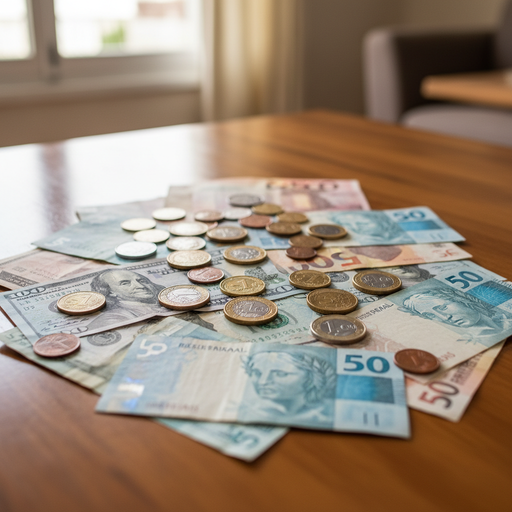
In March 2026, major international media outlets confirmed that Iran has started imposing transit fees of up to $2 million on commercial vessels passing through the Strait of Hormuz. These fees are being charged per voyage, on a case-by-case basis, and most notably, payments are being accepted in Chinese yuan instead of US dollars. This is not just a financial charge it represents a geopolitical tool that Iran is actively deploying.
IMPORTANCE OF THE STRAIT OF HORMUZ:
The Strait of Hormuz is a narrow sea passage connecting the Persian Gulf to the Gulf of Oman, and it is responsible for the transit of approximately 20 to 30 percent of the world’s crude oil and liquefied natural gas (LNG). Any disruption in this route creates a domino effect across global oil supply chains, fuel prices, and inflation. Iran has effectively signaled that any vessel wishing to pass through this waterway must seek permission, undergo documentation review, and pay the required fee otherwise, access may be restricted.
IRGC CONTROL AND ENFORCEMENT:
The Islamic Revolutionary Guards Corps (IRGC) has established de facto control over the region. Ships are required to enter Iranian-monitored waters, undergo inspection, and only then are granted permission to proceed. Reports confirm that at least two vessels have already paid these fees, and notably, in Chinese yuan. This indicates that the system is not theoretical it is already being implemented.
LEGISLATIVE AND POLITICAL STRATEGY:
At the legislative level, Iran is advancing a parliamentary bill aimed at formally codifying this system. The goal is to establish official sovereignty, control, and oversight over the Strait of Hormuz while simultaneously creating a permanent revenue stream through transit fees. Iranian officials have openly stated that the strategic position of the Strait can be used as leverage against Western nations and as a tool to restrict or influence maritime access.
GLOBAL ENERGY DEPENDENCE AND NEGOTIATIONS:
The global implications of this move are significant. Japan, which imports approximately 70 percent of its oil from the Middle East via the Hormuz route, is reportedly engaging in negotiations with Iran. Some reports suggest that Japan may consider purchasing oil in Chinese yuan to ensure safe passage for its tankers. This shift is not just about energy security it signals a potential move toward de-dollarization in global trade.
INTERNATIONAL RESPONSE AND DIPLOMATIC TENSION:
South Korea has also been impacted, with its foreign ministry publicly urging Iran to reduce tensions and ensure safe navigation for international shipping. India has successfully navigated vessels through the region but has clearly stated that international law guarantees freedom of navigation and that no country has the legal right to impose such transit fees. This highlights the legal and diplomatic tensions surrounding Iran’s actions.
UNITED STATES POSITION AND MARKET SIGNALS:
From the United States perspective, there are mixed signals. While statements suggest that some vessels have been allowed passage, actual shipping activity remains disrupted. Market-based prediction platforms indicate low confidence in a near-term return to normal shipping conditions. In an effort to stabilize markets, temporary measures have been taken involving oil supply adjustments, reflecting the seriousness of the situation.
SHIPPING INDUSTRY UNDER PRESSURE:
Shipping companies and oil traders are now operating in an extremely uncertain environment. Some are quietly paying the fees to ensure passage, while others are exploring alternative routes, such as pipeline options through Saudi Arabia. However, these alternatives come with limited capacity and cannot fully replace the Strait’s role.
INSURANCE COST SURGE:
Insurance costs have surged dramatically. War risk premiums, marine hull insurance, cargo insurance, and protection and indemnity coverage have all reached exceptionally high levels. This increase in operational costs further compounds the financial impact on global trade and energy markets.
EXPERT ANALYSIS AND INDUSTRY IMPACT:
Experts in global energy policy have noted that while a fully formalized toll system may be complex to maintain, the current unofficial and ad-hoc fee collection is already altering established shipping norms. Even without full legal codification, the practical impact is being felt across the industry.
OIL MARKET VOLATILITY:
Global oil markets are highly sensitive to any disruption in the Strait of Hormuz. Even minor developments can trigger significant volatility in oil futures. When such a critical portion of the world’s energy supply passes through a single chokepoint under uncertain conditions, the economic consequences become unavoidable.
CHALLENGE TO THE PETRODOLLAR SYSTEM:
This situation also challenges the long-standing petrodollar system. For decades, global oil trade has been conducted primarily in US dollars. However, the acceptance of Chinese yuan for transit payments introduces a potential shift in global financial dynamics. If major economies begin conducting energy transactions in alternative currencies, it could gradually weaken the dominance of the US dollar as the global reserve currency.
IMPACT ON CRYPTO MARKETS:
The impact is not limited to traditional markets. Cryptocurrency markets are also affected by such geopolitical developments. Rising oil prices, currency uncertainty, and global tensions often lead investors to shift toward alternative assets such as Bitcoin and gold. Historically, such environments have triggered increased interest in decentralized and store-of-value assets.
FINAL GLOBAL OUTLOOK:
Overall, #StraitOfHormuzIntroducesTransitFees is not just a trending hashtag it represents a significant shift in global power dynamics. Geography is being used as a strategic weapon, energy routes are being monetized, and control over a passage that handles 20–30 percent of global oil supply is being transformed into direct economic leverage. The world is watching, markets are reacting, and a new chapter in global economic history is unfolding.
#CreaterLeaderBoard