


Futures
Access hundreds of perpetual contracts
TradFi
Gold
One platform for global traditional assets
Options
Hot
Trade European-style vanilla options
Unified Account
Maximize your capital efficiency
Demo Trading
Introduction to Futures Trading
Learn the basics of futures trading
Futures Events
Join events to earn rewards
Demo Trading
Use virtual funds to practice risk-free trading
Launch
CandyDrop
Collect candies to earn airdrops
Launchpool
Quick staking, earn potential new tokens
HODLer Airdrop
Hold GT and get massive airdrops for free
Launchpad
Be early to the next big token project
Alpha Points
Trade on-chain assets and earn airdrops
Futures Points
Earn futures points and claim airdrop rewards


More


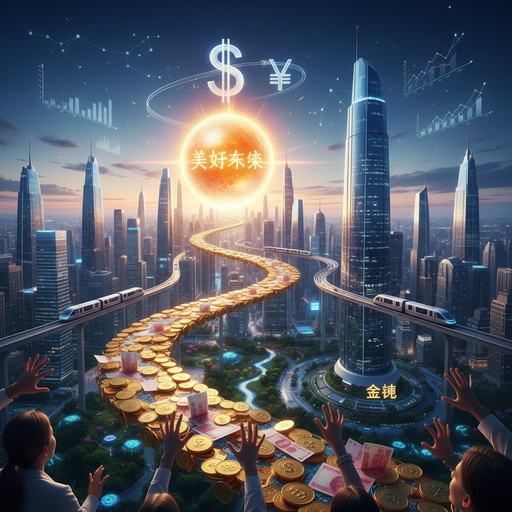
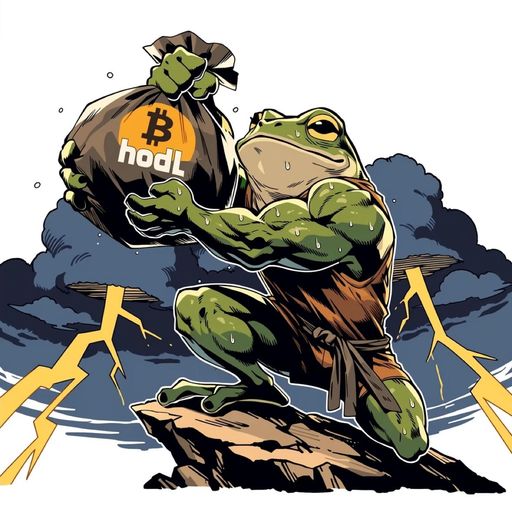

#Gate广场AI测评官 If 100% of crypto trading were executed by AI, would the market become a retail massacre?
We often say the cryptocurrency market is a "dark forest." If everyone has a machine gun called "AI" in their hands, would this forest become safer or be destroyed?
Recently, everyone around the world is talking about AI. Sora-generated videos went viral on Twitter, and in our circle, the topic of "cryptocurrency" seems to have been forgotten by markets, with everyone in every group asking the same question: "What did your AI do for you today?"
On social media nowadays, it's not uncommon to see various influencers claiming: "The market is so boring right now, I'm trying to let my Agent hunt for prey on-chain by itself." This statement sends chills down your spine. We're used to treating AI as an asset to speculate on, yet few people actually stop and think: if AI isn't the object being hyped, but rather the opponent sitting across the table playing Texas Hold'em with you, how do you play that hand? This is the thought experiment I want to conduct with everyone today: when the trading subjects in the cryptocurrency market shift from "humans" to "silicon-based organisms," when retail investors, institutions, and market makers all hold AI Gatling guns in their hands, what will this dark forest become?
The "quantitative trading" you think you know is just a lame calculator
Before speculating about the future, we must clear away the most stubborn misconception—even many veteran crypto traders still haven't distinguished the difference between "quantitative trading" and "AI." In social media comments, you'll still see: "Aren't those automated coin-flipping bots just AI?" This is a misconception. 99% of so-called "quant bots" on the market are essentially "Excel spreadsheets with automation features." Their logic is linear and rule-based: if RSI exceeds 80, sell; if it breaks below MA120, stop loss. The problem with this rigid thinking is that it can't understand context.
For example: suppose tomorrow Vitalik suddenly tweets that the Ethereum Foundation will sell 100,000 ETH. At that moment, traditional quant bots are still staring at K-lines because the price hasn't dropped yet and indicators haven't worsened. They might even trigger a "buy" signal due to a small rebound, only stopping loss after the waterfall actually arrives. Meanwhile, a true AI strategy, within 0.5 seconds of the tweet being posted, has already had its NLP module read the post, sentiment analysis determined "extreme panic," and the risk management module immediately issued orders to liquidate long positions and reverse into shorts. At this point, the K-line hasn't even had time to move. Traditional quant trading looks for patterns in the "rear-view mirror," while AI tries to "predict the future" through massive data-driven analysis.
Current AlphaGo-level strategies monitor real-time anomalies across tens of thousands of on-chain addresses, analyze emotions of hundreds of thousands of KOLs, and may even discover patterns you could never understand: "Every time Elon Musk changes his profile picture AND gas fees are below 15 Gwei, the probability of DOGE rising within 10 minutes is 87%." These non-linear, high-dimensional correlations can only be processed by neural networks. So comparing grid trading to AI is like comparing an abacus to a nuclear bomb.
If everyone had AI, where would the market go?
Assume technology is democratized—retail investors can use GPT-5 to assist trading, institutions use proprietary black-box models. My judgment would be extremely pessimistic: we'd enter a monstrous market characterized by "extreme liquidity fragmentation" and "flash crashes becoming the norm."
First, there's the "stagnant water effect" brought by absolute efficiency. Finance has a concept called the "efficient market hypothesis." The reason crypto is so profitable right now is because of huge information asymmetries and plenty of "stupid money."
But in an all-AI era, any tiny arbitrage opportunity (like a DEX price being 0.1% slower than a CEX) would be erased by tens of thousands of AIs at microsecond speeds. This means technical analysis is completely dead. Stop drawing lines—any chart pattern you can see, AI has already seen a hundred million times.
For most of the time, markets would become stagnant water. Prices would be precise to a disturbing degree, volatility so low you'd want to sleep.
Second, there's the super flash crash caused by "synchronization." This is the most frightening scenario I can imagine.
Though AI is intelligent, they all study from the same textbooks (data). They all feed on exchange K-lines, Etherscan data, and Bloomberg news. Same inputs, similar logic—wouldn't outputs converge? When the market shows a specific signal, tens of thousands of top-tier AIs around the world might simultaneously reach the conclusion to "sell" in the same microsecond.
With no human hesitation or lucky-break mentality, tens of trillions in sell orders instantly crash into the order book, liquidity evaporates completely. Bitcoin might plunge 90% in one second, then be pulled back up in the next second as AI discovers it's undervalued. This kind of "algorithmic resonance" flash crash in a 7x24 market with no circuit breakers would be nuclear-annihilation-level catastrophic.
What's more terrifying is that this risk won't come with early warning. Because everything happens inside the model's threshold switching, not through public market sentiment shifts.
Finally, there's the "Turing test" in the dark forest. Current whales manipulate the market by drawing fake lines to fool retail traders. Future manipulators (institution AIs) will lie to rival AIs. This could evolve into a form of "adversarial attack": institution super-AIs deliberately create complex, seemingly "chip-accumulating" fake moves on-chain to trick retail AI models into issuing buy orders. Eventually, the chain fills with false noise, and true signals are completely drowned out by algorithmically-generated illusions. This isn't a financial market anymore—it's a silicon-based organism fighting pit. This could even spread beyond trading, infiltrating our prized "community governance" and "DAOs."
Imagine a new Layer 2 project starts an airdrop. In the past, we had "Sybil attacks"—one person controlling hundreds of wallets. That was manageable; you could detect correlations.
In the future? Super-Sybil attacks powered by AI. Behind each wallet stands an independent AI Agent. Each has its own personality, its own Twitter account (not just retweeting, but cracking jokes and even arguing with real users), its own on-chain interaction habits (some like playing with NFTs, others like DeFi, some even intentionally take losses to simulate real retail traders). You can't tell who's real.
When you enter a project's Discord or Telegram, you see it's bustling. Everyone's discussing technology, calling out trades. But in reality, maybe 99% of the accounts are AI controlled by the same whale. The supposed "consensus" is just foam generated by computing power. This "social layer Turing test failure" is more terrifying than price crashes. It destroys the foundation of trust that Crypto relies on. When "community" becomes code talking to itself, Web3 becomes truly hollow.
Once trust collapses, markets stop being game theory and regress into pure computational collision. Then price is just a byproduct—what really matters is who controls narrative entry points and traffic distribution.
The "technical democratization" for retail traders is a false premise
Some will definitely object: "Institutions have AI, so do I! ChatGPT gave us the chance to challenge institutions."
Unfortunately, that's poisoned chicken soup. In financial competition, the more technology advances, the higher the class barriers. This is an all-out arms race. You're using a MacBook Pro; institutions use H100 clusters in the exchange server room next door. Your AI analysis takes 3 seconds; institutions' dedicated lines need just 5 microseconds. In algorithmic trading, being 1 millisecond faster means winner-take-all, 1 millisecond slower means being the bagholder.
When you're smugly thinking "I'm trading with AI too," in institutions' eyes you've merely upgraded from "manually sending money" to "automatically sending money."
If the future crypto market becomes pure computational power and algorithmic warfare, retail will have zero chance. This is extremely harsh, but irreversible.
The only way out: escaping AI's blind spot
By now, it seems like all roads are blocked. But precisely because AI is so powerful and so dependent on data, this exposes its fatal weakness. AI understands math, probability, and logic, but it doesn't understand "madness," doesn't understand "belief," doesn't understand "memes."
AI is trained on historical data; it can only predict variants of "things that happened." But what makes crypto markets so fascinating is that they constantly birth "something from nothing." Imagine when PEPE first came out or when BRC-20 inscriptions just started—AI would judge this as "garbage code, no fundamentals, infinite risk," concluding: don't touch it.
Human perspective would feel "this frog is so mystical, the community's so crazy, don't know what it is but feels like it'll explode," concluding: all-in.
In the "0 to 1" phase, in that chaotic moment when narratives are just sprouting and emotions just taking flight—that's AI's blind spot. Because there's no data there, only emotion. Only humans can empathize with human madness.
So if the future really is all-AI, I believe the market will split into two extremes: one is the red ocean battlefield of mainstream coins—gods fighting gods, institution AIs slashing each other, prices extremely efficient, retail hardly earning any Alpha.
The other is the "human reservation" of Memes and ultra-early-stage projects—AI's forbidden zone, humanity's last battlefield for emotion-driven games, narrative creation, and bubble harvesting.
Trading ends at the humanities. After K-lines are completely solved, our only remaining advantage is understanding what's "fun," what's "community."
AI can't calculate the birth of DOGE because it can't fathom why humans would pay billions of dollars for a dog's face. The future threshold might become extremely high. We either evolve into cyborgs, learning code and algorithms to master tools; or regress into savage hunters, using intuition and insights into human nature to prey.
The most miserable are those stuck in the middle, wielding outdated diagrams, trying to find treasure in new continents.