


Futures
Access hundreds of perpetual contracts
TradFi
Gold
One platform for global traditional assets
Options
Hot
Trade European-style vanilla options
Unified Account
Maximize your capital efficiency
Demo Trading
Introduction to Futures Trading
Learn the basics of futures trading
Futures Events
Join events to earn rewards
Demo Trading
Use virtual funds to practice risk-free trading
Launch
CandyDrop
Collect candies to earn airdrops
Launchpool
Quick staking, earn potential new tokens
HODLer Airdrop
Hold GT and get massive airdrops for free
Launchpad
Be early to the next big token project
Alpha Points
Trade on-chain assets and earn airdrops
Futures Points
Earn futures points and claim airdrop rewards


More





STON.fi: The DeFi Protocol Reshaping TON Blockchain's Financial Infrastructure
Telegram has evolved into one of crypto’s most powerful onboarding engines. With its 1 billion user base, mini-app ecosystem, and wallet integrations, it transforms everyday users into active participants in decentralized finance without the barriers typically associated with traditional crypto platforms. At the heart of this transformation is The Open Network (TON), and within this rapidly expanding ecosystem, ston.fi has emerged as a pivotal force driving DeFi adoption and innovation. This comprehensive guide explores how ston.fi is architecting a more accessible financial future on TON.
What Makes STON.fi a Game-Changer for DeFi
STON.fi operates as a sophisticated automated market maker (AMM) protocol, enabling users to exchange tokens seamlessly without intermediaries or permission requirements. Launched in 2022, the platform has rapidly scaled to serve millions of users while processing over $5.7 billion in cumulative swap volume. The ecosystem encompasses multiple products: the core STON.fi trading interface and Omniston, an advanced liquidity aggregation tool designed to optimize swap execution across multiple sources.
The protocol’s architecture prioritizes user protection and efficiency. Funds reside in trustless smart contracts and decentralized liquidity pools—anyone can establish a pool, but no single participant controls the assets or mechanisms. This design prevents individual liquidity providers from manipulating or withdrawing others’ funds. Users only recover assets through equivalent crypto exchanges, ensuring fair and predictable interactions.
Accessing STON.fi requires only a TON-compatible wallet, eliminating signup friction. The platform delivers several compelling advantages:
STON.fi’s leadership team combines decades of fintech and blockchain expertise. CEO Slavik Baranov brings nearly 30 years in software and blockchain development. The organization also includes Alexey Papirovskiy (CPO) with deep DeFi architecture experience, Andrey Fedorov (CMO & acting CBDO) leading growth initiatives, Dmitriy Malinovskiy (CFO) managing financial operations, and Ethan Clime (Head of Developer Relations) fostering the builder community.
The Core Mechanics: Swapping, Staking, and Earning on STON.fi
How Token Swaps Actually Work
Picture STON.fi as an intelligent vending machine operating 24/7—whenever you need to exchange tokens, the system executes instantly without waiting for another party. The protocol employs a fully decentralized structure, meaning STON.fi itself never accesses your assets or collects personal data. Every transaction occurs within transparent, immutable smart contracts.
A standard swap transaction incurs a 0.3% fee: 0.2% flows to liquidity providers who maintain market depth, while 0.1% supports protocol development and sustainability. This fee structure incentivizes participation while keeping costs competitive.
Staking: Governance and Rewards
STON.fi implements a sophisticated staking mechanism enabling token holders to participate in protocol governance and earn rewards. The process involves:
ARKENSTON functions as a governance NFT, granting holders decision-making authority over STON.fi protocol parameters once the DAO launches. These soulbound tokens remain tied to the original staker and burn when unstaking occurs. GEMSTON incentivizes sustained ecosystem participation and can be transferred or traded.
Farming: Amplified Returns Through Liquidity Provisioning
Users can generate higher yields by farming liquidity provider (LP) tokens. When you deposit assets into a liquidity pool, you receive LP tokens representing your share. Staking these LP tokens in designated farms unlocks compounded reward streams.
Farming differs fundamentally from basic staking—it demands deeper protocol understanding and carries elevated risks from price volatility. However, experienced participants typically generate substantially higher returns through active liquidity management across multiple pools.
Downside Protection for Liquidity Providers
STON.fi distinguishes itself through an innovative impermanent loss protection feature. This mechanism addresses a core challenge: when token prices within a pool shift significantly, liquidity providers experience losses despite earning trading fees.
To qualify, liquidity providers must deposit funds in the STON/USDT pair before each month begins. The program has effectively doubled LP participation since launch, demonstrating meaningful confidence among participants. The team actively evaluates expansion opportunities to cover additional trading pairs.
Omniston: Next-Generation Liquidity Aggregation
Omniston represents STON.fi’s innovative response to a persistent DeFi challenge: sourcing optimal liquidity across fragmented markets. This decentralized aggregator connects applications, developers, and liquidity providers through a unified interface.
The aggregator operates via trustless mechanisms and smart routing algorithms. When you initiate a swap through an Omniston-integrated application:
This process executes entirely on-chain with built-in security: if any participant violates protocol rules, the transaction cancels automatically and funds return immediately. Developers benefit from simplified integrations, while liquidity providers access a broader user base through Omniston’s routing.
The STON Token: Governance and Utility
STON functions as a utility token native to the TON blockchain, serving multiple critical roles:
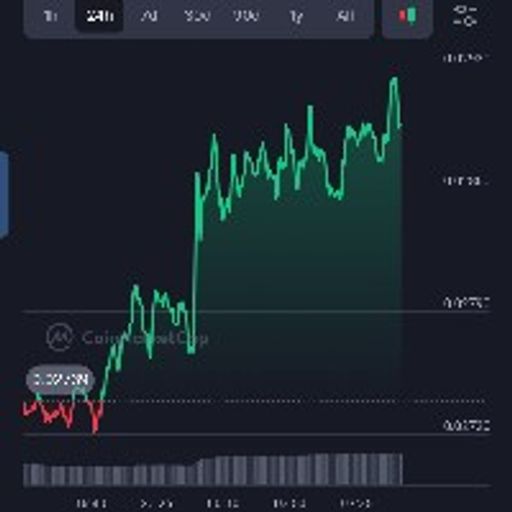
The token features a maximum supply of approximately 100 million STON, with roughly 1 million currently in active circulation. Current pricing and market data can be tracked through platforms like CoinGecko.
Ecosystem Expansion: Trading Pairs and Strategic Partnerships
STON.fi has cultivated a robust ecosystem supporting over 23,000 trading pairs. The platform accommodates TON-native assets alongside ecosystem-specific tokens from various projects. Its permissionless architecture allows any project to launch new pools, with tokens regularly added as the ecosystem expands.
Whether trading stablecoins, community tokens, or specialized assets, users access deep liquidity and competitive rates through Omniston’s intelligent routing. STON.fi maintains partnerships with trusted infrastructure providers including Tonkeeper and Wallet (native TON wallets), launchpads like Blum and Ton.fun, and cross-chain DEXs including Symbiosis. These integrations reinforce STON.fi’s position as the liquidity backbone for TON’s broader ecosystem.
Building the Future: STON’s Ambitious Cross-Chain Roadmap
STON.fi’s development trajectory reflects bold ambitions for DeFi infrastructure evolution. The phased roadmap outlines:
Phase 1: TON-Tron Interoperability Enable cross-chain swaps between TON and Tron networks without requiring wrapped tokens or bridge intermediaries. An open-source SDK permits developers to integrate cross-chain functionality into their applications.
Phase 2: EVM Integration & Stableswap Enhancement Extend cross-chain capability to Polygon and other EVM-compatible networks. Introduce stableswap routing—optimized mechanics for high-volume stablecoin trading with minimal slippage and fees regardless of available liquidity.
Phase 3: Universal Cross-Chain Access Deploy full cross-chain protocol functionality enabling seamless access to tokens across all integrated networks. Expand to additional blockchain ecosystems.
Phase 4: Telegram Bot & DAO Governance Launch a Telegram-native bot providing all 1 billion Telegram users direct cross-chain access. Simultaneously activate decentralized autonomous organization governance, transferring protocol control to the community.
Phase 5: Advanced Trading & Capital Efficiency Introduce limit orders, margin trading, and gasless swaps rivaling traditional exchange experiences. Launch V3 pools featuring concentrated liquidity mechanics—a transformative upgrade for capital efficiency benefiting both providers and traders.
Governing STON.fi: The Role of Governance Tokens in Protocol Evolution
STON.fi’s governance structure emphasizes community ownership and decentralized decision-making. Stakeholders who lock their STON tokens receive ARKENSTON governance rights, directly shaping protocol parameters, feature prioritization, and resource allocation.
This model contrasts sharply with centralized platforms where protocol changes depend entirely on company discretion. By distributing governance authority, STON.fi creates sustainable incentives for long-term participant alignment—stakeholders literally govern the system they use and benefit from.
Growing the STON.fi Ecosystem: Developer Grants and Community Rewards
Developer Grant Program
Recognizing that innovation requires resources, STON.fi established a Grant Program supporting developers integrating the STON.fi SDK into new applications. The initiative provides:
The program welcomes individual developers, emerging startups, and established companies—no formal deadline exists, allowing continuous applications. Basic eligibility requires projects to:
Stonbassadors: Community-Driven Growth
STON.fi strengthens community bonds through the Stonbassadors program, rewarding members who drive platform visibility and adoption. Unlike rigid programs requiring formal verification, Stonbassadors welcomes any individual passionate about STON.fi and DeFi—participants can immediately begin contributing.
Monthly reward pools distribute up to 10,000 STON tokens among ambassadors based on contribution quality and impact. The program also features a referral component: ambassadors earn 10% of their referrals’ rewards for a minimum six-month period when referred individuals generate $50+ in monthly token earnings.
Contributors submit monthly contribution documentation through the official Stonbassadors portal, with the team distributing rewards based on demonstrated value creation.
The Future of DeFi on TON: Building an Interoperable Financial Layer
STON.fi represents a distinctive approach to DeFi infrastructure—democratizing financial access regardless of geography while empowering both developers and liquidity providers through aligned incentive structures. The protocol’s evolution toward cross-chain DeFi positions it as a gateway connecting TON with major blockchain networks.
As Telegram continues accelerating crypto adoption through its massive user base, STON.fi’s role becomes increasingly critical. The platform bridges casual users to sophisticated DeFi mechanics, provides developers with powerful building blocks, and enables liquidity providers to participate in an expanding, increasingly interconnected financial ecosystem.
By combining technical sophistication with genuine accessibility, STON.fi exemplifies how next-generation protocols can reshape financial infrastructure—proving that decentralized finance need not remain the domain of experts, but instead can become a natural extension of the platforms people already trust and use daily.