


Kalshi Fines MrBeast Editor for Insider Trading, Referred to CFTC in First Public Enforcement Action
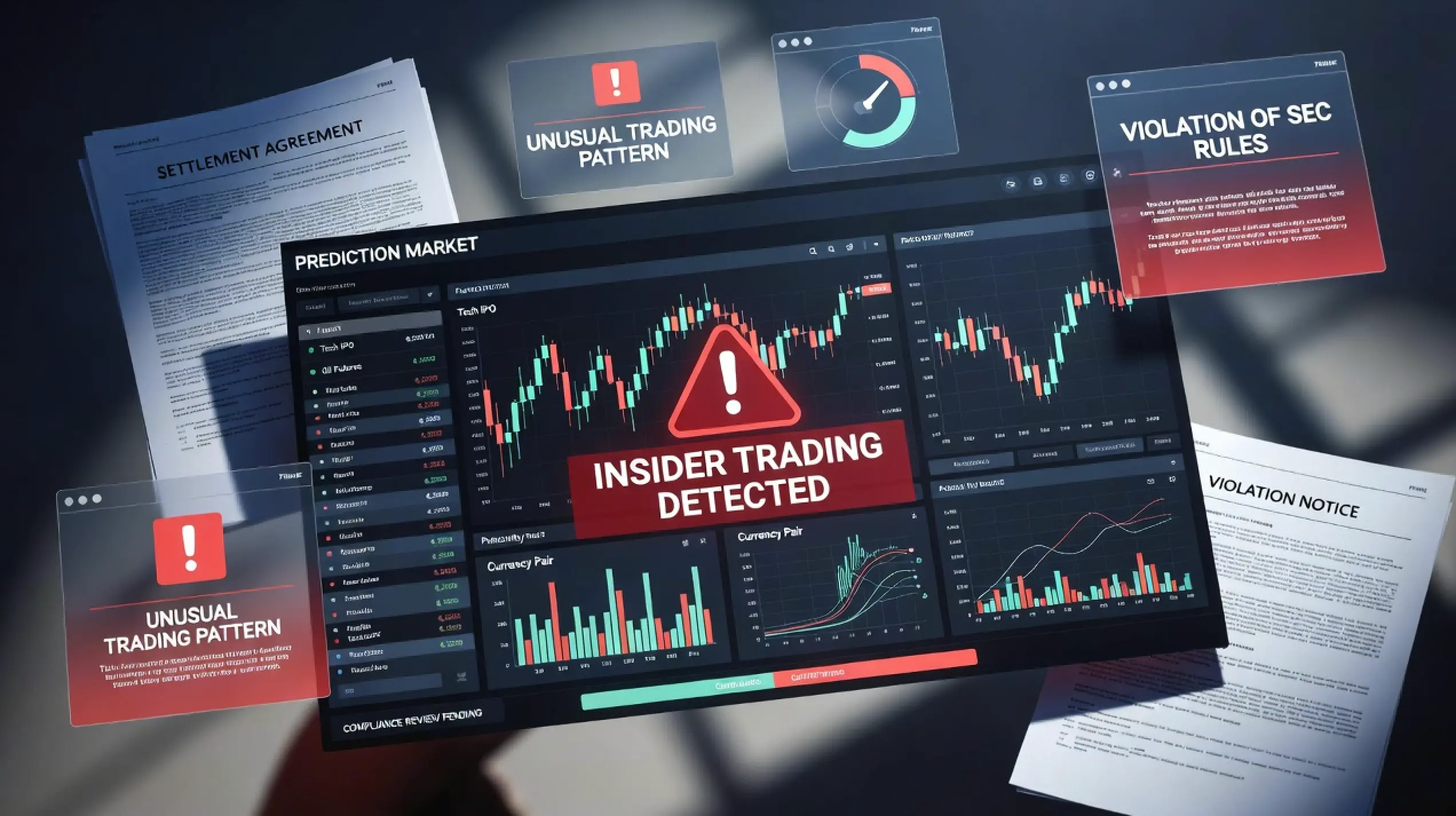
Kalshi, a regulated prediction market platform, announced on February 25, 2026, that it has fined Artem Kaptur, a visual effects editor for YouTube creator MrBeast, more than $20,000 and suspended him for two years for allegedly using non-public information about upcoming video content to execute “near-perfect” trades.
In a separate case, the platform fined former California gubernatorial candidate Kyle Langford $2,246 and banned him for five years for betting $200 on his own election bid, marking the first public disclosure of insider trading investigations by the exchange, which operates under U.S. Commodity Futures Trading Commission (CFTC) oversight.
CFTC Affirms Enforcement Authority Over Prediction Markets
The Commodity Futures Trading Commission issued a formal advisory on February 25, 2026, following Kalshi’s public disclosure, affirming its “full authority” to police illegal trading practices in prediction markets. CFTC Chairman Mike Selig characterized registered exchanges such as Kalshi as the “first line of defense” against insider trading, adding, “Let me be clear: if you attempt to engage in manipulation, fraud, or insider trading, we will find you and take action.”
The advisory noted that both cases potentially violated Section 6©(1) of the Commodity Exchange Act and CFTC Regulation 180.1, which prohibit misappropriation of confidential information in breach of a pre-existing duty. While Kalshi’s internal enforcement program handled these matters, the CFTC emphasized it retains independent authority to investigate and prosecute violations occurring on designated contract markets.
MrBeast Editor Case: Suspicious Trading Patterns Trigger Investigation
Kaptur traded approximately $4,000 on markets related to MrBeast’s content, including bets on what would occur in upcoming videos and outcomes related to the creator’s “Beast Games” reality competition series. Kalshi’s internal systems flagged the account due to “near-perfect trading success on markets with low odds, which were statistically anomalous,” according to the company. Multiple users also reported suspicious activity.
Investigators found that the trader was employed as an editor for the streamer’s show and likely had access to material non-public information connected to his trading. The platform froze the account before profits could be withdrawn, imposed a $20,397.58 financial penalty (comprising disgorgement of $5,397.58 in profits plus a $15,000 penalty), and issued a two-year suspension.
Beast Industries, MrBeast’s parent company, issued a statement declaring “no tolerance for this behavior, whether by contestants or our own employees” and confirmed it has “already initiated an independent investigation” into the matter. The company noted it maintains a “longstanding policy in place against employees using proprietary company information.”
Political Candidate Case: Self-Betting on Gubernatorial Race
In the second enforcement action, Kalshi identified Kyle Langford, then a Republican candidate for California governor, who allegedly bet $200 on his own candidacy and posted a video on X appearing to show the wager. Kalshi’s compliance team contacted Langford the same day, and he acknowledged the trades violated platform rules prohibiting candidates from trading in markets related to their own elections.
The platform imposed a $2,246.36 financial penalty (including disgorgement of $246.36 in trading profits plus a $2,000 penalty) and a five-year suspension. Langford subsequently dropped out of the gubernatorial race and filed in January 2026 to run for a U.S. House seat as a Democrat, according to Federal Election Commission records.
Prediction Market Boom and Regulatory Scrutiny
Kalshi, founded in 2018 by billionaires Tarek Mansour and Luana Lopes Lara, operates as a CFTC-regulated designated contract market, allowing trading on event-based contracts covering politics, economics, weather, sports, and pop culture. The platform’s monthly active users reportedly surged from 600,000 to 5.1 million during 2025, with trading volume reaching nearly $10 billion in January 2026, over $8.5 billion of which was tied to sports betting.
The Trump administration has supported prediction market expansion, with CFTC Chairman Selig asserting exclusive federal jurisdiction over these markets and vowing to battle state efforts to regulate them as gambling operations. Several states, including Nevada, have sued Kalshi and rival Polymarket, alleging they operate unlicensed sports betting in violation of state laws.
Kalshi disclosed it has opened approximately 200 insider trading investigations over the past year, with 12 still active. The company stated the fines from these cases will be donated to a non-profit providing consumer education about derivatives markets.
FAQ: Understanding Kalshi’s Insider Trading Enforcement
Q: How did Kalshi detect the MrBeast editor’s insider trading?
A: Kalshi’s internal surveillance systems flagged Kaptur due to “near-perfect trading success on markets with low odds,” which created statistically anomalous patterns. The company also received tips from other platform users, and investigators subsequently discovered his employment relationship with MrBeast gave him access to material non-public information about video content prior to public release.
Q: What penalties were imposed, and what is the CFTC’s role?
A: Kaptur received a $20,397.58 fine (disgorgement of $5,397.58 profits plus $15,000 penalty) and a two-year suspension. Langford was fined $2,246.36 (disgorgement of $246.36 plus $2,000 penalty) and suspended for five years. Both cases were reported to the CFTC, which issued an advisory affirming its authority to prosecute such misconduct and noting the cases may have violated federal commodities law.
Q: What rules govern political candidate trading on prediction markets?
A: Kalshi’s rules explicitly prohibit candidates from trading in markets related to their own elections. The platform’s head of enforcement clarified that while candidates may follow and use Kalshi’s market forecasts, they should not trade on them. The CFTC advisory noted that trading based on influence over contract outcomes potentially violates anti-manipulation and fraud provisions of the Commodity Exchange Act.
Q: How are prediction markets regulated in the United States?
A: Prediction markets operating as designated contract markets, including Kalshi and Crypto.com, are regulated by the CFTC under the Commodity Exchange Act, which designates event contracts as swaps subject to federal oversight. The Trump administration has asserted exclusive federal jurisdiction, arguing state gambling laws are preempted, though multiple states continue litigation challenging this position.
Industry Implications and Ongoing Oversight
Kalshi’s first public enforcement actions signal increased scrutiny of insider trading in rapidly growing prediction markets, where users can wager on increasingly granular real-world events. The CFTC’s explicit endorsement of exchange-led enforcement, coupled with its warning of independent prosecutorial authority, establishes a dual-layer regulatory framework for market integrity.
The cases also highlight the expanding scope of prediction market oversight, extending from traditional financial instruments to entertainment content and political campaigns. As the industry continues its explosive growth—from dozens to over 200,000 active markets—regulators and exchanges face ongoing challenges in detecting and prosecuting misconduct by individuals with access to non-public information.
Related Articles
$1.2M in Profits Tied to Insider-Linked Addresses in ZachXBT Market Bet
ZachXBT exposes insider trading at Axiom, with Polymarket insiders profiting over $1.2 million in advance
CFTC Cracks Down on Prediction Market Abuse as Insider Trading Cases Surface on Kalshi