

Trade
Basic
Futures
Futures
Hundreds of contracts settled in USDT or BTC
TradFi
Gold
Trade global traditional assets with USDT in one place
Options
Hot
Trade European-style vanilla options
Unified Account
Maximize your capital efficiency
Demo Trading
Futures Kickoff
Get prepared for your futures trading
Futures Events
Participate in events to win generous rewards
Demo Trading
Use virtual funds to experience risk-free trading
Earn
Launch
CandyDrop
Collect candies to earn airdrops
Launchpool
Quick staking, earn potential new tokens
HODLer Airdrop
Hold GT and get massive airdrops for free
Launchpad
Be early to the next big token project
Alpha Points
Trade on-chain assets and enjoy airdrop rewards!
Futures Points
Earn futures points and claim airdrop rewards
Investment
Simple Earn
Earn interests with idle tokens
Auto-Invest
Auto-invest on a regular basis
Dual Investment
Buy low and sell high to take profits from price fluctuations
Soft Staking
Earn rewards with flexible staking
Crypto Loan
0 Fees
Pledge one crypto to borrow another
Lending Center
One-stop lending hub
VIP Wealth Hub
Customized wealth management empowers your assets growth
Private Wealth Management
Customized asset management to grow your digital assets
Quant Fund
Top asset management team helps you profit without hassle
Staking
Stake cryptos to earn in PoS products
Smart Leverage
New
No forced liquidation before maturity, worry-free leveraged gains
GUSD Minting
Use USDT/USDC to mint GUSD for treasury-level yields

More






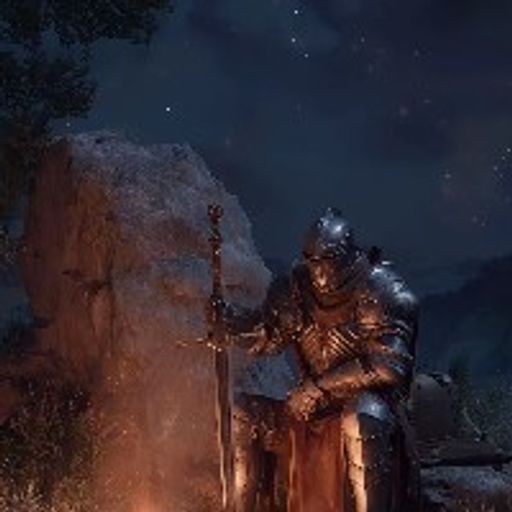
I finally understand why Elon Musk is so convinced that we are living in a "simulation."
Author: Jiayi Jiayi
Elon Musk: The probability that we are living in a base reality is only one in a billion.
Neil deGrasse Tyson (Famous American astrophysicist): I wish I could find a strong argument to refute it (the simulation hypothesis), but I can’t find a single one.
I’m an investor and an entrepreneur. I believe in code, logic, and verifiable data. This sci-fi-like speculation, to me, is just billionaire entertainment after dinner.
But what truly made me start to doubt isn’t Musk, nor physics, but two small “metaphysical” things that happened to me.
First thing: about a Bazi master
I have a Bazi master I’ve worked with for years. Before every new investment, I ask him to do a reading. I’m not superstitious; I just see it as an alternative “risk assessment.”
Strangely, his results almost perfectly match my actual investment returns. He can even accurately predict at which stage the project will encounter certain “obstacles.”
At first, I thought it was coincidence. But after this “coincidence” repeated over a dozen times, I had to admit: there must be some logic behind it that I don’t understand.
Second thing: about my tarot-reading best friend
I have a very talented best friend—excellent family background, top education. A few years ago, she suddenly said she wanted to learn tarot.
I thought she was crazy at the time. But because I knew her well, I didn’t say anything.
Later, I started asking her questions just for fun. The results were incredibly accurate.
I began to doubt myself. I asked her to do readings in different ways: offline card spreads, using a phone app, even asking her to repeat the same question. Every time, the core message was astonishingly consistent.
I was completely baffled. I asked her, “What exactly is the principle behind tarot?”
She gave me a chilling explanation:
“You can think of this world as a huge database. Tarot readers are like programmers—different skill levels mean different ‘database access permissions.’ The higher your ability, the more comprehensive and accurate the data you can access. Tarot is just a tool we use to query this database.”
“Database permissions”… that phrase hit me like lightning.
Suddenly, I remembered Musk’s words. I started to see the world from a programmer’s most fundamental perspective.
And then, I found more and more “coincidences,” so many that I couldn’t deny them.
Coincidence 1: “Junk code” in DNA
Our DNA is like an extremely complex code. But strangely, 98% of its sequences don’t code for proteins—they’re “junk DNA.”
Why is there so much “useless” code?
If you see the world as a program, it’s easy to explain:
It’s legacy code from older versions
It’s features that were commented out but not deleted
It’s redundant data left over after system upgrades
Just like old files on your computer—unused but not deleted.
Coincidence 2: “Version updates” before and after the Great Flood
Why do all ancient civilizations have a shared memory of a “Great Flood”? In China, there’s Nüwa repairing the sky; in the West, Noah’s Ark.
Why, in these myths, did humans before the flood live astonishingly long lives (often 800-900 years), but after the flood, lifespan drops sharply?
Isn’t this like a server “reset”?
Great Flood = system reboot
Pre-flood long lifespans = old version parameters
Post-flood lifespan drop = new version adjustments (perhaps to limit player abilities)
Coincidence 3: The universe’s “performance limits”
⭕️ Big Bang: not a singularity, but the system booting up (UNIVERSE.EXE LOADING…)
⭕️ Speed of light: not a physical limit, but a CPU clock speed cap
⭕️ Déjà vu: not memory confusion, but cache errors
When I connect these clues, I arrive at a chilling conclusion:
If we think of our world as a “virtual” environment, everything makes sense.
So, if this is true, what should we do? Just lie back and accept it?
At first, this conclusion made me feel utterly nihilistic. If everything is just code, what’s the point of our efforts?
But metaphysics gave me another answer: you can change your fate.
Yes, this world might be virtual, but all your feelings—love, joy, pain, achievement—are absolutely real.
Your destiny is like the default settings of a game character; it determines your upper limit. For example, I might never become a billionaire in this lifetime.
But I can strive within my version to reach my maximum potential.
I can fully experience everything this world offers—feel every heartbeat, create my own value.
Because, experience is the only truly real thing in this game.
Epilogue: From “player” to “advanced player”
Writing this, I finally understand Musk’s conviction. He’s not just playing philosophy; he’s using first principles thinking to explore the truth of our existence.
The simulation theory isn’t pessimistic. Quite the opposite—it gives us unprecedented freedom.
Our generation stands at a great turning point—from passive “players” to active “advanced players.” We hold the keys of Web3 and AI, giving us the chance to explore, even modify, the rules of this “simulated world.”
And that’s more important than figuring out whether the world is real or fake.
So, stop laughing. Next time you encounter an unexplainable “coincidence,” consider this:
What kind of role do you want to play in this game?