


The path of integration between stablecoins and on-chain credit and privacy
Author: Jay Jo Source: Tiger Research Translation: Shan Ouba, Golden Finance
Abstract
- Cryptocurrencies have demonstrated their practicality in remittance and payment scenarios, but their impact on the broader financial system remains limited. Traditional finance provides complex and sophisticated services, whereas cryptocurrencies still fall short in terms of application breadth and level of trust.
- Stablecoins have improved financial accessibility as digital currencies, but their role is still limited to basic functions such as asset storage and transfer. To achieve more complex financial activities, the cryptocurrency system urgently needs support from on-chain credit systems and privacy protection technologies.
- These three key elements form an interconnected structure that allows cryptocurrencies to transcend basic functionalities and possess the potential for structural transformation. The integration of stablecoins, credit, and privacy will bring a new experience and operational mode that traditional finance lacks.
1. The potential of the cryptocurrency industry has just begun to be unleashed
Crypto is gradually expanding from speculative tools to practical scenarios such as remittances and payments, but its market share is still limited compared to traditional finance. According to the data, the total size of the traditional financial market in 2024 will be $247 trillion, while the crypto market will be only $4 trillion, a difference of nearly 60 times. **
The practicality of cryptocurrency has been validated, but mainstream adoption has not yet been realized, and its application scope remains narrow, with a significant gap still existing between it and the mature financial system.
So, what does it take for crypto to enter the broader financial ecosystem? This report focuses on three core elements – stablecoins, credit, and privacy – and explores their expansion paths and strategies.
2. How do cryptocurrencies expand their influence?
! XK9KjdoKBVvua0XVM8pE5aEfhD0IMkPLL1kuDjB0.png
2.1. Stablecoins: The potential has been proven, but there are still structural limitations
Stablecoins are the clearest example of cryptocurrencies transitioning from speculation to practical financial infrastructure. Existing cryptocurrencies struggle as payment methods or stores of value. High volatility and complex usage have created numerous obstacles. Stablecoins break through these limitations, providing stable value for fundamental financial functions such as transfers, storage, and trading. This reflects a clear product-market fit (PMF).
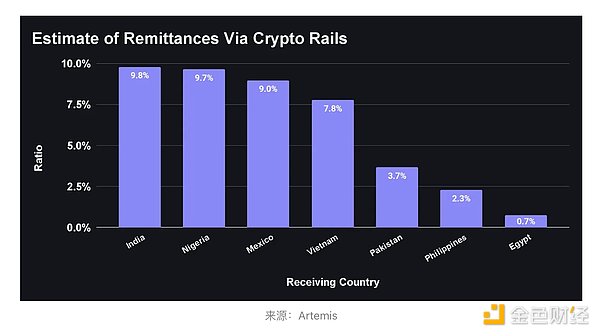
In emerging markets with weak financial infrastructure, severe inflation, and strict capital controls, stablecoins are a viable alternative. In these regions, dollar-pegged stablecoins like USDT and USDC are more trusted than local currencies. They significantly enhance the accessibility of finance.
However, stablecoins are just a starting point. Their current role is primarily focused on basic functions such as asset storage and transfer. Their impact is still limited to specific regions or use cases. Traditional finance offers complex services such as credit, investment, and asset management. Due to structural limitations, stablecoins themselves cannot replace or expand these services.
These limitations stem from the structural characteristics of cryptocurrencies, rather than simple technical issues. The transparency of blockchain makes all transactions public, which undermines the financial privacy of individuals and businesses. Currently, collateral-based lending systems cannot achieve flexible, credit-based asset management. These limitations represent the common challenges faced by all cryptocurrency finance (including stablecoins).
Stablecoins require additional components to go beyond existing possibilities and expand into a broader financial ecosystem. The cryptocurrency industry must develop effective on-chain credit systems and privacy protection technologies. This way, stablecoins can evolve from simple digital currencies into the infrastructure that supports complex financial activities. This lays the foundation for significantly enhancing the financial influence of cryptocurrencies.
2.2. On-chain Credit: Expanding the Structure of Crypto Finance
Stablecoins have proven the effectiveness of cryptocurrencies in practice and laid the groundwork. However, relying solely on stablecoins is not sufficient to fully deepen the financial structure. The next step is on-chain credit. This is the key driver for expanding the structural coverage of cryptocurrency finance.
Current crypto finance relies on over-collateralized loans. Borrowers must deposit assets first to obtain a loan. The loan-to-value ratio usually has a cap of 50%. Users can only borrow a loan worth half the value of the collateral if they use one Bitcoin as collateral.
This stems from the blockchain’s lack of identity verification and legal recourse. Risk management relies entirely on realizable collateral. This structure** restricts access to finance to asset holders and also limits capital efficiency. DeFi** claims to be “open to everyone”. However, credit is still limited to those who own assets.
On-chain credit scoring projects address these limitations. The Cred Protocol is a typical case. It uses machine learning to analyze on-chain behavior of DeFi protocols such as Aave, covering liquidation history, position sizes, and trading patterns.
The system predicts liquidation risk within 90 days and generates a real-time credit score based on the analysis results. These scores support risk-based lending at the wallet level, which lowers collateral requirements and may even support unsecured loans.
! 9KedwD9fRyEqttI7ns5ABBx5srndVRwU0xSHKUeb.png
3Jane takes this approach a step further. It analyzes predictable revenue streams from both on-chain and off-chain sources. This includes fixed bank deposits, DeFi activity, and exchange earnings. The model evaluates credit based on cash flow rather than asset ownership. It opens up new possibilities for “users with weak credit histories” (users with limited traditional credit histories).
Future developments may include additional sources of income, such as airdrops, DeFi participation, and node operations. These efforts are still in the early stages. However, they align with the broader trend of on-chain behavioral data being converted into actionable financial intelligence. This represents an important direction for development.
On-chain credit can extend beyond individuals to projects as well. Some projects maintain ongoing fund management. Others have stable protocol revenue streams. These projects can secure loans without external investment. They leverage their past performance records for on-chain financing. This indicates that the potential of cryptocurrency can evolve from personal finance to corporate finance.
On-chain credit ultimately lowers the collateral threshold. It enables users to build credit history through their on-chain activity. This makes crypto finance no longer limited to a structure that serves asset holders. It creates a more inclusive and participatory financial system. This reinforces the role of cryptocurrencies as a true financial infrastructure.
2.3. Privacy: Expanding the Scope of Cryptocurrency Coverage
The transparency of blockchain lays the foundation for trust in the system. However, the public nature of all transactions brings many limitations in practical applications. Sensitive financial information of individuals and businesses can be recorded and made public on the chain. This creates structural limitations that hinder the widespread adoption of cryptocurrency.
Individuals face the risk of payroll and expense record leaks. Traditional finance protects basic financial privacy, but the blockchain environment fundamentally abandons this protection. This limits real-world scalability.
Companies face more severe issues. When internal transactions are exposed to the outside, cost structures and strategies may be leaked to competitors. Asset management firms and investment companies are particularly vulnerable. The public disclosure of investment times and amounts creates opportunities for front-running and copy trading.
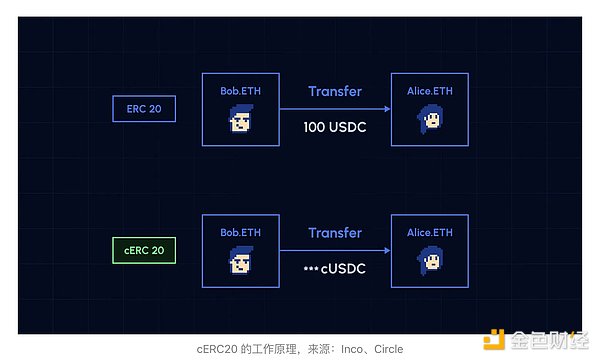
The technical approach addresses these limitations through confidentiality protection rather than complete anonymity. Inco** and Circle Research have jointly developed cERC20 (classified ERC-20). It uses fully homomorphic cryptographic (FHE) to keep transaction amounts and balances cryptographic, while maintaining on-chain transaction validity verification. **
The core advantage of cERC20 lies in selective disclosure, rather than completely anonymously hiding all information. Information is disclosed to authorized parties only when necessary. This ensures regulatory and audit compliance. It represents a technological solution that can coordinate the conflicting demands of transparency and confidentiality.
Such confidentiality technologies are prerequisites for cryptocurrency to extend beyond simple peer-to-peer transfers. They enable businesses and institutions to adopt them in the real world. cERC-20 provides the privacy infrastructure that meets these conditions. It plays a crucial role in building cryptocurrencies as a trust-based scalable structure, allowing various economic participants to engage.
3. From Limited Influence to Structural Transformation
Compared to traditional finance, the influence of cryptocurrencies is still limited. They have demonstrated product-market fit in certain areas. However, compared to the multi-layered complex system that traditional finance has built over decades, cryptocurrencies still have gaps in terms of scope and trust.
Stablecoins are the first step in bridging this gap. They improve financial channels and efficiency, especially in areas with weak financial infrastructure. However, they still focus on basic functions such as value storage and transfer. To expand into a broader financial ecosystem, it is necessary to combine on-chain credit with privacy protection technology.
When these three elements come together, cryptocurrency can transcend simple functionality and become a structure that supports sustained, comprehensive financial activities. For example, freelancer A in South Korea can receive payment from overseas in the form of stablecoins. Based on these transaction records, they can obtain on-chain loans for active investment activities. Throughout the process, financial information is always protected. However, when tax reporting is required, this information can be selectively disclosed.
The key structural change lies in automation. The complex flow of funds and regulatory compliance processes in traditional finance can be automated within a single environment. This structure also enables borderless financial participation. Users and businesses from different countries can access this ecosystem without being constrained by existing infrastructure.
Many areas of finance have yet to be implemented in an on-chain environment. However, as on-chain lending and privacy technologies continue to develop based on stablecoins, cryptocurrencies show the potential to create structural impacts comparable to traditional finance. The speed and effectiveness of the integration of these three pillars will determine whether the cryptocurrency industry can bring about real transformation for traditional finance—a sector that is 60 times larger than traditional finance.