


What impact will the stablecoin regulation bill passed in Hong Kong yesterday have on the Chinese crypto world?
With the maturity of the stablecoin market in Hong Kong and further cooperation with the mainland, both sides will occupy a more important position in the global digital finance sector, injecting new momentum into regional economic development.
Written by: Lawyer Liu Zhengyao
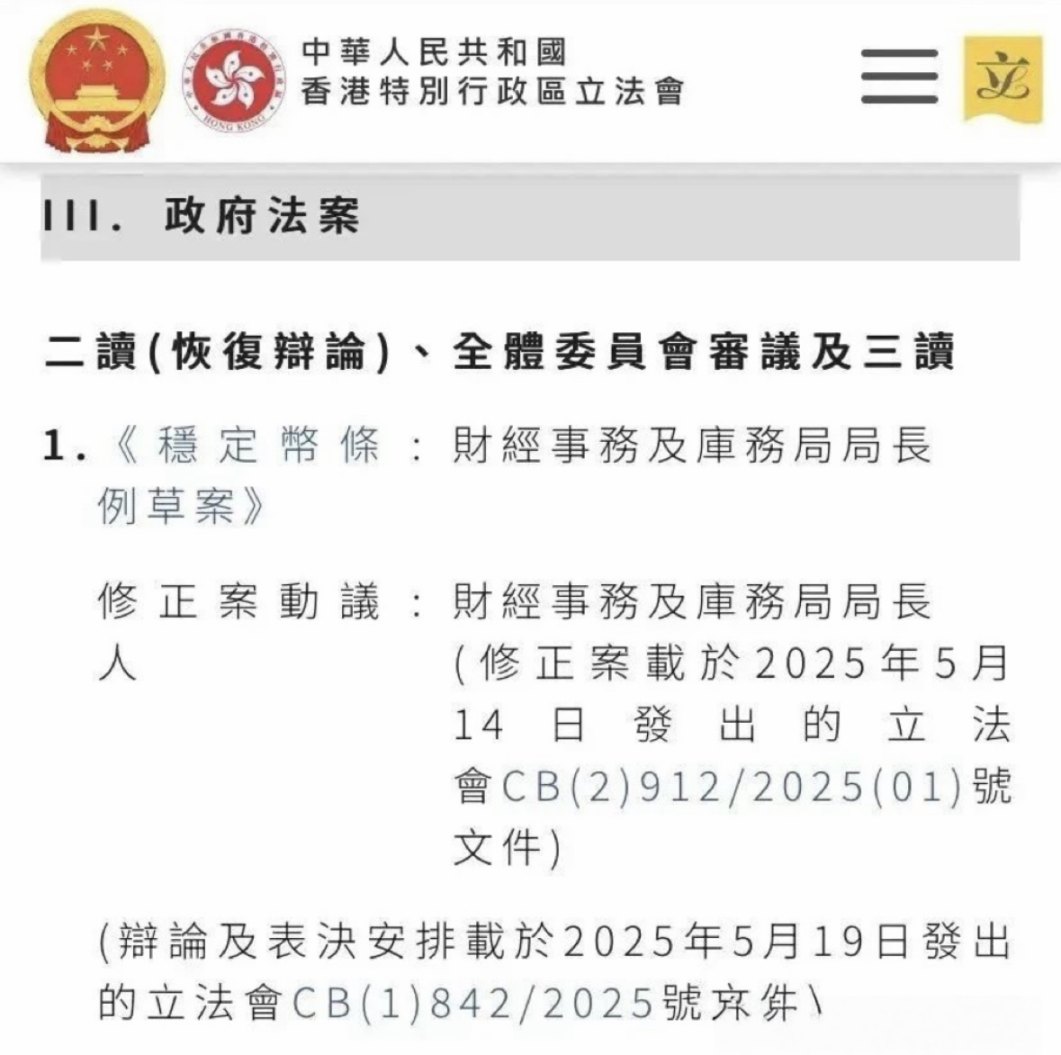
On May 21, 2025, the Legislative Council of the Hong Kong Special Administrative Region passed the “Stablecoin Regulation Draft,” marking Hong Kong as the first jurisdiction in the world to establish a comprehensive regulatory framework for fiat stablecoins. This legislative action not only provides a clear legal framework for Hong Kong’s virtual asset industry but also brings far-reaching positive impacts on the development of the virtual currency industry in Hong Kong and mainland China by balancing financial innovation with risk prevention. Lawyer Liu (web3_lawyer) analyzes the positive significance of the bill’s passage from both Hong Kong and mainland China perspectives, combining policy background, industry impact, and future trends.
1. Positive Impact on the Hong Kong Virtual Currency Industry
(1) Strengthen Hong Kong’s position as a global digital asset center.
As an international financial centre, Hong Kong has been making continuous efforts in the field of virtual assets in recent years. The passage of the Stablecoin Bill further cemented Hong Kong’s leading position in the global digital asset market. The bill clarifies the regulatory requirements for stablecoin issuers, including a registered capital threshold of HK$25 million, a 1:1 reserve asset anchor issuance, and mandatory protection of unconditional redemption rights. These stringent but clear regulatory standards provide a transparent compliance environment for the stablecoin market, helping to attract global investors and businesses to choose Hong Kong as the operational hub for stablecoin business.
In addition, the Hong Kong Monetary Authority (HKMA) plans to issue regulatory guidance soon after the passage of the bill and open up licence applications by the end of 2025. This will attract the active participation of enterprises including Standard Chartered Hong Kong, Anxi Group and other institutions to accelerate the development and application of Hong Kong dollar stablecoins. The launch of the Hong Kong dollar stablecoin will not only enhance Hong Kong’s competitiveness in the field of cross-border payments, but also promote the development of the Web3 ecosystem and inject new vitality into Hong Kong’s digital economy. For example, the Hong Kong dollar stablecoin can be used for efficient and low-cost cross-border trade settlement, further strengthening Hong Kong’s position as a financial hub in Asia.
(2) Promote financial innovation and technological development
The passage of the Stablecoin Bill shows that the Hong Kong government views stablecoins as an important part of the digital financial infrastructure rather than a marginal technology. By providing a clear compliance path for stablecoin issuers, the bill encourages companies to innovate within a regulatory framework. For example, JD.com has entered the testing stage of Hong Kong’s stablecoin “sandbox”, indicating the confidence of companies in the Hong Kong market. This “regulatory sandbox” mechanism allows companies to test innovative products in a controlled environment, reducing the cost of compliance for start-ups while providing room for technology iteration.
As a core component of decentralized finance (DeFi), the legalization of stablecoins will drive further development in areas such as Web3, NFTs, and the metaverse. The Hong Kong government has been deploying virtual asset regulation since 2022, launching a public consultation in 2023 and launching a regulatory sandbox in 2024, showing its long-term support for the Web3 ecosystem. The passage of the bill will further stimulate the application of blockchain technology in payment, settlement, supply chain finance and other fields, and create a vibrant digital asset ecosystem for Hong Kong.
(3) Enhance market confidence and investor protection
The virtual asset industry is facing a crisis of trust due to past events (such as the FTX collapse). Hong Kong has effectively reduced market risks by establishing a comprehensive regulatory framework for stablecoins that emphasizes reserve asset management, liquidity, and anti-money laundering (AML) requirements. These measures ensure the sustainability of stablecoin issuers’ business models while providing investors with higher security assurances. For example, the mandatory 1:1 reserve asset requirement and unconditional redemption rights can effectively prevent the risk of stablecoin decoupling, thereby enhancing market trust in stablecoins.
In addition, Hong Kong’s regulatory framework seeks a balance between innovation and protection, demonstrating an open and inclusive attitude. This balance not only attracts the attention of global crypto companies, but also provides a safer investment channel for local retail investors. For example, ZA Bank has pioneered the launch of a virtual asset trading service that supports Bitcoin and Ethereum trading, and may further expand to stablecoin trading in the future. This first-mover demonstration effect will encourage more financial institutions to enter the virtual asset market and expand Hong Kong’s investor base.
(4) Promote cross-border payment and financial interconnection
Stablecoins have the advantages of low cost and high efficiency in cross-border payments, and Hong Kong’s stablecoin bill has laid the foundation for the widespread use of Hong Kong dollar stablecoins. The launch of the Hong Kong dollar stablecoin will enhance the financial connectivity between Hong Kong and the rest of Asia, especially in the Belt and Road Initiative and the Guangdong-Hong Kong-Macao Greater Bay Area. For example, Hong Kong dollar stablecoins can be used for cross-border e-commerce, trade settlement and supply chain finance to reduce transaction costs and improve settlement efficiency. This will not only help Hong Kong consolidate its position as a global trading hub, but will also provide more digital financial tools for local businesses.
2. Positive Impact on the Virtual Currency Industry in Mainland China
(1) Provide regulatory experience reference for the Mainland
The regulatory attitude towards virtual currency in mainland China is relatively strict, prohibiting cryptocurrency business transactions and ICOs, but maintaining an open attitude towards blockchain technology. The passage of Hong Kong’s “Stablecoin Regulation Draft” provides a regulatory model that mainland China can refer to. Hong Kong’s regulatory framework emphasizes a balance between compliance, risk prevention, and financial innovation, which aligns with mainland China’s policy goals of promoting the application of blockchain technology in the financial sector (such as digital renminbi).
For example, Hong Kong’s “regulatory sandbox” mechanism provides a testing environment for stablecoin issuance, a model that may inspire the mainland to explore similar pilot mechanisms in specific areas, such as central bank digital currencies (CBDCs) or supply chain finance. Hong Kong’s successful experience as a bridge between the Mainland and the international market may lead to the gradual liberalization of regulatory restrictions on virtual assets such as stablecoins in the future, especially in the field of stablecoins pegged to the Hong Kong dollar or renminbi.
(2) Promote the internationalization of the Renminbi
Hong Kong’s stablecoin legislation provides a testing ground for non-US dollar stablecoins (such as those pegged to the Hong Kong dollar or the Renminbi). While current stablecoin regulation in Hong Kong mainly focuses on Hong Kong dollar stablecoins, its open regulatory stance offers possibilities for the exploration of Renminbi stablecoins. As an offshore center for the Renminbi, Hong Kong has a mature financial infrastructure and an internationalized market environment, making it suitable as a testing ground for Renminbi stablecoins. If Renminbi stablecoins succeed in Hong Kong, it will further promote the use of the Renminbi in global payments and settlements, assisting in the process of Renminbi internationalization.
For example, the stablecoin regulatory framework in Hong Kong may provide compliant channels for mainland enterprises to issue RMB-pegged stablecoins for cross-border trade and investment. This model not only enhances the international acceptance of the RMB but also provides mainland enterprises with new financing and payment tools, strengthening their competitiveness in the global market.
(3) Promote the coordinated development of financial technology in the Guangdong-Hong Kong-Macao Greater Bay Area
The Guangdong-Hong Kong-Macao Greater Bay Area is an important region in Chinese mainland to promote the application of fintech and blockchain technology. Hong Kong’s stablecoin bill provides new opportunities for the synergistic development of fintech in the Greater Bay Area. For example, the Hong Kong dollar stablecoin can complement the digital yuan to serve the cross-border payment, trade finance and supply chain finance needs of the Greater Bay Area. Hong Kong’s regulatory experience and mature financial market can provide compliance guidance for GBA enterprises and attract more mainland technology companies to enter the international market through Hong Kong.
In addition, virtual asset trading platforms and stablecoin issuers in Hong Kong may collaborate with mainland enterprises to develop blockchain-based financial products. For example, stablecoins can be used in supply chain finance platforms in the Greater Bay Area to address the financing difficulties faced by small and medium-sized enterprises. This cross-regional cooperation will promote the integration and development of the financial technology ecosystem in the Greater Bay Area.
(4) Indirectly stimulate the application of blockchain technology in the region.
Although the mainland takes a cautious attitude towards cryptocurrency trading, blockchain technology has been widely applied in areas such as supply chain finance, cross-border payments, and digital identity verification. The stablecoin legislation in Hong Kong provides a successful case for the commercial application of blockchain technology, which may indirectly stimulate mainland enterprises to accelerate the research and application of blockchain technology within a compliance framework. For example, the “sandbox” testing experience of Hong Kong’s stablecoin can provide technical references for mainland enterprises, promoting the implementation of blockchain in the fintech sector.
3. Future Trends and Outlook
The passage of the Hong Kong “Stablecoin Ordinance Draft” marks a new phase in global stablecoin regulation. In the future, Hong Kong may become a global testing ground for non-USD stablecoins, attracting more international companies to enter its market. At the same time, Hong Kong’s regulatory model may provide a reference for other countries and regions, promoting the coordination and development of global stablecoin regulation.
For mainland China, Hong Kong’s successful experience may encourage regulators to gradually relax restrictions on virtual assets in the future, especially in areas related to the internationalization of the RMB. Mainland enterprises can participate in the global digital asset market through compliant channels in Hong Kong, enhancing international competitiveness. In addition, financial technology cooperation between Hong Kong and the mainland will be further deepened under the framework of the Guangdong-Hong Kong-Macao Greater Bay Area, forming a model of regional collaborative development.
4. Conclusion
The passage of the Hong Kong Stablecoin Ordinance has far-reaching positive effects on the virtual currency industry in Hong Kong and mainland China. For Hong Kong, the bill reinforces its position as a global digital asset center and promotes the development of financial innovation, investor protection, and cross-border payments. For mainland China, Hong Kong’s regulatory experience provides a reference and indirectly stimulates the internationalization of the Renminbi, the collaborative development of financial technology in the Guangdong-Hong Kong-Macau Greater Bay Area, and the application of blockchain technology. In the future, as the stablecoin market in Hong Kong matures and further cooperation with the mainland develops, both sides will occupy a more important position in the global digital financial field, injecting new momentum into regional economic development.