


Futures
Access hundreds of perpetual contracts
TradFi
Gold
One platform for global traditional assets
Options
Hot
Trade European-style vanilla options
Unified Account
Maximize your capital efficiency
Demo Trading
Futures Kickoff
Get prepared for your futures trading
Futures Events
Join events to earn rewards
Demo Trading
Use virtual funds to practice risk-free trading
Launch
CandyDrop
Collect candies to earn airdrops
Launchpool
Quick staking, earn potential new tokens
HODLer Airdrop
Hold GT and get massive airdrops for free
Launchpad
Be early to the next big token project
Alpha Points
Trade on-chain assets and earn airdrops
Futures Points
Earn futures points and claim airdrop rewards


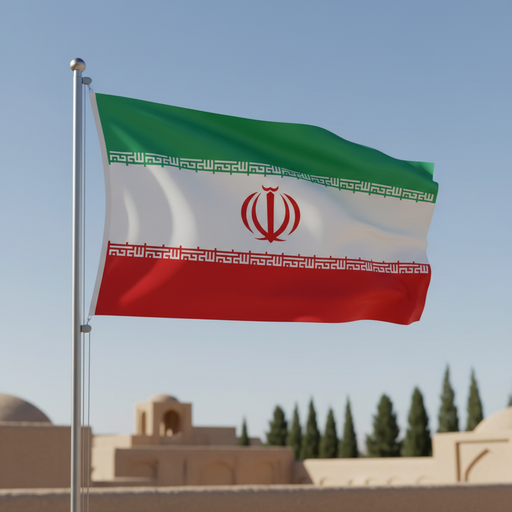



Iran warns oil prices could exceed $200, and international oil prices may remain in the three-digit range for an extended period
The military conflict between Israel and Iran enters its tenth day, with fighting continuing to spread to neighboring countries, and energy markets facing increasingly severe shocks. Iran issued a strong warning that if the conflict escalates further, international oil prices could break through $200 per barrel and remain at triple-digit levels for a considerable period.
According to CCTV News, on March 8, a spokesperson from Iran’s Hatam Anbia Central Command delivered a video speech directly warning the U.S. and Israel: “If you can tolerate oil prices rising above $200 per barrel, then keep playing this game.” On March 9, Iran’s Parliament Speaker Kalibaf further stated that if the current conflict expands further to infrastructure, its economic impact will persist regionally and globally for a long time, and international oil prices could stay in the triple digits for an extended period.
Reports indicate that several Gulf countries experienced new attacks and civilian casualties this Monday, with no signs of easing.
The core concern in energy markets stems from the Strait of Hormuz. This vital artery for global energy carries one-fifth of the world’s oil shipments and one-fifth of liquefied natural gas trade. If the situation spirals out of control, it will have profound impacts on the global economy.
According to reports, Russian President Vladimir Putin stated during a meeting with government officials and energy executives that Russia “must understand that the current high prices for commodities are definitely temporary,” and should act accordingly. He urged Russian companies to seize current opportunities, using additional export revenues to reduce debt.
Putin said that, given the Middle East conflict has “effectively closed” the Strait of Hormuz, reliance on this route for oil production “could cease completely within a month.” The region’s liquefied natural gas capacity would require “weeks or even a month” to restore, and “it is impossible to quickly make up for lost production.” Russia will continue supplying oil and natural gas to reliable partners, not only in the Asia-Pacific but also in Eastern Europe.
Trump announced on social media that he will hold a press conference around 5:30 p.m. Eastern Time on Monday at his golf club in Florida.
Battlefield Situation: Both Sides Expand Attacks to Infrastructure
According to Xinhua News Agency, the tenth day of U.S.-Israel military strikes against Iran on March 9 has seen a clear expansion of targets to civilian facilities.
The Israel Defense Forces (IDF) issued a statement on March 9 saying they launched a new wave of large-scale strikes against facilities in Tehran, Isfahan, and southern Iran. Iran announced it was implementing the “Real Commitment 4” operation, with the 31st wave of strikes using heavy missiles targeting U.S. and Israeli-related sites.
CCTV News reports that Iranian military sources said since the joint U.S.-Israel attack on February 28, Iran has shot down over 82 U.S.-Israeli drones and 4 F-15 fighters, and destroyed multiple radar facilities.
Iran also claimed several achievements: shooting down an advanced U.S. cruise missile AGM-158 “Joint Air-to-Ground Stand-Off Missile” (JASSM) during air defense operations; the Islamic Revolutionary Guard Corps Navy reported using drones and cruise missiles to strike and “destroy” U.S. helicopter bases in Udayri, Kuwait, including fuel tanks, helicopter pads, and logistics facilities. All these reports are from CCTV News and Xinhua News Agency.
Fighting is also spreading to neighboring countries. According to Xinhua, Saudi civil defense reported that on March 8, a “military projectile” fell in a residential area of Ha’il city, killing 2 and injuring 12, all migrant workers from Bangladesh and India. The Saudi Defense Ministry confirmed that one of the country’s largest oil fields, Shaybah, was attacked by a drone on March 9. Bahrain reported that a drone from Iran struck Sitra Island, injuring 32 people, including children.
Iran Elects New Supreme Leader, Firm Stance Remains
According to Xinhua, after the assassination of Iran’s Supreme Leader Khamenei, his son Mojtaba was elected as the new Supreme Leader on March 8. Iran’s Islamic Revolutionary Guard Corps and armed forces have sworn allegiance; the president and speaker of parliament expressed support, and Hezbollah and Houthi armed groups in Yemen sent congratulations. Following the election of the new Supreme Leader, Iran launched a new round of missile attacks on Israel.
Iranian President Ebrahim Raisi’s statements show a clear shift. On March 8, he strongly stated, “The more pressure they exert on us, the stronger our response will naturally be,” marking a change from his previous tone—just a day earlier, he apologized in a televised speech, saying Iran has no intention of attacking other countries and urging neighbors not to “become puppets of the U.S. and Israel.” Iran’s Chief Justice Gholamhossein Mohseni Ejei also posted on social media that “intense attacks targeting countries exploited by the enemy will not stop.”
U.S. and Israel Positions: Trump Refuses to Recognize New Leader, Claiming Significant Gains
According to Xinhua, U.S. President Donald Trump said that the appointment of Khamenei’s son as Iran’s new leader is “unacceptable” to him. In an interview with ABC on March 8, Trump stated he would personally participate in the appointment of Iran’s new leadership after the conflict ends, and that a leader not approved by him “won’t last long.”
U.S. Secretary of State Antony Blinken, speaking Monday during a memorial event for U.S. hostages, labeled Iran as “the world’s most serious hostage-taker” and praised the U.S. military for “completing their mission, as Iran’s regime is firing fewer missiles, using fewer launchers, operating fewer factories, and its navy is being destroyed.”
Blinken also expressed condolences for the seven U.S. soldiers who died in the conflict. Reports indicate he also pledged efforts to bring “every unjustly detained American home.”
The Israel Defense Forces announced they will “hunt down” Khamenei’s successor. Israeli Defense Minister Gantz previously warned that anyone who becomes Iran’s Supreme Leader and opposes Israel and the U.S. will become an “elimination target” for Israel.
Increased Civilian Casualties in Gulf Countries, Saudi Warns Iran Will Be the “Biggest Loser”
According to Xinhua, several Gulf countries are suffering direct consequences of the conflict. Bahrain, the UAE, and Kuwait have seen multiple desalination plants affected by the fighting, risking humanitarian crises. Kuwait’s Ministry of Defense activated its missile defense systems Monday to intercept new missile and drone attacks. Qatar’s Defense Ministry reported intercepting a missile launched from Iran that day.
Kuwait’s ambassador to Iraq has called on the Iraqi government to “intervene” to stop attacks launched from Iraqi territory, a move that may target Iran-backed armed groups operating in Iraq.
According to Xinhua, Saudi Arabia’s Foreign Ministry issued a statement on March 9 warning that if Iran continues attacking neighboring countries, it will be the “biggest loser.” The Arab League Secretary-General Gheit criticized Iran’s “reckless policy” of attacking neighbors and urged Iran to correct this “strategic mistake.”
Chinese Foreign Minister Wang Yi Holds Talks with Gulf Foreign Ministers to Promote De-escalation
According to CCTV News, Wang Yi, member of the Political Bureau of the CPC Central Committee and Foreign Minister, held separate phone calls on March 9 with Kuwait’s Foreign Minister Jaber Al-Mubarak and Bahrain’s Foreign Minister Abdullatif bin Rashid Al Zayani.
Kuwait’s Foreign Minister Jaber Al-Mubarak said Kuwait is not a party to the war but is affected by the fighting. Gulf countries, including Kuwait, are committed to resolving disputes through dialogue but will not give up their legitimate right to self-defense. He expressed willingness to strengthen communication and coordination with China to restore regional security and stability as soon as possible, and assured the safety of Chinese personnel and institutions.
Bahrain’s Foreign Minister Zayani stated that Bahrain has always favored peace and should not be subjected to illegal attacks. He expressed willingness to work with Gulf countries and China to strengthen communication and coordination through platforms like the UN.
Macron Says France May Deploy Troops to the Strait of Hormuz
According to Xinhua citing Cypriot media, French President Emmanuel Macron on March 9 said France will maintain a military presence in the Mediterranean and Red Sea, including deploying aircraft carriers and other warships, with the potential to include the Strait of Hormuz to ensure regional shipping safety and European interests.
Macron stated, “Attacking Cyprus is attacking Europe,” and France will continue to cooperate with partner countries to protect European citizens and ensure the freedom of international waterways. He emphasized that these actions will remain defensive.
Additionally, Macron announced that France will deploy eight frigates, two amphibious helicopter carriers, and the Charles de Gaulle aircraft carrier to the Eastern Mediterranean and Red Sea as defensive measures. He clarified that France is not involved in the U.S.-Israel-Iran conflict. France’s goal is to “maintain a strict defensive posture, stand with all countries targeted by Iranian retaliation, ensure our credibility, and contribute to de-escalating regional tensions.”
Energy Landscape: Risks of the Strait of Hormuz Expansion, Alternative Routes Share the Load
Xinhua’s new media outlet Yuyuantan Tian noted that Iran’s instability is rapidly spreading to the energy sector. The Strait of Hormuz handles one-fifth of global oil transportation and liquefied natural gas trade. About 80% of Japanese oil tankers and over 40% of China’s crude oil imports pass through this strait. Analysts believe that even if the strait is not fully physically blocked, security risks have deterred most international oil tankers from passing, creating transportation difficulties for Gulf-produced oil.
Wang Xu, a professor at Beijing Foreign Studies University, told Yuyuantan Tian that a long-term blockade of the Strait of Hormuz is neither politically nor economically beneficial for Iran, and historically, the strait has never been permanently closed. Meanwhile, alternative routes such as the Saudi East Pipeline (designed capacity 5 million barrels per day), Abu Dhabi Pipeline (1.5 million barrels per day), and routes via the Cape of Good Hope, Turkish Straits, and Panama Canal are being utilized more.
While these alternatives cannot fully replace the Strait of Hormuz, they can alleviate short-term pressure and reflect a trend toward a more diversified global energy landscape.
Yuyuantan Tian pointed out that China has established systemic buffer capacities, sourcing crude oil from 49 countries. Land-based pipelines like China-Russia, China-Kazakhstan, and China-Myanmar effectively disperse maritime risks. The China-Russia East Siberia-Pacific Ocean (ESPO) pipeline transports 38 billion cubic meters of natural gas annually. Wang Xu emphasized that the security of global maritime routes is an inseparable interest, and international cooperation is necessary. China, as a key contributor to security governance, can consider coordinating efforts within multilateral frameworks to initiate more inclusive joint escort mechanisms if the situation worsens.
The conflict has also triggered diplomatic chain reactions.
According to reports, Turkey’s Ministry of Defense announced on March 9 that a ballistic missile launched from Iran towards Turkish airspace was successfully intercepted and destroyed by NATO’s missile defense system in the Eastern Mediterranean, with debris falling near Gaziantep.
NATO spokesperson Allison Hart posted on social media that “NATO remains firmly prepared to defend all allies from any threat.”
UK Prime Minister Rishi Sunak said on March 9 that efforts are needed to ease current tensions and warned that the longer the conflict lasts, the greater the economic impact.
Risk Warning and Disclaimer
Market risks are present; investments should be cautious. This article does not constitute personal investment advice and does not consider individual users’ specific investment goals, financial situations, or needs. Users should consider whether any opinions, views, or conclusions herein are suitable for their particular circumstances. Invest at your own risk.