

Trade
Basic
Futures
Futures
Hundreds of contracts settled in USDT or BTC
TradFi
Gold
Trade global traditional assets with USDT in one place
Options
Hot
Trade European-style vanilla options
Unified Account
Maximize your capital efficiency
Demo Trading
Futures Kickoff
Get prepared for your futures trading
Futures Events
Participate in events to win generous rewards
Demo Trading
Use virtual funds to experience risk-free trading
Earn
Launch
CandyDrop
Collect candies to earn airdrops
Launchpool
Quick staking, earn potential new tokens
HODLer Airdrop
Hold GT and get massive airdrops for free
Launchpad
Be early to the next big token project
Alpha Points
Trade on-chain assets and enjoy airdrop rewards!
Futures Points
Earn futures points and claim airdrop rewards
Investment
Simple Earn
Earn interests with idle tokens
Auto-Invest
Auto-invest on a regular basis
Dual Investment
Buy low and sell high to take profits from price fluctuations
Soft Staking
Earn rewards with flexible staking
Crypto Loan
0 Fees
Pledge one crypto to borrow another
Lending Center
One-stop lending hub
VIP Wealth Hub
Customized wealth management empowers your assets growth
Private Wealth Management
Customized asset management to grow your digital assets
Quant Fund
Top asset management team helps you profit without hassle
Staking
Stake cryptos to earn in PoS products
Smart Leverage
New
No forced liquidation before maturity, worry-free leveraged gains
GUSD Minting
Use USDT/USDC to mint GUSD for treasury-level yields

More


Trending Topics
View More220.57K Popularity
30.82K Popularity
14.91K Popularity
13.81K Popularity
6.91K Popularity



Pin
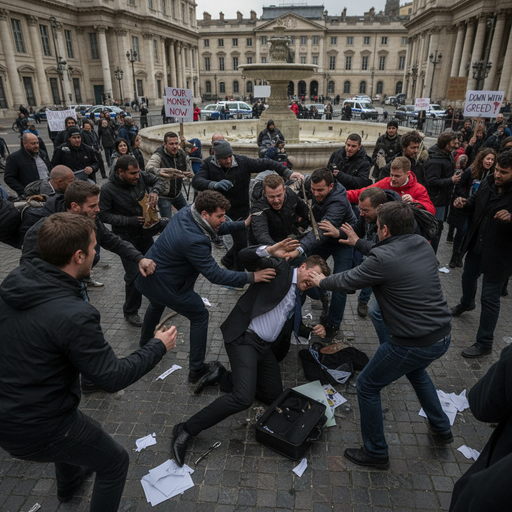
The Winklevoss Brothers' Two Big Bets: From Facebook Lawsuit to Bitcoin Legend
The life trajectory of the Winklevoss brothers has taught us a profound lesson: the true winners are not those who never fail, but those who make the right decisions after failure. From rowers to Silicon Valley entrepreneurs, and then to cryptocurrency believers, every turning point was driven by a key choice.
Perfect Symmetry in the Mirror: From Connecticut to Harvard
On August 21, 1981, Tyler and Cameron Winklevoss were born in Greenwich, Connecticut. They are not only twins but also perfect mirrors—Cameron is left-handed, Tyler is right-handed—this perfect symmetry has accompanied them throughout their lives.
In their youth, the brothers demonstrated extraordinary talent. At age 13, they learned HTML and designed websites for local companies. In high school, they founded their first internet company. But what truly changed their trajectory was rowing. At Greenwich Country Day School and later at Brown/St. Xavier School, they discovered the appeal of the sport— in an eight-man boat, seconds decide the outcome, and perfect coordination requires deep understanding of teammates and lightning-fast decisions under pressure.
These years of rowing experience not only made them elite athletes but also shaped their way of thinking. After entering Harvard in 2000, the Winklevoss brothers joined the men’s rowing team, participating in top-tier competitions. In 2004, they helped Harvard’s “Chosen Team” complete a grand slam—winning the Eastern Sprints, the Intercollegiate Rowing Association Championships, and the legendary Harvard-Yale race. By the 2007 Pan American Games, Cameron won gold in the eight and silver in the four; at the 2008 Beijing Olympics, the brothers finished sixth in the coxless pair, becoming world-class rowers.
Campus Entrepreneurship to Court Battles: The Lost HarvardConnection
In December 2002, while still at Harvard, the Winklevoss brothers conceived an idea: create an exclusive social network for elite college students. They called it HarvardConnection (later renamed ConnectU), imagining it would spread like a virus among students.
The problem was, neither brother was a programmer. They needed a tech genius to realize this vision. In October 2003, at Harvard’s Kirkland House dining hall, they found that person—then still relatively unknown—Mark Zuckerberg, a sophomore in computer science.
Initially, Zuckerberg seemed very interested. He listened carefully to the plan, asked about technical details, and promised to participate in development. Everything went smoothly for a few weeks—until January 11, 2004. The cooperation the Winklevoss brothers expected did not materialize; instead, they encountered a new domain: thefacebook.com. Four days later, Zuckerberg launched Facebook directly. The brothers learned from a Harvard Crimson report that their technical advisor had become a competitor.
The next four years were a long legal war. In 2004, ConnectU sued Facebook, accusing Zuckerberg of stealing their idea and breaching an oral agreement. During this process, the Winklevoss brothers inadvertently became the closest observers of Facebook’s growth—they watched the platform expand from Harvard to other campuses, then to high schools, and finally open to everyone. They analyzed user growth curves, business models, network effects. Before the settlement, their understanding of Facebook might have been deeper than anyone outside the company.
The First Big Bet: Equity Instead of Cash
In the 2008 court settlement, Facebook agreed to pay $65 million. Faced with this huge sum, most would choose cash. But the Winklevoss brothers made a different decision.
In front of their lawyers, Tyler looked at Cameron and then said a sentence that changed their lives: “We choose equity.”
The lawyers exchanged surprised looks. At that time, Facebook was still private, and this equity could be worthless; the company might go bankrupt. Cash was tangible, equity was a gamble. But this bet changed everything.
When Facebook went public in 2012, the $4.5 billion settlement—now in the form of equity—was worth nearly $500 million. The Winklevoss brothers proved a principle: they lost more than just an idea; they ultimately gained far more from failure. Finding victory in failure—that’s the true meaning of the first big bet.
Lessons from Rejection: Silicon Valley’s “Poison Gold”
The huge returns from Facebook should have opened all doors. But the opposite happened. As angel investors, the Winklevoss brothers found that many Silicon Valley startups refused their funding. The reason was simple: Mark Zuckerberg would never invest in companies related to the Winklevoss brothers. Their wealth became a “poison.”
Trapped and sidelined, the brothers fled to Ibiza. At a nightclub, a stranger named David Azar handed them a dollar bill and only said one word: “Revolution.”
On the beach, David explained what Bitcoin was—a fully decentralized digital currency with a total supply of only 21 million. As Harvard economics graduates, the Winklevoss brothers immediately saw the essence: Bitcoin is digital gold, possessing all the properties that gave gold value throughout history, but even better.
The Second Big Bet: Going All-In on the Crypto Revolution
In 2013, while Wall Street was still figuring out what cryptocurrency was, the Winklevoss brothers took action. They invested $11 million to buy Bitcoin—at that time, Bitcoin’s price was $100. This investment accounted for about 1% of all circulating Bitcoin then, nearly 100,000 coins.
Imagine this scene: two Olympians, Harvard graduates, young men with unlimited opportunities, betting millions of dollars on something most people associate with drug dealers and anarchists. Their friends must have thought they were crazy.
But once again, the Winklevoss brothers made a visionary decision. Their logic was: if Bitcoin becomes a new form of currency, early adopters will reap huge rewards; if it fails, they can afford the loss.
By 2017, when Bitcoin surged to $20,000, their $11 million turned into over $1 billion. The Winklevoss brothers became among the first confirmed Bitcoin billionaires in the world. But what’s truly important isn’t that number, but their market insight: in places others can’t see, the Winklevoss brothers already saw the future.
From Investors to Builders: The Birth of Gemini
The Winklevoss brothers didn’t just sit and wait for Bitcoin to appreciate. They started building infrastructure. Winklevoss Capital provided seed funding for the new digital economy: supporting exchanges (like BitInstant), blockchain infrastructure, storage tools, analytics platforms, and later DeFi and NFT projects. Their portfolio spans everything—from protocol developers like Protocol Labs to companies providing energy infrastructure for crypto mining.
But in 2014, the ecosystem faced a crisis. Charlie Shrem, CEO of BitInstant, was arrested at the airport, charged with money laundering related to Silk Road transactions. BitInstant was forced to shut down. The largest Bitcoin exchange, Mt. Gox, was hacked, losing 800,000 BTC. The infrastructure invested in by the Winklevoss brothers collapsed, and the Bitcoin market plunged into chaos.
Yet amid the chaos, they saw opportunities. The crypto ecosystem needed legitimate, regulated companies. That year, the Winklevoss brothers founded Gemini, which would become one of the earliest regulated crypto exchanges in the U.S.
While other platforms operated in legal gray areas, Gemini cooperated with New York regulators to establish a transparent compliance framework. The Winklevoss brothers understood: to mainstream cryptocurrency, institutional-grade infrastructure is essential. The New York State Department of Financial Services granted Gemini Trust Company a license, making it one of the earliest licensed Bitcoin exchanges in the U.S.
By 2021, Gemini’s valuation reached $7.1 billion, with the Winklevoss brothers owning at least 75%. Today, the exchange manages over $10 billion in assets and supports more than 80 cryptocurrencies. Through Winklevoss Capital, they have invested in 23 crypto projects, including the 2017 funding round for Filecoin and Protocol Labs.
The Winklevoss brothers are not fighting regulators but trying to educate them. They don’t pursue regulatory arbitrage but have integrated compliance into their products from the start. This strategy has made Gemini one of the most trusted exchanges in the industry.
Political Bets and Philanthropic Commitments
After making significant contributions to the crypto ecosystem, the Winklevoss brothers continued their strategic layout. In 2024, each donated $1 million worth of Bitcoin to Donald Trump’s presidential campaign, aiming to position themselves as supporters of pro-crypto policies. Their donations exceeded federal limits and were partially asked to be returned, but they clearly expressed their stance.
The brothers also openly criticized SEC Chairman Gary Gensler’s aggressive enforcement approach. Their battles with regulators involve both personal lives and business operations. The SEC’s lawsuit against Gemini directly threatened their business model. In June 2025, Gemini secretly filed for an IPO, marking an important step toward mainstream finance.
According to Forbes’ current assessment, the Winklevoss brothers’ net worth is approximately $4.4 billion, with total wealth around $9 billion, mostly in crypto assets. Their holdings include about 70,000 Bitcoin (worth approximately $4.48 billion), as well as substantial amounts of Ethereum, Filecoin, and other digital assets.
In personal life, in February 2025, the Winklevoss brothers became part-owners of the eighth-tier English football club Real Bedford, investing $4.5 million. They partnered with crypto podcaster Peter McCormack in an effort to elevate the semi-professional team to the Premier League. Their father, Howard, also donated $4 million worth of Bitcoin to Grove City College in 2024, marking the college’s first Bitcoin donation, used to fund the newly established Winklevoss Business School. The brothers also donated $10 million to their alma mater, Greenwich Country Day School—the largest alumni donation in the school’s history.
They publicly state that even if Bitcoin’s value reaches gold levels, they will not sell their Bitcoin. This is not only confidence in the asset’s value but also a commitment to their philosophy—Bitcoin is not just a store of value but a revolutionary tool that fundamentally changes money.
Two Decisions That Changed Their Trajectory
(The Harvard Crimson) revealed Zuckerberg’s betrayal and the Bitcoin revolution started on Ibiza’s beach—these moments mark the key times when the Winklevoss brothers learned to see what others cannot.
In Facebook’s failure, they made a seemingly crazy choice—opting for equity instead of cash. After being rejected in Silicon Valley, they once again made a visionary choice—going all-in on something most people mocked.
This is the story of the Winklevoss brothers. They were once considered the ones who missed the party. In reality, they simply arrived at the next party earlier than everyone else.