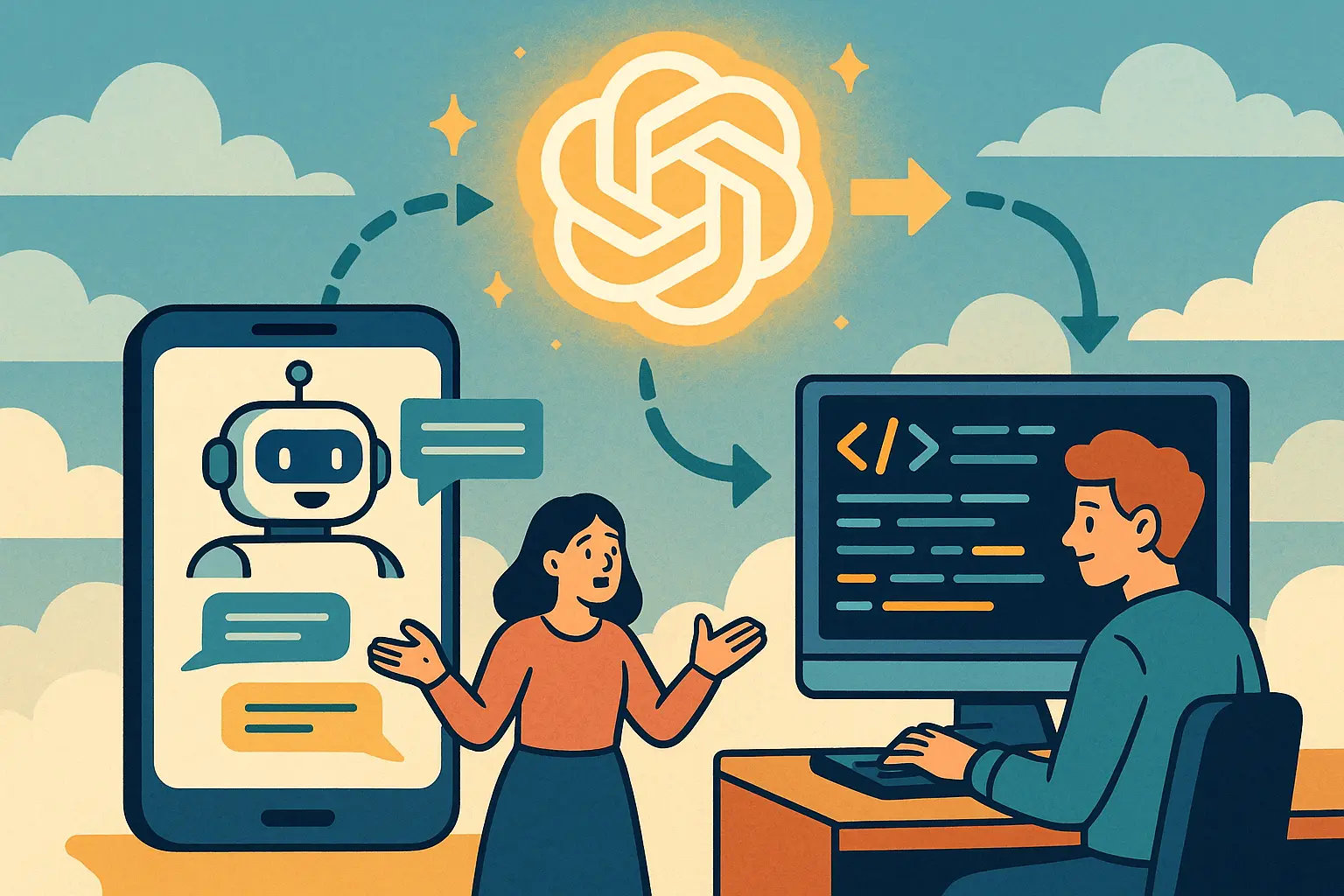
OpenAI CEO and co-founder Greg Brockman, in a Big Technology Podcast interview, for the first time fully described the architecture of the company’s super app and its roadmap. The app plan aims to integrate ChatGPT, the AI programming platform Codex, and the AI browser Atlas into a unified desktop entry point, targeting a personal AGI (artificial general intelligence).
Super App Architecture: Integrating Three Products and a Delivery Framework
Brockman described the target products as a personal assistant that deeply understands users’ preferences and can take action on users’ behalf in the digital world, rather than a mere Q&A tool. Its core architecture is built from the integration of three existing products:
ChatGPT: a conversational interface and a task control hub
Codex: a general Agent foundation with both programming and knowledge-work execution capabilities
Atlas: OpenAI’s AI browser, responsible for executing actions at the web layer
Brockman explained that the integration plan will be rolled out in steps over the coming months and will not be completed all at once. The standalone action-side app for ChatGPT will remain as it is; the scope of integration will be limited to the desktop. The goal is to let users “just speak up with anything they want the computer to do.”
Codex’s Strategic Upgrade: The First Step Toward General Knowledge Work
The starting point of the super app roadmap is expanding Codex’s application scope. Brockman explained that Codex’s underlying structure consists of two parts: a general Agent foundation, plus an Agent focused on programming. The former’s application boundaries go far beyond programming itself and can extend to general knowledge-work scenarios such as spreadsheets, document processing, and email consolidation.
Inside OpenAI, there have already been cases of employees independently using Codex to handle non-programming tasks, including email summaries and cross-tool integration work, showing that a generalization path is practically feasible. This direction also aligns with OpenAI’s clearest commercialization opportunities on the enterprise side.
Sora Shutdown and Compute Constraints: Trade-Offs Behind the Roadmap
Brockman admitted that OpenAI’s current compute is “not enough even for the two lines—personal assistants and Codex,” which is the direct reason for shutting down Sora and shrinking the product lines. He characterized this adjustment as “a clear-eyed recognition of technical maturity and the enormous impact that is coming,” rather than simply shifting focus from the consumer side to the enterprise side.
The shutdown of Sora has had a direct impact on partners. According to media reports, Disney signed a $1 billion cooperation agreement with Sora in December last year. And on the night before the shutdown decision was officially announced, both sides’ employees were still collaborating until around 7:30 p.m. The Disney incident became a key case used by outside observers to assess the pace at which OpenAI is executing its transformation.
On the level of competitive pressure, over the past six months OpenAI has modified the super app roadmap twice, responding to competitive threats from Google and Anthropic in succession. Some industry observers pointed out that Anthropic’s revenue growth rate may surpass OpenAI’s within a few months; this outlook accelerated OpenAI’s strategic decision to concentrate core resources on Codex and enterprise-side tools.
Frequently Asked Questions
How is OpenAI’s super app different from the existing ChatGPT?
The ChatGPT mobile action app will keep operating independently, and the integration scope of the super app will be limited to the desktop. The core difference is that ChatGPT currently focuses on conversation, whereas the super app plan, through integration with Codex and Atlas, will allow users to execute cross-tool complex tasks from a unified interface.
What, specifically, does “personal AGI” mean in OpenAI’s roadmap?
Brockman used “personal AGI” to describe the goal for the super app: a personal assistant system that deeply understands users’ preferences and goals and can proactively handle digital-world tasks on the users’ behalf—signaling that OpenAI is shifting from demonstrating model capabilities to a user-centered application integration strategy.
Why did OpenAI shut down Sora?
Brockman explained that the fundamental reason is that there isn’t enough compute resources to support multiple product lines at the same time. Sora was assessed as a direction with relatively lower commercial potential in the short term, so resources were reallocated to Codex and enterprise-side tools to strengthen OpenAI’s current two product lines with the most revenue potential.
Disclaimer: The information on this page may come from third parties and does not represent the views or opinions of Gate. The content displayed on this page is for reference only and does not constitute any financial, investment, or legal advice. Gate does not guarantee the accuracy or completeness of the information and shall not be liable for any losses arising from the use of this information. Virtual asset investments carry high risks and are subject to significant price volatility. You may lose all of your invested principal. Please fully understand the relevant risks and make prudent decisions based on your own financial situation and risk tolerance. For details, please refer to
Disclaimer.


