Ethereum щойно оприлюднив найдетальніший план оновлення в своїй історії. Сім оновлень. П’ять цілей. Одна масштабна реконструкція.
Якщо ви замислюєтеся, для кого написаний цей гайд… це для мене.
Дослідник Ethereum Джастін Дрейк опублікував "Strawmap" — запропонований графік семи ключових оновлень, розрахований до 2029 року. Віталік Бутерін, співзасновник Ethereum, назвав його "дуже важливим" і описав сукупний ефект як реконструкцію ядра Ethereum за принципом "Корабель Тесея".
Цю метафору варто розкрити.
Корабель Тесея — це давньогрецький філософський експеримент: якщо поступово замінити всі частини корабля, чи залишиться він тим самим кораблем?
Саме таку модель пропонує Strawmap для Ethereum.
До 2029 року кожну основну частину системи буде замінено. При цьому не планується "зупинка світу" для переписування коду. Мета — зворотно сумісні оновлення, які підтримують безперервну роботу мережі під час заміни компонентів. Однак кожне оновлення вимагає від операторів оновлення програмного забезпечення, а крайові випадки можуть змінюватися. Це повна реконструкція, замаскована під поступові оновлення. Для точності: консенсус і логіка виконання перебудовуються, але стан (баланси користувачів, сховище контрактів, історія) зберігається через всі форки. "Корабель" перебудовується, поки перевозить вантаж. Всі на борту!
"Чому не почати з нуля?" Тому що неможливо перезапустити систему без втрати того, що робить Ethereum цінним: додатки, які вже працюють, гроші, що вже циркулюють, довіра, яку вже створено. Дошки потрібно замінювати, поки корабель у русі.
Назва "Strawmap" — це поєднання "strawman" і "roadmap". Strawman — попередня пропозиція, навмисно недосконала, щоб її можна було критикувати. Це не обіцянка, а стартова точка для дискусії. Але вперше розробники Ethereum окреслили структурований, обмежений у часі шлях оновлень із чіткими показниками продуктивності.
Над цим працюють провідні криптографи та комп’ютерні науковці світу. І все це відкрито. Без ліцензійних платежів. Без контрактів із постачальниками. Без корпоративної команди продажів. Будь-яка компанія, будь-який розробник, будь-яка країна може будувати на цьому. Оновлення, які отримує JPMorgan, доступні й для стартапу з трьома людьми в Сан-Паулу.
Уявіть, що глобальний консорціум інженерів світового рівня перебудовує фінансову інфраструктуру інтернету з нуля, і ви можете просто підключитися.
Як працює Ethereum (60 секунд)
Перш ніж говорити про майбутнє, ось що це таке зараз.
Ethereum — це спільний глобальний комп’ютер. Замість одного сервера тисячі незалежних операторів по всьому світу запускають копію одного й того ж програмного забезпечення.
Оператори самостійно перевіряють транзакції. Частина з них — валідатори — розміщують власні кошти (ETH) як гарантійний депозит. Якщо валідатор намагається обдурити, він їх втрачає. Кожні 12 секунд валідатори погоджують, які транзакції відбулися і в якому порядку. Це 12-секундне вікно називається "слотом". Кожні 32 слоти (близько 6,4 хвилини) формують "епоху".
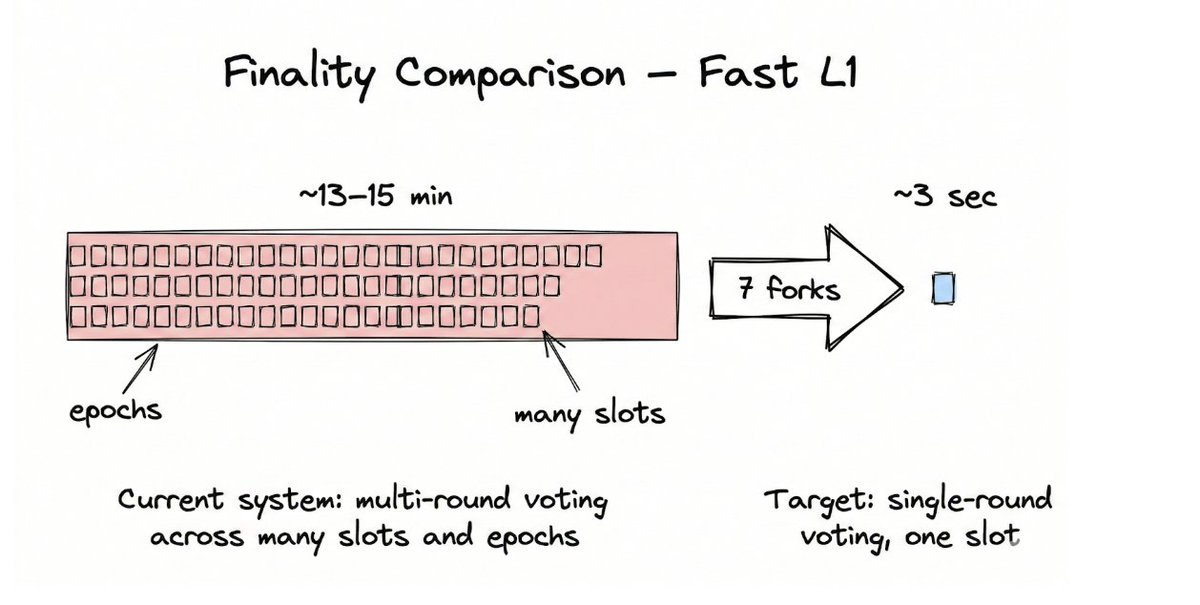
Справжня фіналізація, коли транзакція стає незворотною, займає близько 13–15 хвилин, залежно від того, коли вона потрапляє в цикл.
Ethereum обробляє приблизно 15–30 транзакцій за секунду, залежно від складності кожної транзакції. Для порівняння, мережа Visa може обробляти понад 65 000 за секунду. Саме тому більшість додатків Ethereum працюють на "Layer 2" — окремих системах, що агрегують багато транзакцій і потім публікують підсумок на базовому рівні Ethereum для безпеки.
Система, яка забезпечує узгодженість операторів, називається "механізмом консенсусу". Поточний механізм Ethereum працює і перевірений часом, але був розроблений для ранньої епохи і обмежує можливості мережі.
Strawmap має на меті вирішити ці проблеми. Оновлення за оновленням.
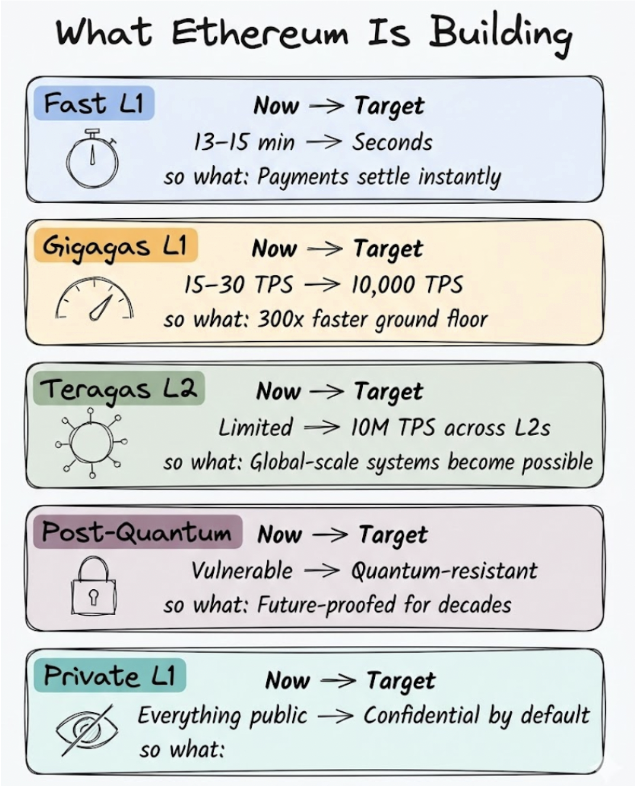
П’ять основних цілей Strawmap
Дорожня карта організована навколо п’яти цілей. Ethereum вже працює. Через нього щодня проходять мільярди доларів. Але існують реальні обмеження для того, що можна побудувати на його основі. Ці п’ять цілей спрямовані на усунення цих обмежень.
1. Швидкий L1: фіналізація за секунди
Коли ви надсилаєте транзакцію в Ethereum сьогодні, ви чекаєте близько 13–15 хвилин, поки вона стане остаточною — незворотною, завершеною, без права на відкат.
Вирішення: Замінити механізм, який забезпечує узгодженість операторів. Мета — досягти фіналізації за один раунд голосування в кожному слоті. Minimmit — один із провідних кандидатів у дослідженнях, протокол для надшвидкого консенсусу, але точний дизайн ще уточнюється. Головне — ціль: фіналізація в межах одного слота. Далі слоти стискаються: запропонований шлях — 12 секунд → 8 → 6 → 4 → 3 → 2.
Фіналізація — це не лише швидкість, а й впевненість. Подумайте про банківський переказ: час між "відправлено" і "завершено" — це вікно, коли ще можуть виникнути проблеми.
Якщо ви рухаєте платіж на мільйон доларів, або закриваєте угоду з облігаціями, або оформлюєте угоду з нерухомістю на блокчейні, ці 13 хвилин невизначеності — проблема. Скоротіть це до секунд, і ви фундаментально змінюєте можливості мережі. Не лише для крипто-додатків, а й для будь-чого, що переміщує цінності.
2. Gigagas: у 300 разів більше
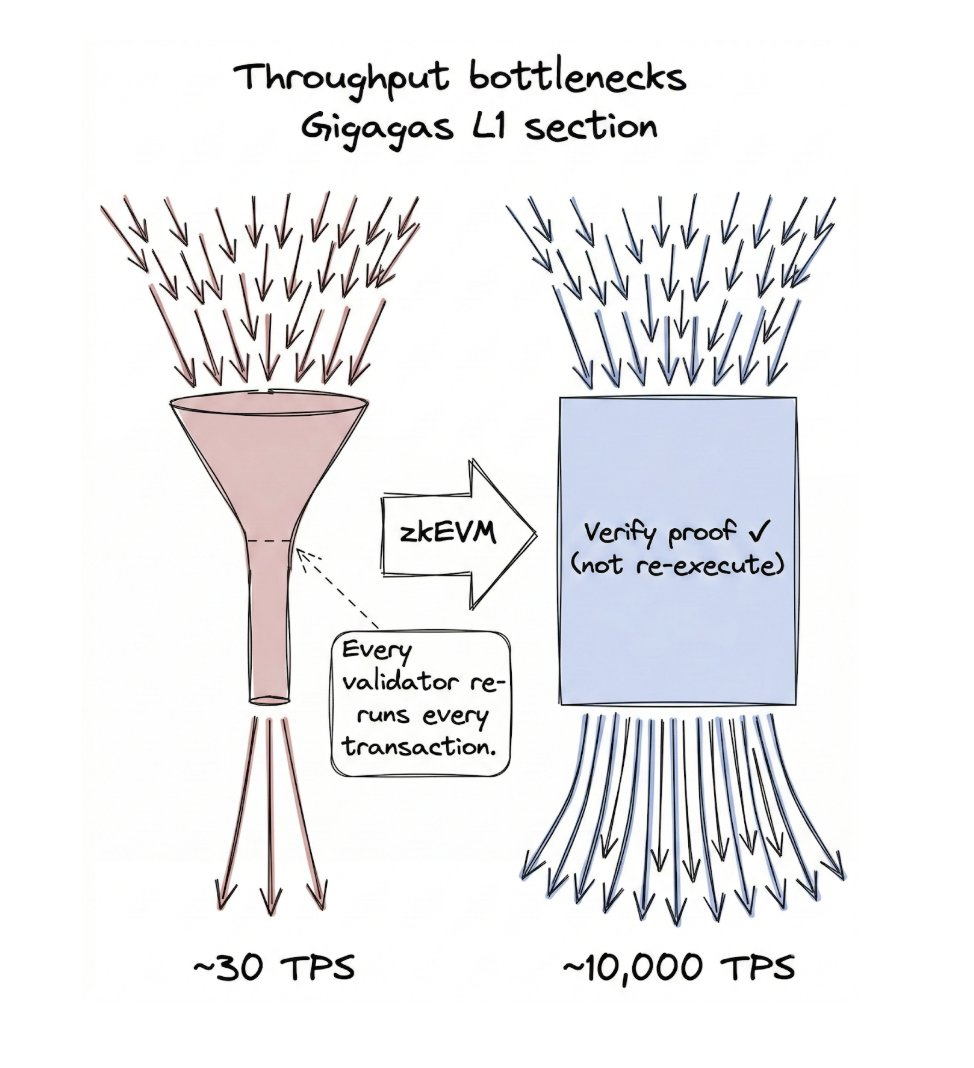
Основна мережа Ethereum обробляє близько 15–30 транзакцій за секунду. Це вузьке місце.
Вирішення: Strawmap націлений на 1 гігагаз за секунду потужності виконання, що приблизно дорівнює 10 000 TPS для типових транзакцій (точне число залежить від складності кожної транзакції, оскільки різні операції споживають різну кількість газу). Ключова ідея — технологія "zero-knowledge proofs" (ZK proofs).
Найпростіше уявити це так: зараз кожен оператор у мережі повинен повторити кожне обчислення, щоб перевірити його правильність. Це як якщо б кожен співробітник компанії самостійно перевіряв математику кожного колеги. Безпечно? Так. Надзвичайно неефективно? Так само.
ZK proofs дозволяють перевірити компактний математичний чек, який доводить, що обчислення виконано правильно. Та сама довіра, але значно менше роботи.
Програмне забезпечення для створення таких доказів поки що занадто повільне. Поточні версії займають хвилини або години для складних задач.
Звести це до секунд, тобто приблизно у 1 000 разів швидше, — це активна дослідницька проблема, а не просто інженерна задача. Команди RISC Zero і Succinct швидко просуваються, але це все ще на межі можливого.
Мейннет із 10 000 TPS і швидкою фіналізацією означає простіше, менше рухомих частин. Менше того, що може зламатися.
3. Teragas L2: 10 мільйонів TPS у швидкісних каналах
Layer 2 мережі все одно потрібні для справді великого обсягу та кастомізації. Сьогодні L2 обмежені кількістю даних, яку основна мережа Ethereum може для них обробити.
Вирішення: Технологія "Data Availability Sampling" (DAS). Замість того, щоб кожен оператор завантажував усі дані для перевірки їх існування, вони перевіряють випадкові вибірки і використовують математику, щоб переконатися, що весь набір даних цілісний. Це як перевірити, чи 500-сторінкова книга дійсно є на полиці, випадково переглянувши 20 сторінок; якщо всі вони на місці, можна статистично бути впевненим, що решта теж.
PeerDAS був впроваджений у оновленні Fusaka, яке заклало основу для всього, що будується у Strawmap. Масштабування до повної цілі означає поступове розширення: більше пропускної здатності даних у кожному форку, тестування стабільності мережі на кожному етапі.
10 мільйонів транзакцій за секунду в екосистемі L2 відкриває можливості, які наразі недоступні жодному блокчейну. Наприклад, глобальні ланцюги постачання, де кожен продукт і відправлення має цифровий токен. Або мільйони пристроїв, що генерують перевіряємі дані. Або мікроплатежі на частки цента. Ці навантаження занадто великі для будь-якої існуючої мережі. При 10 мільйонах TPS вони легко вписуються.
4. Post-Quantum L1: підготовка до квантових комп’ютерів
Безпека Ethereum базується на математичних задачах, які надзвичайно складні для сучасних комп’ютерів. Це стосується як підписів, які користувачі створюють при відправленні транзакцій, так і підписів, які валідатори використовують для досягнення консенсусу. Квантові комп’ютери, якщо вони стануть достатньо потужними, можуть зламати обидва механізми, потенційно дозволяючи підробляти транзакції або красти кошти.
Вирішення: Перехід на нові криптографічні методи (схеми на основі хешів), які вважаються стійкими до квантових атак. Це оновлення відкладене на пізній етап, оскільки зачіпає майже всі компоненти системи, а нові методи використовують набагато більші дані (кілобайти замість байтів), що змінює економіку розміру блоків, пропускної здатності та зберігання по всій мережі.
Квантові атаки на сучасну криптографію, ймовірно, ще за роки або десятиліття. Але якщо ви будуєте інфраструктуру, яка має зберігати трильйони доларів, "вирішимо пізніше" — це не відповідь.
5. Private L1: конфіденційність транзакцій
Все в Ethereum за замовчуванням публічне. Якщо ви не використовуєте додаток для приватності, наприклад Railgun, або L2, орієнтовану на конфіденційність, як ZKsync чи Aztec, кожна транзакція, кожна сума, кожен контрагент видимі для всіх.
Вирішення: Вбудувати конфіденційні перекази прямо в ядро Ethereum. Технічна мета — дати мережі змогу перевірити, що транзакція дійсна, що у відправника є кошти, і що математика коректна, без розкриття деталей. Можна довести, що це легітимний платіж на \$50 000, не розкриваючи, хто кому і за що платив.
Сьогодні існують обхідні рішення. EY і StarkWare анонсували Nightfall на Starknet у лютому 2026 року, що приносить транзакції з захистом приватності в Layer 2 середовище. Але обхідні рішення додають складності та витрат. Вбудування приватності на базовий рівень прибирає потребу в проміжному програмному забезпеченні.
Сім форків (оновлень)
Strawmap пропонує сім оновлень приблизно з інтервалом у шість місяців, починаючи з Glamsterdam. Кожне оновлення спеціально обмежене змінами лише одного-двох основних компонентів, оскільки якщо щось зламається, потрібно точно знати причину.
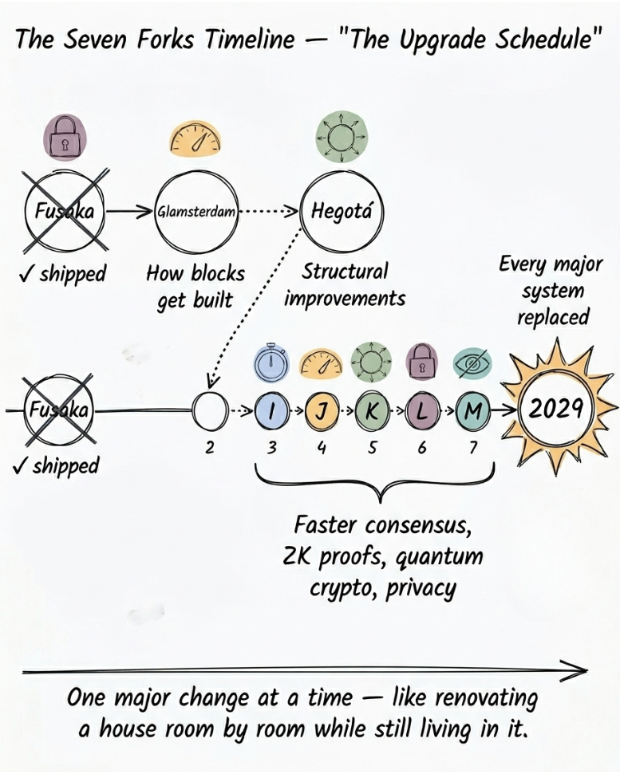
Hegotá йде слідом із подальшими структурними покращеннями. Решта форків (I* до M*) охоплюють період до 2029 року, поступово впроваджуючи швидший консенсус, ZK proofs, розширену доступність даних, криптографію, стійку до квантових атак, та функції приватності.
Чому це триватиме до 2029 року?
Тому що деякі з цих проблем справді не вирішені.
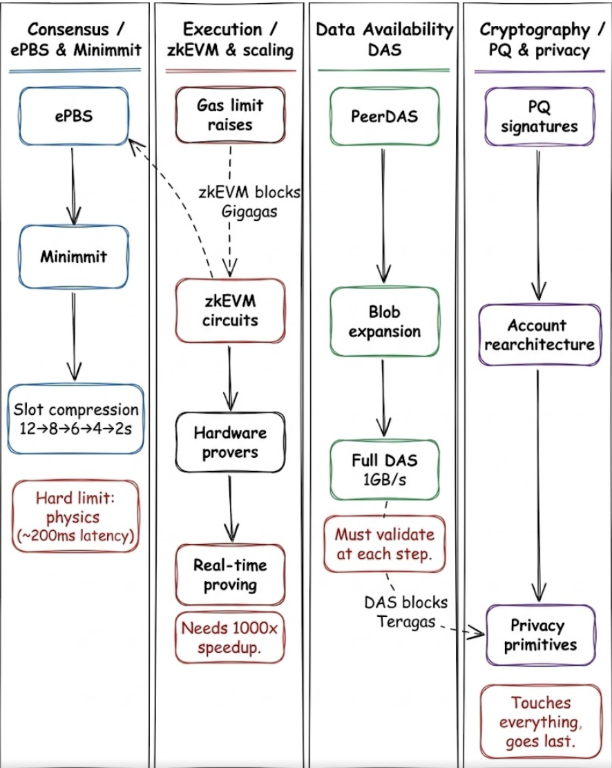
Заміна механізму консенсусу — найскладніше завдання. Уявіть, що ви міняєте двигуни літака під час польоту, а тисячі співпілотів мають погодитися з кожною зміною. Кожна зміна потребує місяців тестування та формальної верифікації. А ще зменшення циклів до менш ніж 4 секунд зрештою впирається у фізику: сигналу потрібно близько 200 мілісекунд, щоб пройти навколо земної кулі і повернутися. В якийсь момент ви боретеся зі швидкістю світла.
Зробити ZK proofers достатньо швидкими — інша межова проблема. Різниця між поточною швидкістю (хвилини) і цільовою (секунди) — приблизно у 1 000 разів. Це потребує як математичних проривів, так і спеціалізованого обладнання.
Масштабування доступності даних складне, але більш вирішуване. Математика працює. Виклик у тому, щоб зробити це обережно на живій мережі, що зберігає сотні мільярдів доларів.
Перехід на постквантову криптографію — операційний кошмар, оскільки нові підписи настільки великі, що змінюють економіку всього.
Вбудована приватність — політично чутлива, крім технічної складності. Регулятори хвилюються, що інструменти приватності сприяють відмиванню грошей. Інженери мають створити рішення, достатньо приватне для користувачів, але достатньо прозоре для відповідності вимогам, і ще й стійке до квантових атак.
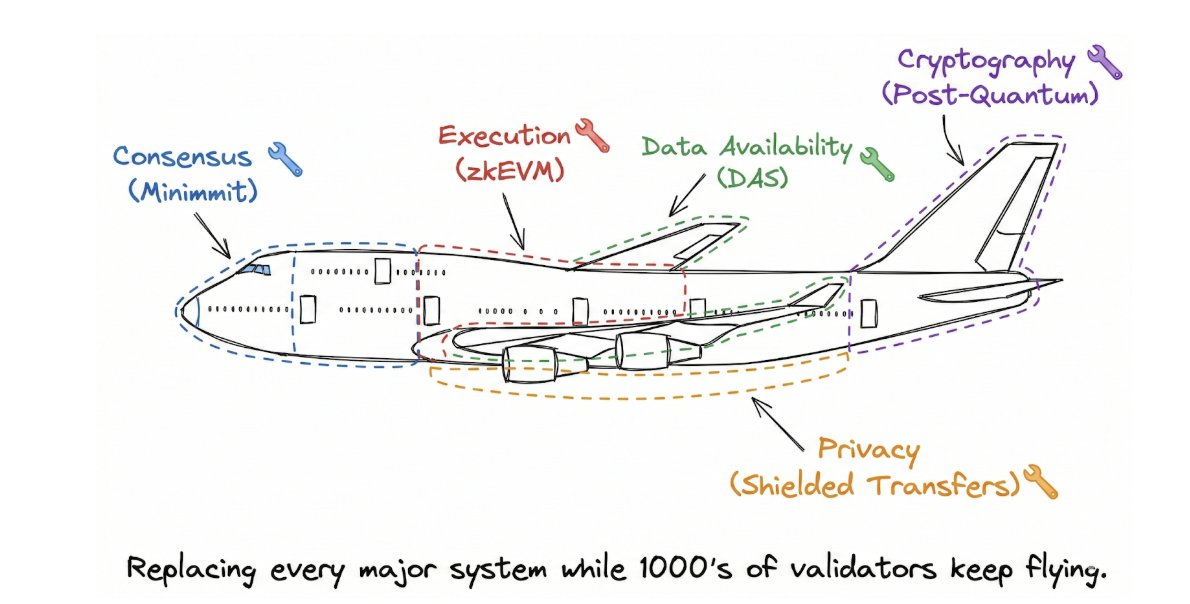
І все це не може відбутися одночасно. Деякі оновлення залежать від інших. Не можна масштабувати до 10 000 TPS без зрілих ZK proofs. Не можна масштабувати L2 без роботи над доступністю даних. Ці залежності визначають графік.
Три з половиною роки — це насправді амбітний термін для того, що планується.
2029?
Є й непередбачуваний фактор. Strawmap прямо зазначає: "поточний проєкт передбачає розвиток, орієнтований на людину. Розробка з використанням ШІ та формальна верифікація можуть значно скоротити графік."
У лютому 2026 року розробник YQ уклав парі з Віталіком, що одна людина зможе за допомогою ШІ-агентів написати всю систему Ethereum, орієнтовану на дорожню карту 2030+. За кілька тижнів він випустив ETH2030: експериментальний клієнт виконання на Go, який містить приблизно 713 000 рядків коду з усіма 65 пунктами Strawmap, зазначений як такий, що працює на тестових мережах і мейннеті.
Чи готовий він до продакшену? Ні. Як зазначив Віталік, майже напевно там є критичні баги, і в деяких випадках лише заглушки, де ШІ навіть не намагався реалізувати повну версію. Але відповідь Віталіка варто прочитати уважно: "Шість місяців тому навіть це було далеко поза межами можливого, і важливо те, куди рухається тренд... Люди мають бути відкритими до можливості (не впевненості! можливості), що дорожня карта Ethereum завершиться набагато швидше, ніж очікують, і на набагато вищому рівні безпеки, ніж очікують."
Головний висновок Віталіка — правильний спосіб використання ШІ — не лише пришвидшення, а розділення виграного часу між швидкістю і безпекою: більше тестування, більше математичної верифікації, більше незалежних реалізацій одного й того ж.
Lean Ethereum працює над формальною машинною верифікацією частин криптографічного і proof-стека. Безпомилковий код, який довго вважався утопією, може стати базовим стандартом.
Strawmap — це документ для координації, а не обіцянка. Його цілі амбітні, графіки — надихаючі, а виконання залежить від сотень незалежних учасників.
Але питання не в тому, чи буде досягнута кожна ціль у визначений термін. Питання в тому, чи хочете ви будувати на платформі з такою траєкторією, чи конкурувати з нею.
І той факт, що все це — дослідження, прориви, криптографічні міграції — відбувається відкрито, безкоштовно, доступно для всіх — це частина цієї історії, яка заслуговує значно більше уваги.
Відмова від відповідальності:
1. Ця стаття є передруком з [[Snapcrackle](https://x.com/Snapcrackle/status/2029174289379811594)]. Всі авторські права належать оригінальному автору [*Snapcrackle*]. Якщо є заперечення щодо передруку, звертайтеся до команди Gate Learn, і вони оперативно розглянуть питання.
2. Відмова від відповідальності: думки та погляди, висловлені в цій статті, належать виключно автору і не є інвестиційною порадою.
3. Переклади статті іншими мовами здійснюються командою Gate Learn. Якщо не зазначено інше, копіювання, поширення або плагіат перекладених статей заборонені.
**